 WhatsApp
 Email
Email
 Facebook
 Twitter
 LinkedIn

Despite being a keen horse rider, Robin Haley hadn’t intended to make equine-themed jewels. But after acquiring ancient objects that featured depictions of horses, the Nashville, Tennessee-based designer translated the images into gold as part of her Artifact Necklaces collection — and to her surprise, she “learned that a lot of people really love horse jewelry.”
The Horse – A Beautiful Bond is one of her eponymous jewelry brand’s most popular pieces. The 14-karat-gold pendant, which hangs from a chain with a diamond bail, features a boy riding a horse — a motif she found on an ancient Greek spiritual token from 365 BCE. Haley attributes its success and that of her other horse-themed designs to the “fascination we have with the animal.”
This interest is long-established; horses featured in ancient Roman jewels. But it will come into sharper focus in February as we enter the Year of the Horse in the Chinese zodiac. While some brands might release special pieces to mark the Lunar New Year, the horse is already a favored source of inspiration for contemporary designers.
From head to hoof
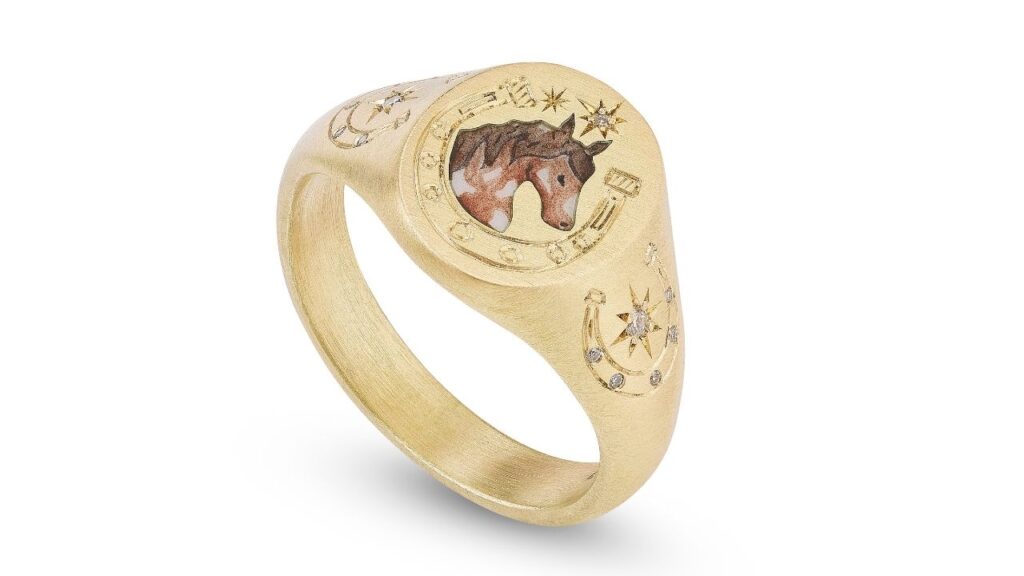
Hermès — which traces its roots back to the Paris workshop that harness-maker Thierry Hermès opened in 1837 — recalls its equine heritage in jewels including the silver Galop horse-head ring. This part of the animal also appears in men’s designs at Effy, while fellow New York brand Amáli offers necklaces with a hand-carved horse-head pendant in pink tourmaline or aquamarine.
British brand Cece Jewellery focuses on the head as well, rendering it in champlevé enamel on the company’s gold Wild Horse designs. Founder Cece Fein Hughes grew up within Dartmoor National Park in Devon, England, where ponies roam free. She is drawn to the “whimsical storytelling element of horses” and the symbolism of these powerful creatures, which she sees as representing freedom and wildness.
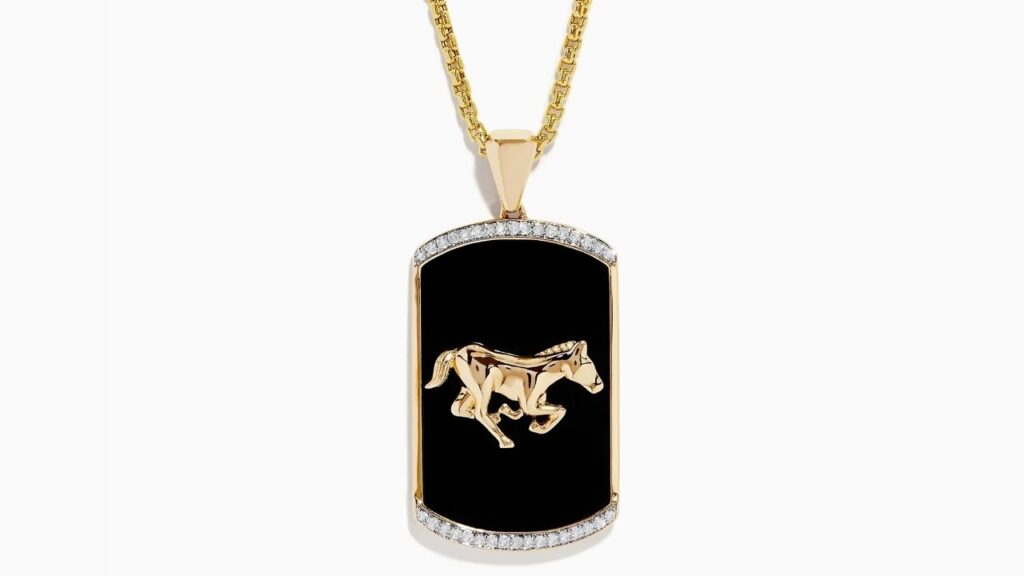
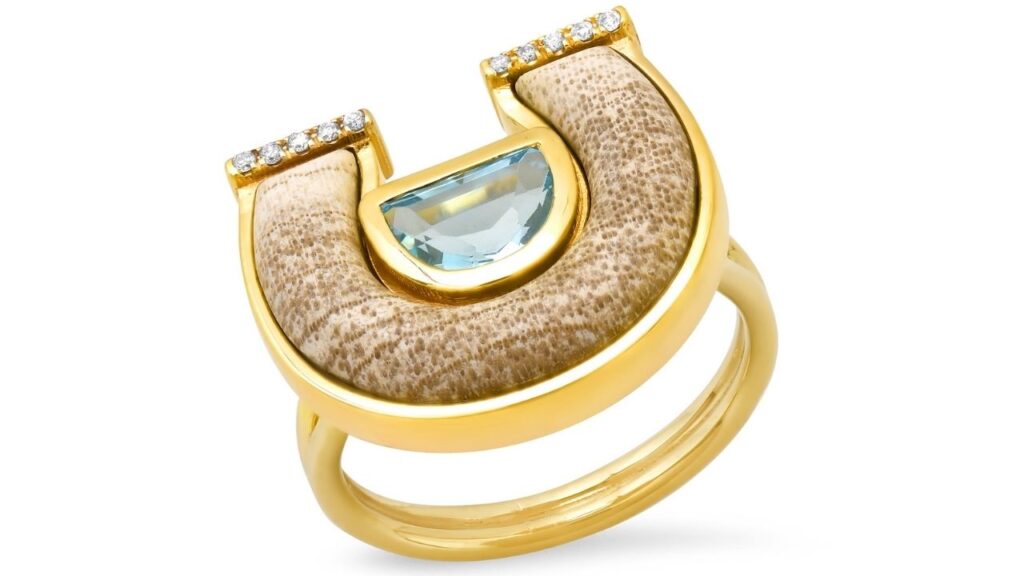
“They’ve always been an important animal, whether in battle or [as] your best friend,” observes the designer, who also produces bespoke hand-enameled portraits of her clients’ pet horses and offers a Chinese Zodiac ring with a galloping horse for people born in the relevant year. But her bestsellers are her Horseclip pieces with their horseshoe motif, a longstanding symbol of good luck and protection.
“Jewelry is always quite talismanic,” says Fein Hughes. “People wear jewelry not just for decoration, but for meaning. And so I always am drawn to a horseshoe.”
The designer — whose jewelry is available in the US at stores such as New York boutique Broken English — further encourages luck by adding seven star-set diamonds to her Horseclip pieces. These represent the seven iron nails that an old Irish proverb says will ward off evil spirits, she explains. “I also always make sure that the horseshoe is facing upward, because if it’s upward, you can collect luck. If it’s upside down, luck falls out.”
Lucky looks
Designer Lauren Harwell Godfrey takes a different tack: She uses the symbol facing downward, as she prefers how it looks.
“I know it’s actually quite controversial,” says the California-based founder of the Harwell Godfrey brand, whose 2023 Horseshoe collection drew on her experiences competing in hunter-jumper riding events when growing up, as well as riding Western style. She likes the idea that if the horseshoe “is facing downward, you can share your luck — or it also becomes this protective bubble shape.”
The horseshoe has featured in jewelry for centuries, particularly during the Victorian era, when there was a keen interest in symbolism. For Godfrey, the motif’s pervasiveness throughout history is an “opportunity to take it and make it specific” to her brand. She’s applied her own maximalist aesthetic, with gold and diamond interpretations that embrace her penchant for patterns and geometric shapes. Godfrey plans to introduce more horse-inspired designs at the Las Vegas Couture show in May.
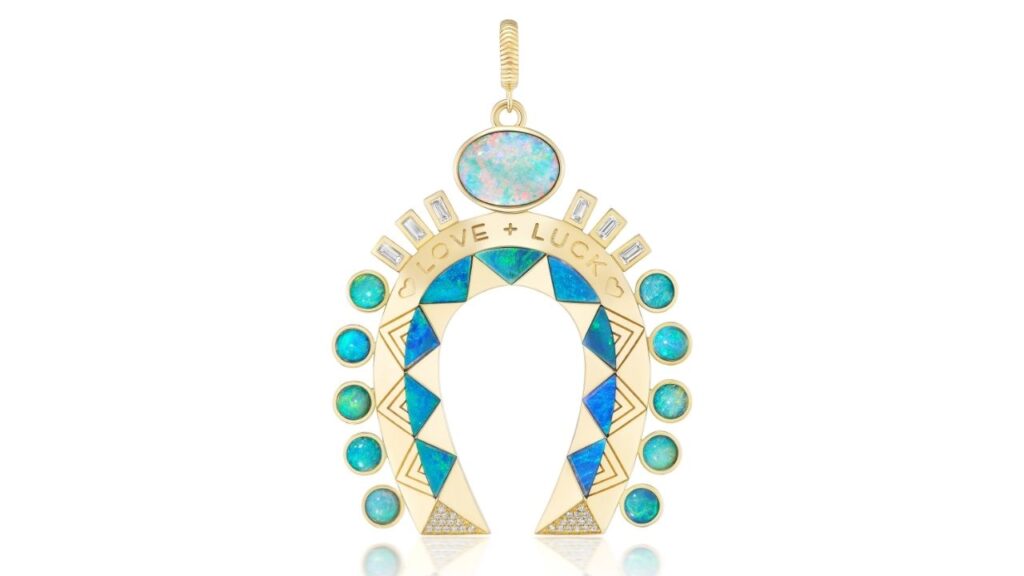
Fellow Californian brand Sig Ward Jewelry lets customers choose their luck. Its colorful Horseshoe Manifest collection includes necklaces with gold, gemstone and diamond horseshoe pendants facing upward, and others with more elongated versions of the symbol facing downward.
Committed to the bit
Whichever way people wear it, the motif is here to stay. Fein Hughes attributes its current popularity to the “beautiful shape” and the fact that people are choosing statement pieces for self-expression. As she remarks, “the horseshoe’s quite a large, impactful shape to wear.”
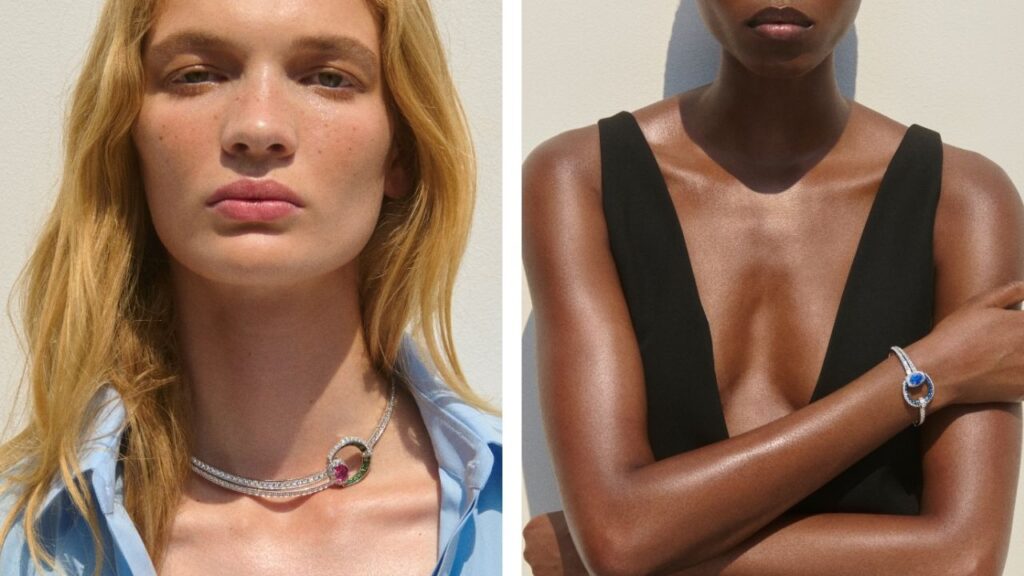
But the shoe isn’t the only equestrian equipment to inspire jewelers. Recent additions to Gucci’s Horsebit collection include new pink-gold bracelets, necklaces, earrings and rings. The signature bit motif first appeared in the Italian fashion house’s accessories and loafers in the 1950s before expanding to watches and bracelets in the ’70s. The dedicated fine-jewelry line launched in 2004.
Haley thinks the horse’s enduring influence on jewelry stems from its early industrial role. “We needed the power and the strength of the animal to help us create fields to grow food in,” says the designer, who plans to showcase her horse-themed pendants at New York’s Melee the Show jewelry fair between January 31 and February 2. “And they’ve helped us travel and explore…. We couldn’t have gotten to where we’ve been without the horse to carry us.”
Now jewelry lovers can carry the horse wherever they go.
Main image: Amali necklace in 18-karat gold with a carved tourmaline in the shape of a horse. (Amali)