 WhatsApp
 Email
Email
 Facebook
 Twitter
 LinkedIn
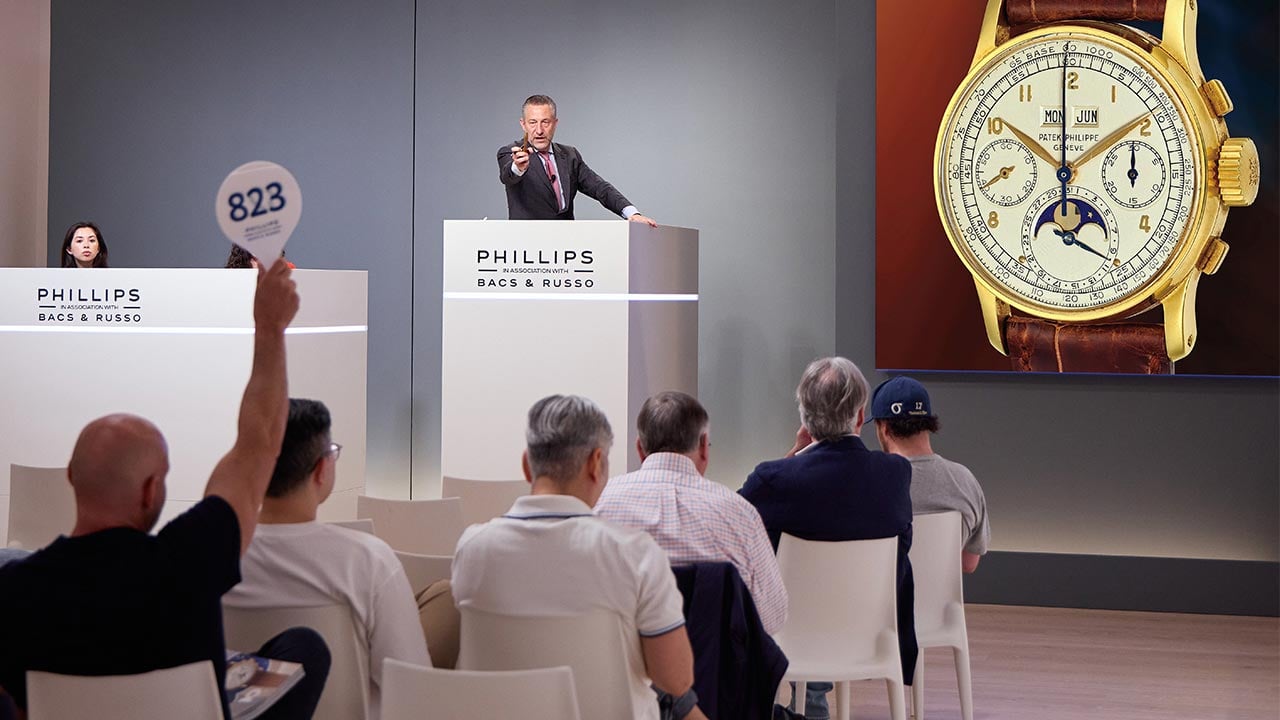
The global consumer market spent $726.1 million on watches at the three major auction houses in 2025, taking sales totals to new heights.
Sotheby’s recorded its best year ever, with $193.6 million in watch sales for 2025 — up 22% from 2024. Phillips in Association with Bacs & Russo, which holds a 45% share of the total watch-auction market, shattered its own record for the highest annual total in watch-auction history: It reached $290 million, versus a previous peak of $227 million in 2022. It also realized an additional $80 million through private sales and its Phillips Perpetual boutique. Meanwhile, Christie’s achieved a total of $162.5 million in global auction sales for the year, with 81% of all lots selling within or above their estimates.
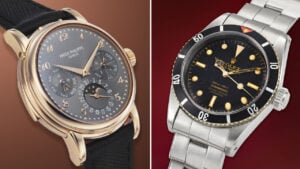
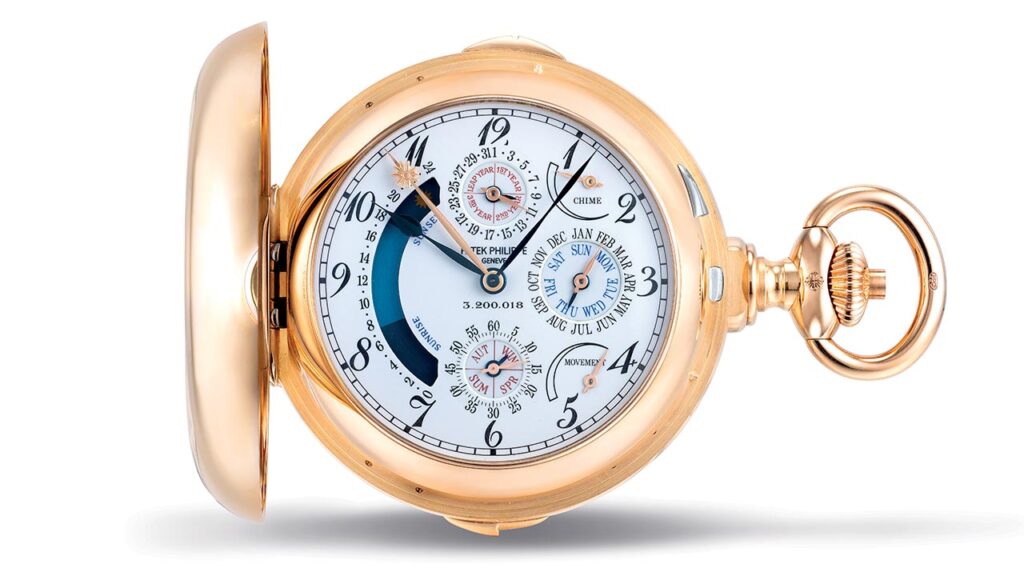
Phillips broke the record not only for annual sales, but also for the highest total of any watch auction, garnering $83 million in November at its Watches: Decade One sale in Geneva; it had established the previous record of $74.5 million in 2021. The top lot of the year, which sold at the Geneva auction, was an extremely rare stainless steel Patek Philippe Ref. 1518 that fetched $17.6 million. That makes it the most expensive vintage Patek Philippe wristwatch ever to sell at auction and the highest timepiece result at auction globally in 2025.
Notably the watch hit just under the $17.8 million Phillips achieved in 2017 for the Paul Newman Rolex Daytona that belonged to the namesake actor.
Dialing up prices
Watch auction houses are increasingly distinguishing themselves by limiting their live sales to high-value lots. At the Watches: Decade One sale for example, 12 timepieces sold for over $1 million. Overall for the year, 36 sold for over $1 million at Phillips, and the house’s average lot value reached $173,000. At Sotheby’s this past year, 25 timepieces realized over $1 million, more than double 2024’s figure, and the average lot value was up 56% at $71,000.
“The global interest in collectible watches is the highest we’ve ever seen,” comments Paul Boutros, Phillips’s deputy chairman and head of watches for the Americas.
Since it started in 2015, Phillips in Association with Bacs & Russo has shaken up the watch auction game in a few ways. For one thing, it has introduced themed auctions that frame watches within a broader historical context and cultural narrative. On the editorial front, it has expanded its catalogs beyond the borders of the conventional format — including by adding scholarly, detail-oriented lot descriptions that are rich in context — and launched a magazine, The Phillips Journal, documenting watch culture and expanding scholarship.
These efforts were “more than a stylistic decision,” says Boutros. “Our approach to catalogs reflects a shift toward showcasing timepieces in a way that resonates with collectors.”
Quite a Journe
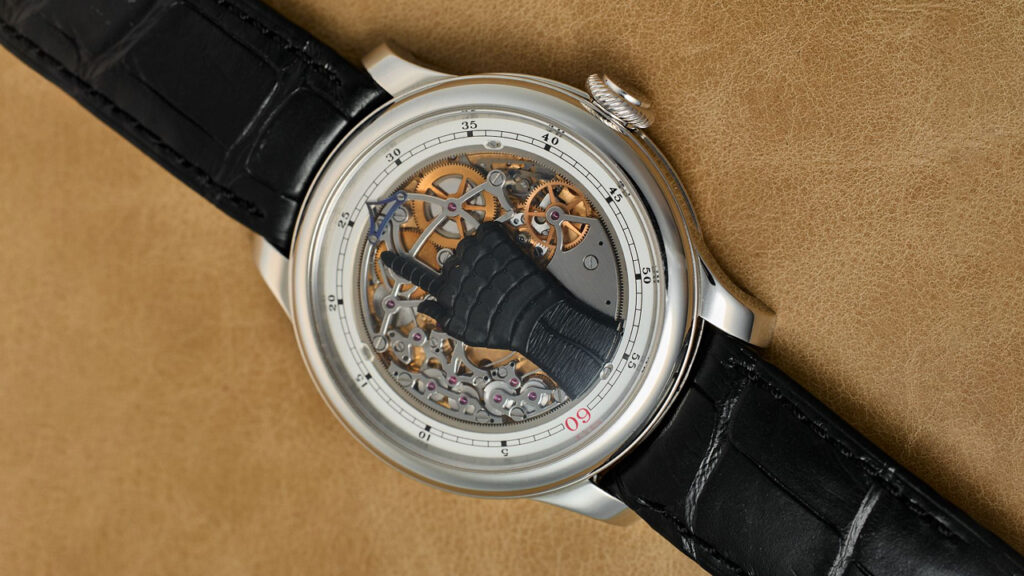
The second-highest lot of the year at Phillips sold in New York in December: the F.P. Journe FFC Prototype, which went for $10.8 million. Formerly belonging to director Francis Ford Coppola, who helped design it, the piece set a new world record for an F.P. Journe wristwatch, and for any wristwatch by an independent maker at auction. It was also a record for any 21st-century non-charity wristwatch; in 2019, a Patek Philippe Grandmaster Chime grabbed CHF 31 million (approximately $31 million at the time) — the highest auction price a watch has ever achieved — at the Christie’s Only Watch sale to benefit research into Duchenne muscular dystrophy.
The quirky design of the F.P. Journe’s dial features a human hand rather than the conventional hour and minute hands. “Its superb provenance and whimsical complication created by two geniuses at the apex of their respective fields propelled it to the highest watch auction result in the US since our sale of Paul Newman’s Rolex Paul Newman Daytona in 2017,” says Boutros.
Phillips now holds the records for the three most valuable wristwatches ever to sell at a non-charity auction: the two top lots mentioned above for 2025, and the Paul Newman Daytona.
Stars of the show
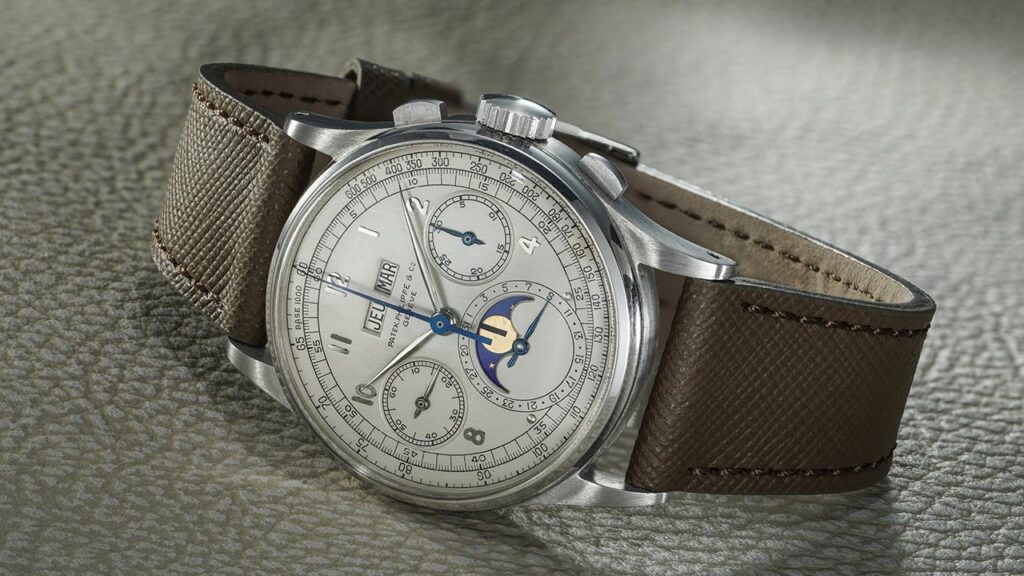
At Sotheby’s, the top lot was a set of four Patek Philippe Star Caliber 2000 pocket watches, which brought in $11.9 million at the auction house’s Abu Dhabi sale in December — the second-highest price the auction house has ever realized on a timepiece. Created to usher in the new millennium, the Star Caliber 2000 was the product of seven years of intensive research and innovation. It is also Patek’s third-most complicated watch.
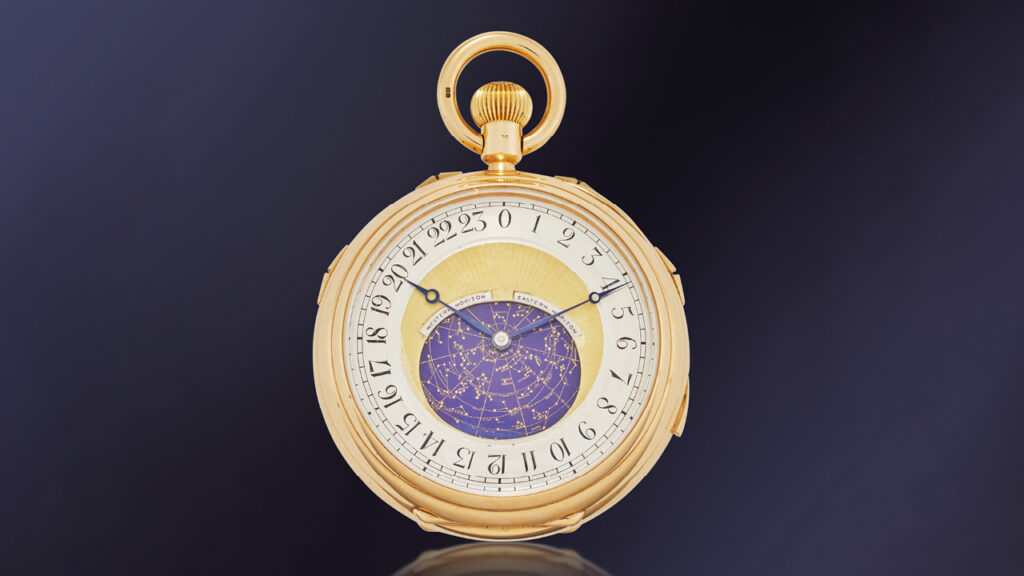
The second-highest Sotheby’s lot, garnering $7.7 million at a December New York auction, was the Audemars Piguet Grosse Pièce, the brand’s most complicated known pocket watch. Smith & Sons of London commissioned it in 1914 on behalf of a South American client, and it took six years to create. Depicting 18 constellations, it is the brand’s only known watch to feature an astronomical star chart complication.
“I attribute the record-breaking year at Sotheby’s to our having the best watch team in the world,” declares Geoff Hess, the house’s global head of watches. “Beyond that, as evidenced by our December live auction [in Abu Dhabi] having an astonishing 1,850 registered bidders from over 50 countries, the global reach of Sotheby’s is second to none.”
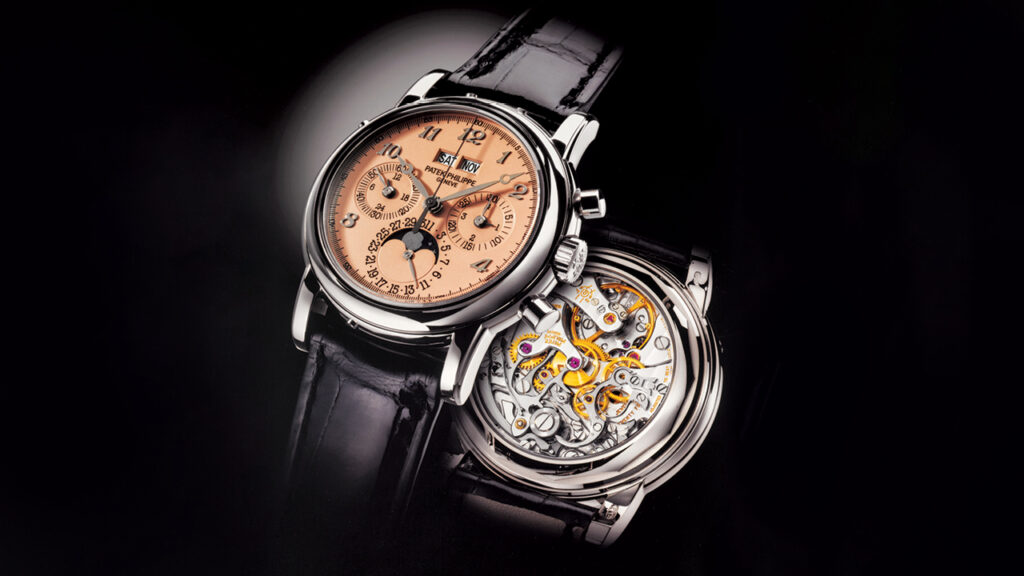
The top lot at Christie’s was a Patek Philippe Ref. 3970EP-038 — a platinum special-edition perpetual calendar chronograph, one of four commemorating the reopening of the Geneva Salon in 2006. It sold for CHF 1.4 million (about $1.8 million) at the Geneva Rare Watches auction in November. The second was a steel F.P. Journe Grande et Petite Sonnerie Souveraine that went for HKD 17.6 million (about $2.3 million) at a Hong Kong sale in May.
Starting young
One of the defining — and perhaps most surprising — developments in watch auctions is the growing interest among young people. Auction houses were traditionally a source for seasoned collectors who, after collecting inexpensive watches at a younger age, move on to the higher-priced items at live auctions. Today, collectors are starting at the top.
Christie’s says 42% of its watch buyers and bidders this year were new to the auction house, and 56% were Millennials and Gen Z. It was a similar story at Phillips, where 35% of all buyers were new and 32% were Millennials or Gen Z.
Hess at Sotheby’s also notes the increasing interest of young collectors: “Incredibly, we continue to expand our client base, with 36% of our buyers this year having never taken part in a watch auction. More than a third of all bidders were under the age of 40. Quite simply, we’re attracting more and more new enthusiasts to the hobby of watch collecting.”
Main image: Auctioneer Aurel Bacs commands the saleroom at Phillips in Association with Bacs & Russo. (Phillips)