
 WhatsApp
 Email
Email
 Facebook
 Twitter
 LinkedIn
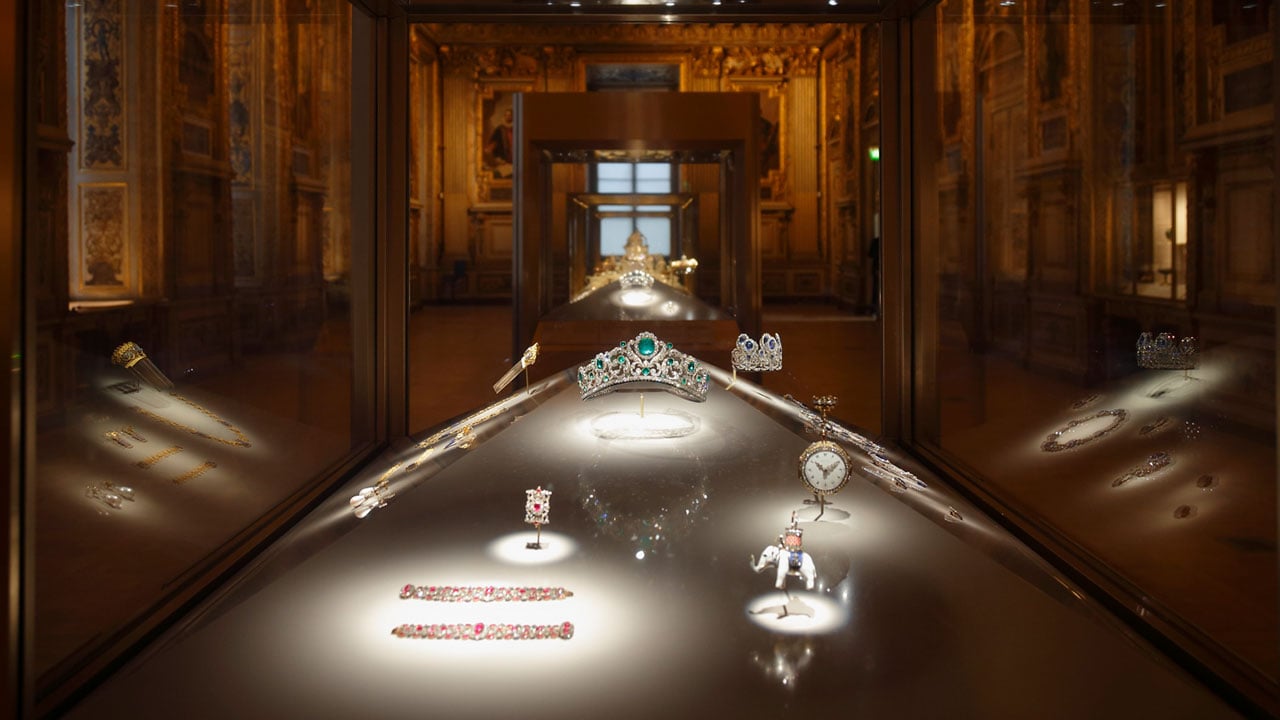
When news broke on October 19 that the French crown jewels had been stolen from the Louvre, the internet erupted in disbelief, outrage and irony. Memes mocked politicians and museum officials, while amateur sleuths flooded social media with increasingly far-fetched theories. Beneath the frenzy, however, lay one of the gravest cultural losses in recent memory.
The facts
At 9:30 a.m. on a Sunday, a gang of four arrived with a vehicle-mounted mechanical lift, parking near the Apollo Gallery overlooking the Seine. Using power tools, they cut through a window one story up, smashed two display cases, and vanished on two scooters, carrying eight pieces of royal jewelry.
A preliminary report revealed that one in three rooms in the raided area lacked CCTV coverage, and the camera on the gallery’s balcony was misaligned. The heist recalled the 1792 theft of the royal jewels during the French Revolution, and the 1976 robbery of King Charles X’s diamond sword, which was also in the Apollo Gallery. Both times, thieves used a ladder to gain entry to the building.

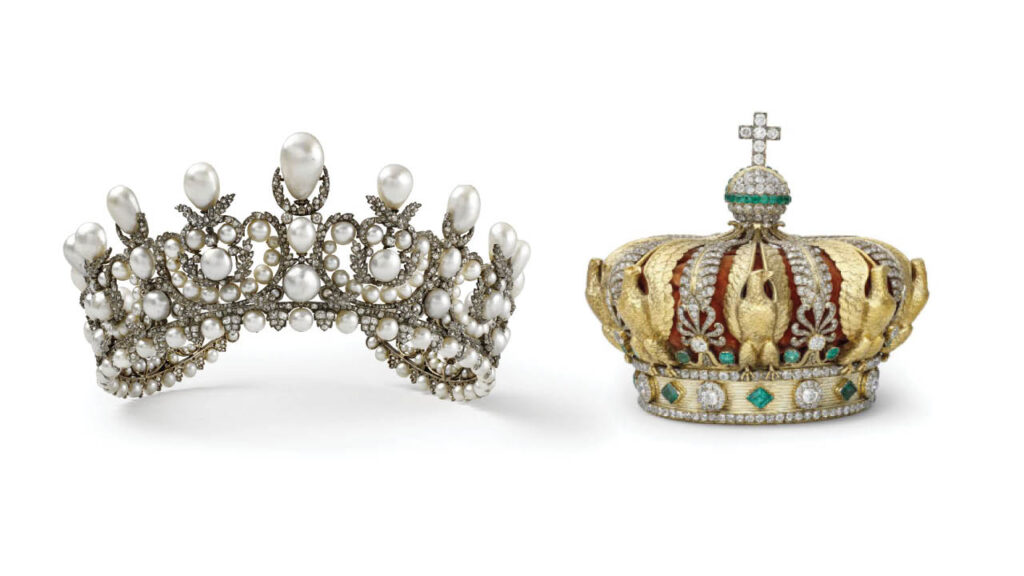
The stolen pieces have a total value of EUR 88 million ($102 million), according to Paris prosecutor Laure Beccuau. Among them is a diamond brooch that crown jeweler Paul-Alfred Bapst created for Empress Eugénie in 1855, containing two Indian Golconda diamonds that royal minister Cardinal Mazarin had bequeathed to King Louis XIV in 1661. Other missing items include a sapphire tiara and necklace belonging to Queen Marie-Amélie, an emerald necklace and earrings that were Empress Marie-Louise’s, and a bodice bow from Eugénie’s parures. The thieves dropped one spectacular piece, a diamond- and emerald-set crown that was later found broken near the museum.

A wider sense of betrayal
For French gemologist Marie Chabrol, the fascination these jewels inspire goes far beyond material value. “A jewel transcends power, appearance, money,” she says. “It’s an object of technical prowess and emotion, and it tells stories. In a world that feels unstable, people look to history for reassurance.”
That emotional pull is precisely what makes the pieces’ loss so unsettling. “Robberies like this send a chill not just through institutions, but through collectors, curators, and anyone who loves jewelry,” remarks jewelry historian Marion Fasel, founder of online magazine The Adventurine. “It makes everyone rethink how much they can trust museums.”
For Fasel, the shock is not only emotional, but reputational: “It’s an international embarrassment, yes, but also a wake-up call. You cannot take heritage for granted. Security has to come before aesthetics.”
Paris-based jewelry historian and exhibition curator Vanessa Cron shares that sense of unease. “If Cartier, Chaumet or any major maison lent even one piece, they’d send their head of security to inspect every lock and alarm,” she says. “The Louvre had an entire royal collection and didn’t film the balcony. It’s unthinkable.”
Across the jewelry world, she adds, the feeling is not just sorrow, but anger and betrayal — a sense that institutions have let down donors and the public.
“Jewels are not paintings,” Cron continues. “You don’t protect a diamond the way you protect the Mona Lisa. A jewel can be dismantled, melted, recut — even destroyed for profit. That’s why jewelry needs its own security protocols.”

A worrying pattern
Compounding the shock was how easily the thieves acted. In 2019, the museum replaced the gallery’s display vitrines with lighter, more transparent cases that Cartier subsidized. A recent report from the Cour des Comptes — France’s top auditing body — found that from 2019 to 2024, the Louvre “failed to catch up on its persistent delay” in upgrading protection. Despite a record 8.7 million visitors in 2024, major sections of the museum remain without video surveillance, and fire safety gaps persist. A source close to that report, speaking on condition of anonymity, describes “a pattern of mismanagement and misplaced priorities,” such as favoring prestige projects over security spending.
The Louvre theft also fits a broader trend. In November 2024, thieves struck Paris’s Musée Cognacq-Jay, stealing 18th-century objets d’art. In September 2025, gold nuggets worth EUR 1.5 million ($1.7 million) disappeared from the Musée d’Histoire Naturelle.
The latest heist has reignited debate about whether jewels of such significance should be on display at all.
“If the conditions aren’t right to exhibit the crown jewels of France, then don’t exhibit them,” says Cron. Some have suggested showing replicas instead — an idea she firmly rejects. “I wouldn’t go to the Louvre to see a copy of the Mona Lisa, so why would I go to see fake jewels?”
Picking up the pieces
The irony is painful. France sold off its royal jewels in 1887 to sever ties with the monarchy, only to repurchase many of the pieces over the past century through public generosity. Now they are gone once again — not through politics, but through neglect.
History, however, offers a sliver of hope. When thieves pilfered royal jewels from Dresden’s Green Vault in 2019, 31 of the missing pieces resurfaced in Berlin three years later.
After weeks of public outrage over October’s heist, Culture Minister Rachida Dati acknowledged that the Louvre’s security systems were “totally obsolete,” and ordered a full audit to be completed by the end of 2025. By early November, four suspects had been charged in connection to the robbery. While the perpetrators seem to have been opportunistic thieves rather than part of a wider criminal network, the fate of the jewels remains unresolved.
Main image: The French crown jewels on display in the Louvre. (Musée du Louvre/Antoine Mongodin)