 WhatsApp
 Email
Email
 Facebook
 Twitter
 LinkedIn
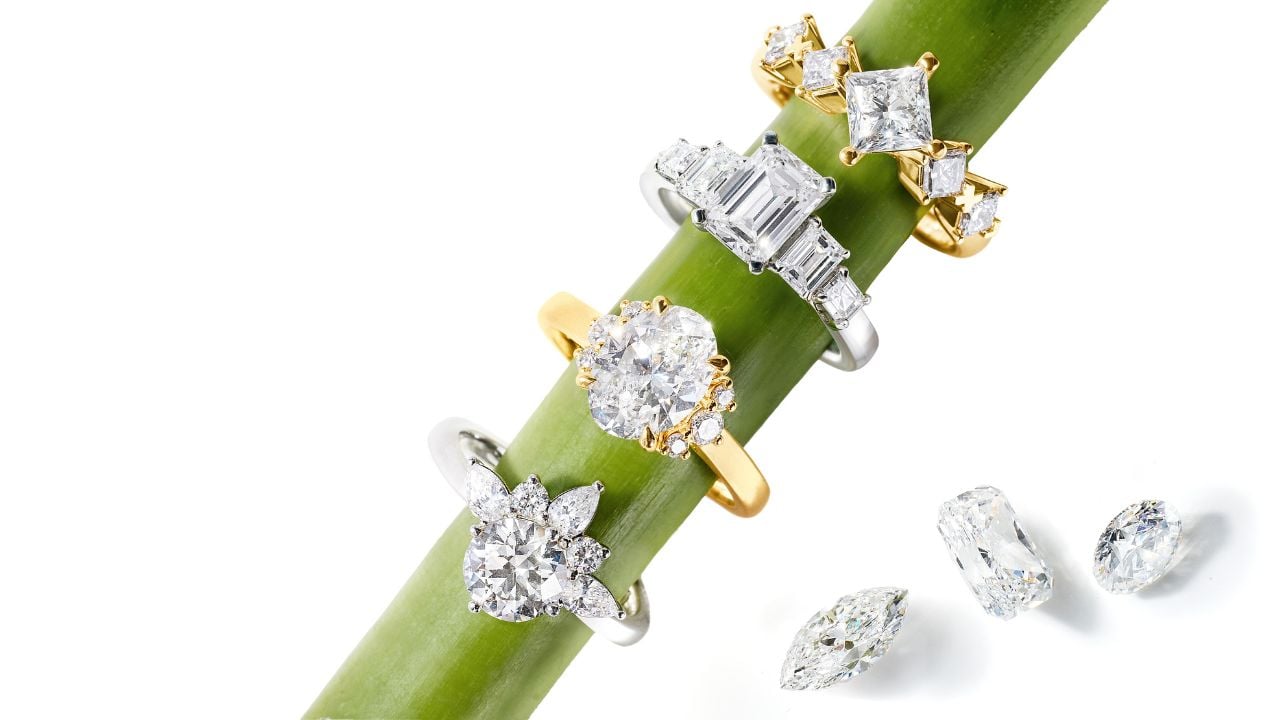
From diamond sourcing to manufacturing, technology is making engagement-ring buying more efficient, transparent and personalized.
In August, Jared Jewelers launched the Storied Diamond collection, a blockchain-backed initiative that traces each diamond’s journey from its mine of origin in Botswana through the polishing, cutting and setting stages.
“Storied shows the beauty and rarity of a natural diamond in a new, deeper and more transparent way that we think will resonate with today’s consumer,” says Ann Grimmett, the jeweler’s vice president of merchandising.

Meanwhile, New York-based jeweler The Clear Cut introduced an AI system called Eunice in May. Built on years of manual diamond sourcing and trend forecasts, it provides pricing clarity, predicts trends and personalizes the shopping journey.
Eunice works on top of the jeweler’s proprietary Gem platform to “help couples make smarter choices,” says company cofounder and CEO Olivia Landau. “Today, 90% of our engagement rings are designed and purchased entirely digitally, which speaks volumes about how ready consumers are for thoughtful, tech-forward luxury.”
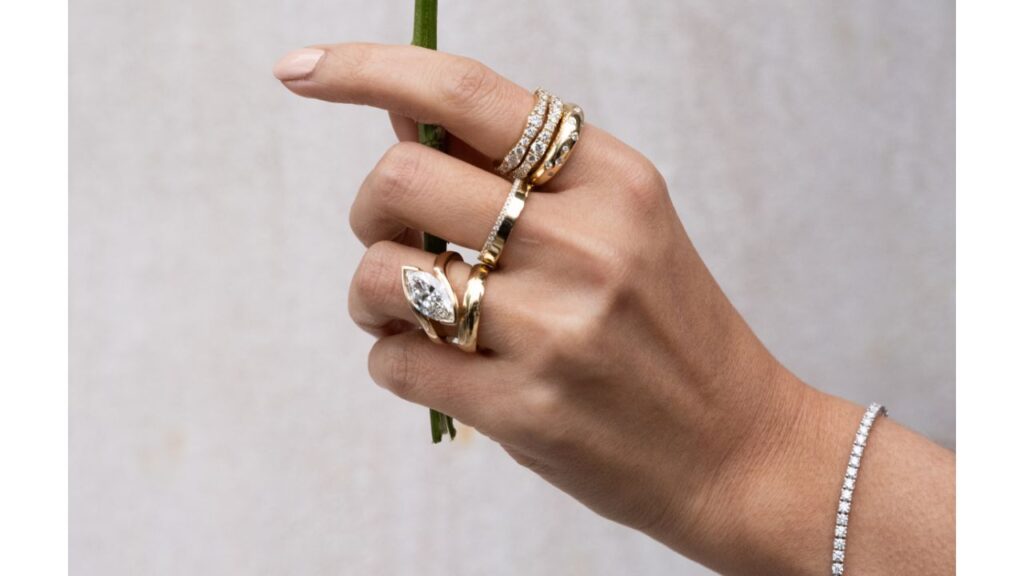
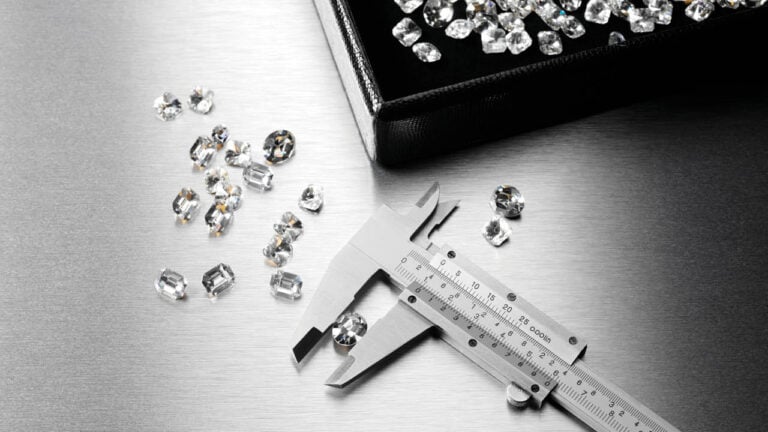
Technology is also reshaping how companies manufacture bridal pieces in the US. Jewelers are producing more pieces domestically — especially in New York, New Jersey, California and Texas — to avoid tariffs, according to Pristine Gems president Kunal Shah. These factories, with anywhere from 10 to 100 employees, are prioritizing precision over volume.
“Jewelry factories are lean and want to source exact sizes for all their diamond and gemstone needs,” explains Shah. “They don’t have the staff and time to sort and sieve through hundreds of carats to get what they need to mount and ship.”
To that end, the company debuted an AI-powered platform at JCK Las Vegas in June that helps clients source exact millimeter sizes of all non-certified fancy-shape diamonds, streamlining the entire process.
Main image: Rings and loose stones from Jared Jewelers’ Storied Diamond collection. (Jared Jewelers)