
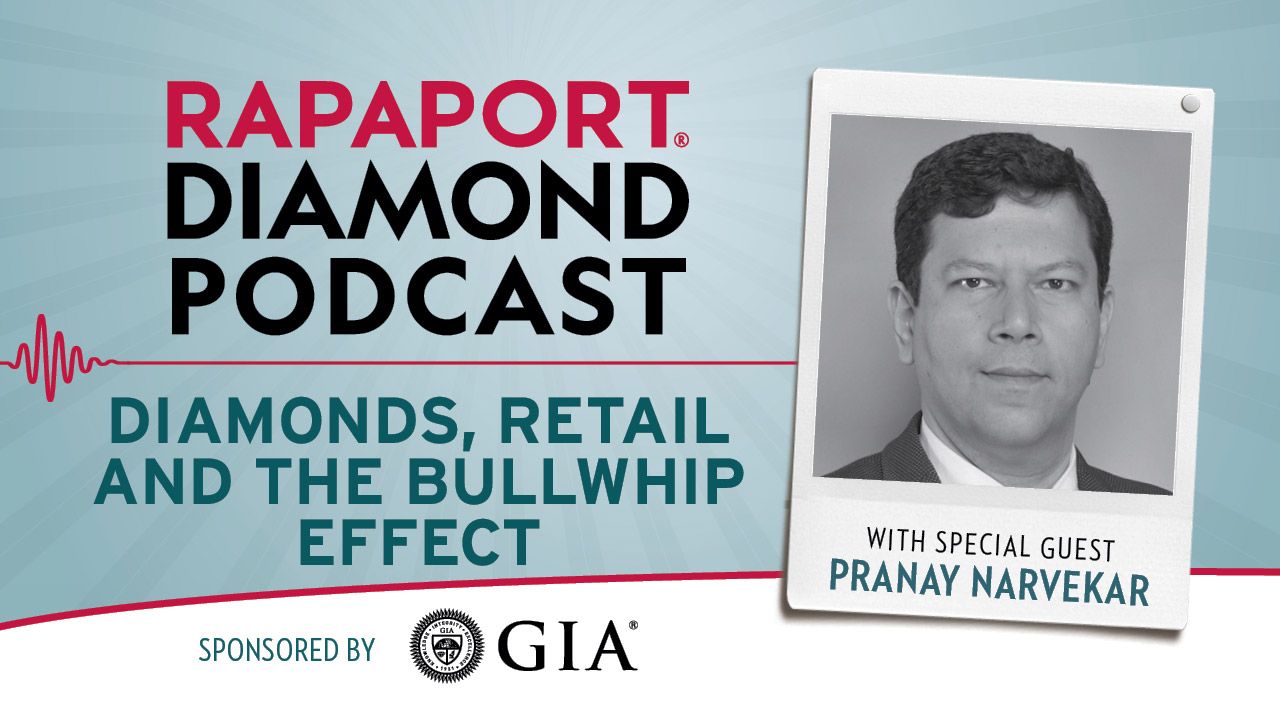
The diamond industry should pay more attention to the retail sector, where small changes can have an outsized effect on the supply chain. This was the message from industry analyst Pranay Narvekar on the latest episode of the Rapaport Diamond Podcast.
“The industry is fairly predictable,” said Narvekar, who owns Pharos Beam Consulting. “If you know what’s happening on the retail side, you can…have a fair bit of an idea about what’s happening on the polished and the rough side.”
While some larger, more sophisticated companies track consumer trends, “most midstream companies will focus on the polished and the rough markets” and the performance of specific diamond categories in the wholesale trade, he said.
Narvekar explained why the “bullwhip effect” is especially intense in the diamond sector. This refers to the reality that small adjustments in end demand translate into bigger and bigger changes the further up the supply chain one goes.
“This is actually [true for] any industry, [but] given that the diamond pipeline is such a large pipeline — so retailers typically sit on a year’s stock, if not more — then you see that the effects are much more pronounced,” he elaborated.
Specific secondary factors in the manufacturing and trading sector also influence the state of the market, “but ultimately what drives the industry is what’s happening at the retail end,” he said in conversation with Rapaport’s Joshua Freedman.
Speaking on July 22, when US import duties on Indian goods were still 10%, Narvekar estimated these would reduce global demand by 5%, given that America accounts for around half of all diamond demand. US President Donald Trump has since increased the levies to 50%.
The consultant also addressed the weakness in small diamonds. This resulted from a drop in Chinese luxury demand for high-quality melee as well as US retailers’ shift to lab-grown diamonds for fashion jewelry, Narvekar observed. By contrast, jewelers are stocking larger diamonds in response to demand, he said — supporting the market all the way up to rough.
Meanwhile, the declining price of synthetics has fueled a transition back to natural among some bridal retailers, he noted.
The analyst also explained the current supply situation and the impact of the inventories miners are holding.
Listen to the podcast here:
This podcast is brought to you by GIA — the Gemological Institute of America — protecting consumers and supporting the global gem and jewelry trade since 1931 through research, education, and laboratory services.