

RAPAPORT… Rapaport Magazine recently carried an article by Farai Maguwu, founding director of the Centre for Natural Resource Governance (CNRG), in which he argued that the Kimberley Process (KP) was allowing Zimbabwe to export conflict diamonds. He cited allegations of torture and violence against local artisanal miners.
Technically, Zimbabwe’s goods are not conflict diamonds, noted Edward Asscher, president of the World Diamond Council (WDC), in a blog post last Thursday. This is because the KP defines conflict stones as rough that rebel movements use to finance wars against legitimate governments, he pointed out.
However, the WDC, which represents the diamond industry at the KP, is working with other stakeholders to update this important definition, Asscher explained. Making this change would enable the KP to address issues such as those that Maguwu describes, he added.
“The [Kimberley Process Certification Scheme (KPCS)] is unfortunately limited in its scope,” Asscher wrote. “Unless that is expanded, it cannot be expected to be a panacea to other challenges afflicting artisanal miners, including human and labor rights violations, bribery, and corruption.”
Read Asscher’s full blog post here.
Image: Edward Asscher. (Royal Asscher)

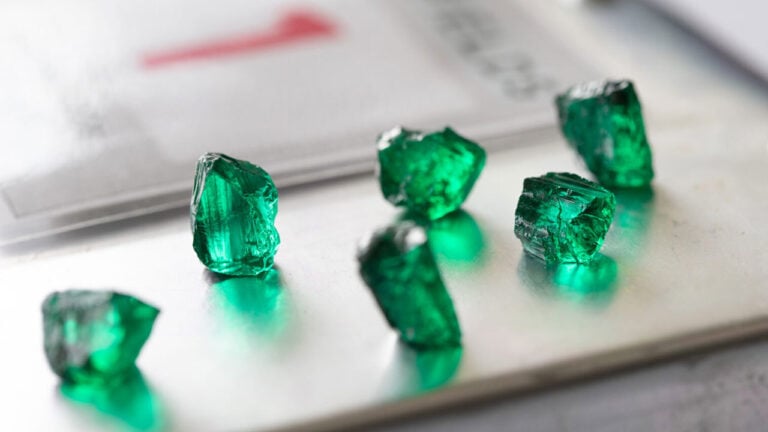
Emerald Prices Improve at Gemfields Auction
Miner sells 100% of its 3 million carats of commercial-quality goods for $29.6 million.

Sarine Opens New Lab in Mumbai
Company also has facilities in New York and Surat.
Star Diamond Names New CEO
Jean Raymond Boulle II will succeed Lester Kemp, who served as interim chief.