

RAPAPORT… Fraudsters created an imitation emerald by assembling five
pieces of glass around a beryl core using a “laborious multi-step cut-and-glue
process,” according to the Gemological Institute of America (GIA).
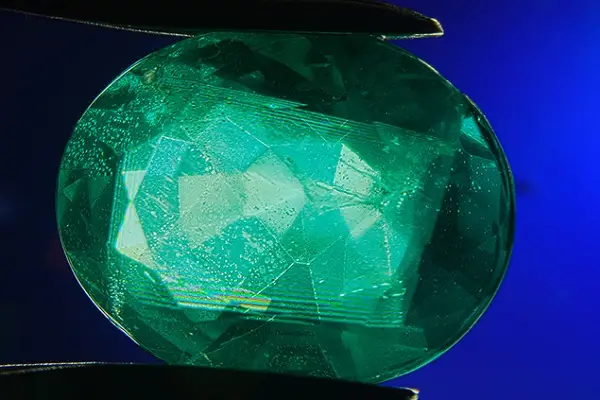
The inside of the 3.35-carat stone — which the New York
branch received for grading — was a natural beryl, a mineral of
which emerald is a variety. However, the crown consisted of a single piece of
glass glued onto the pavilion. The pavilion itself featured four interlocking, asymmetrical
glass segments glued to the beryl core with colorless cement, the GIA explained.
The act of creating the fake stone was probably lengthy and
complex, GIA gemologists Tyler Smith and Augusto Castillo noted in the summer
2018 issue of Gems & Gemology. At each stage of the creation
process, the manufacturers attached one glass segment to the beryl core, and cut
the glass and the beryl to make a flat surface to which they could attach the
next piece of glass, according to the GIA’s proposed model of how the assembly
took place.
Once the artisans had stuck the four segments to the core,
they polished it to create a flat surface onto which they added the glass crown.
The GIA researchers initially spotted multiple, nonparallel
cement planes when examining the stone under a microscope. Further tests confirmed
the presence of glass.
Fraudsters have imitated precious stones using assemblages
of various materials for centuries, with records of such activities dating back
to Roman author Pliny the Elder’s Natural History in the first century, the GIA
explained. However, this was the first time the New York or Carlsbad laboratories
had received an assembled stone of this type.
“Since all exposed surfaces were glass, it is assumed that
the stone was fabricated relatively recently due to the sharp facet junctions
and lack of wear,” the authors said. “It is intriguing that an antiquated
technique is updated in modern times, serving as a cautionary tale of the
ingenuity counterfeiters employ.”
Image: Tyler Smith/GIA
Richemont and Signet Consider Participating in Bid for De Beers
Retailers are in discussions with GDC to join the group.
TAGS Tender Generates $27.1M in Revenue
94% of lots find buyers, including many special-sized and fancy-colored stones.
Sapphire and Diamond Necklace to Star in Sotheby’s Italy Auction
Piece has high estimate of $333,500 at Fine Jewelry and Watches sale in Milan.