

RAPAPORT… Four US jewelry retailers weigh in on whether their clients are concerned about products’ sustainable origins.
Cathy Calhoun (pictured, top left)
owner, Calhoun Jewelers
Royersford, Pennsylvania
“It’s hardly an issue for me here in Royersford, but I opened Calhoun Estate Jewelers in Carmel by the Sea in California, and it is an issue out there. Since it’s estate jewelry, I present it as pre-loved, that we’re repurposing it and it won’t hurt the environment. And they love it. They will comment on that there, but not so much here. I haven’t noticed an increase in prices from suppliers we use because they are ethically sourced and socially responsible. But if it’s presented as such, customers aren’t balking at spending for that product. Everyone seems to feel they need to help a cause in some way. I would feel comfortable passing along perhaps a 10% price premium. Here in the northeast, a lot of friends are carrying lab-created diamonds, and a lot of people are putting that out as environmentally friendly. But I don’t carry them. In a way, I set myself apart in that way.”
Debbie Fox (bottom right)
vice president, Fox Fine Jewelry
Ventura, California
“Our experience is that less than half of our clients inquire about social responsibility. They typically avoid our industry’s ‘hot’ words, instead asking, ‘Where did the diamond come from?’ or ‘Is a lab diamond better than a mined diamond because….’ These clients are inviting the discussion of the Kimberley Process, jobs provided and energy used…. In the end, it nearly always comes down to price versus sentiment and rarity. Less than 5% of our bridal clients want a center stone other than a mined or lab diamond, anecdotally. Their primary goal is to preserve the earth or avoid potential mistreatment of workers. [They] choose sapphires, moissanites and occasionally other stones, even though these could have similar effects to a mined or lab diamond. It is not our place, however, to make this value decision for them.”
John Moorman (top right)
vice president, Carroll’s Jewelers
Fort Lauderdale, Florida
“Where our customers are concerned is whether the diamonds and gems we sell are ethically sourced. All of our suppliers say they source diamonds from ethically [run] mines, and they do the proper transfer chains. And some American manufacturers are saying they use recycled gold. We have a disclaimer on our website that all our gemstones are ethically sourced and that some of the gold is recycled. Occasionally, the question of conflict diamonds comes up. Maybe one in around 25 customers will ask, and we can have a conversation about it. Sometimes we might show them our estate jewelry department as an option. The majority of our customers don’t come in asking about lab-grown — only about one in 10 — [and] what they care about is the price. We introduce it to them as an alternative, showing them lab-grown diamond jewelry — earrings, bracelets, wedding bands, and in settings with real diamond side stones.”
Jimmy Green (bottom left)
owner, J Green Jewelers
San Antonio, Texas
“Of course, everyone cares about being socially responsible. However, only 10% of our clients are asking about it. Mostly younger customers have raised the subject of conflict-free stones. But they don’t question it as far as the manufacture of the jewelry. And most of the manufacturing in this country is done under pretty strict guidelines, which is one reason I choose to limit what I do out of the country. I think customers interested in buying conflict-free are willing to pay more for a product where you can show the chain of manufacture and the country of origin. I explain that you might see something similar on the internet that’s cheaper because it’s made in a country that doesn’t have as strict guidelines. You are paying for people not to be enslaved making jewelry under harsh, horrible conditions. I have seen no price resistance to the sale of socially responsible jewelry at all once I explain the price difference.”
This article was first published in the August 2021 issue of Rapaport Magazine.


US Holiday-Spending Growth to Outpace Last Year’s – Bain
Consumer outlay is likely to rise 4.5%, a slightly higher increase than in previous seasons.
London Diamond Bourse Touts ‘Synthetic Diamond’ Terminology
Exchange encourages UK trade to use term for grown stones, saying it is more accurate and internationally accepted.
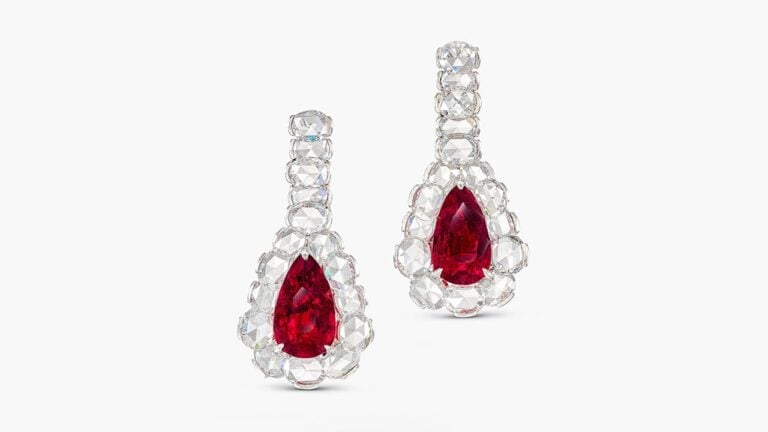
Ruby and Diamond Earrings to Headline Sotheby’s Hong Kong Auction
Lot will be on offer for $2.6 million at High Jewelry sale.