
RAPAPORT… The discovery of a new source-rock indicator for diamond
formation has the potential to help geologists locate and identify valuable
diamond deposits around the world, a study by the University of Alberta and De
Beers shows.
“The outcome of the project fundamentally changes our
understanding of where diamonds come from,” Thomas Stachel, a University of
Alberta geologist and the Canadian research chair for diamonds, was quoted as saying in an online article published by Phys.org. “[It] has the potential to cause diamond
companies to retool their approach to exploration.”
Geologists at Canada’s University of Alberta studied
a sample of 116 diamonds from De Beers’ Victor mine in Ontario. The goal was to
characterize the sample’s mineral inclusions and identify any that could be
age-dated using their isotopic compositions, which could serve as indicator
materials for kimberlite.
Of the stones tested, 99 showed garnet inclusions, a typical
indicator for diamonds. However, 85% of those garnet samples were found to be lherzolite,
a peridotitic rock that had previously been discovered around diamond areas,
but had been considered unimportant.
“This makes Victor the first significant diamond mine in the
world that extracts a predominantly lherzolite-derived diamond production,” the
study notes.
Lherzolite rock has been identified in other areas of
Canada, including Buffalo Head Hills in Alberta and the Saskatchewan region,
Tom Ormsby, head of external and corporate affairs for De Beers Canada, told Rapaport
News Tuesday. It is also found at mining sites such as Ellendale in Western
Australia and De Beers’ Venetia in South Africa, according to the study.
“In the long run, this could make a big difference in
diamond exploration,” Stachel explains.
The University of Alberta is also studying inclusions from De
Beers’ Snap Lake and Gahcho Kué mines in Canada that will enable them to
identify and separate “barren” lherzolite from the diamondiferous kind using
machine learning, Ormsby added.
Image: De Beers’ Victor mine. (De Beers)


Qatar Diamond Exchange to Collaborate with Italian Bourse
Parties signed MoU to extend connection among their members, broaden cooperation and advance commercial relationships.
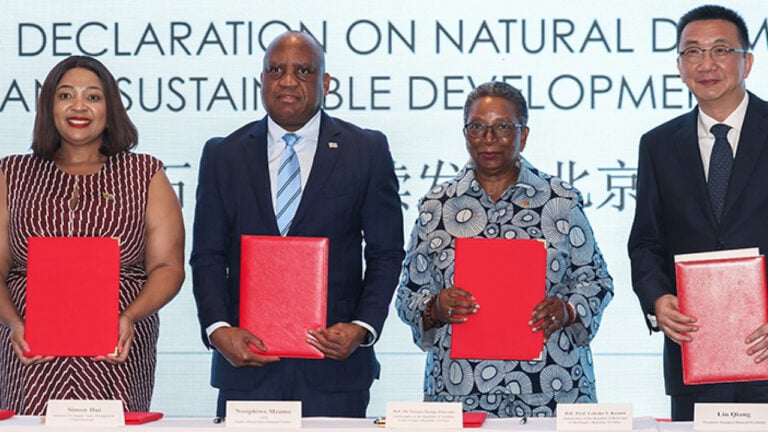
China Signs Deal to Reinvigorate Interest in Natural Diamonds
Shanghai Diamond Exchange hosts signing of Beijing Declaration, with government representatives from Botswana, Namibia and South Africa.

AI, Gen Z Are Hot Topics at AGS Conclave
This year’s edition is last to take place in September, as event returns to spring in 2027.