
RAPAPORT… The luxury jewelry and watch industries are set to recover gradually over the next four years, led by strong growth among Chinese consumers, according to McKinsey and Company.
“We expect demand to increase from younger consumers as well as in domestic markets amid continuing restrictions on international travel and the rise of domestic duty-free zones in China,” McKinsey said this week in a report, “State of Fashion: Watches and Jewellery.”
“Already the biggest regional market, accounting for 45% of global fine-jewelry sales and 50% for watches, sales in Asia are set to expand even further, with China leading the way,” it continued.
During the Covid-19 pandemic, global jewelry revenue declined 10% to 15%, while watch sales decreased between 25% and 30%, according to the report, which the consultancy firm compiled in partnership with The Business of Fashion.
The jewelry industry will grow 3% to 4% per year between now and 2025 to reach between $340 billion and $360 billion, McKinsey predicted. The watch sector will expand 1% to 3% annually over the same period, totaling $52 billion to $59 billion.
China will play a large role as consumers there continue to shop domestically. Sales of branded fine jewelry in Asia will increase 10% to 14% annually, and watch sales will grow up to 4% per year.
Meanwhile, the secondhand-watch market could prove to be a game changer for luxury brands, drawing in younger and more cost-conscious consumers. It will become the industry’s fastest-growing segment, reaching $29 billion to $32 billion in sales by 2025, McKinsey added.
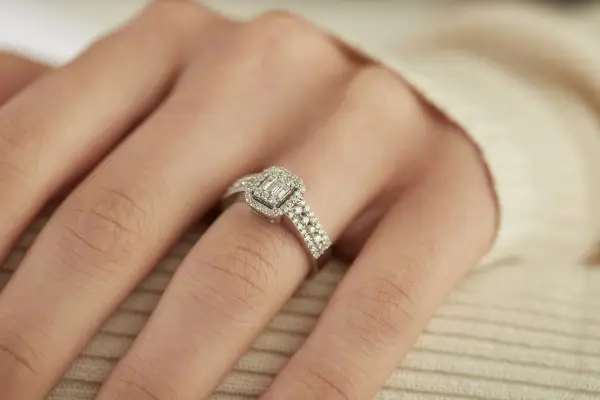
Image: A woman wearing a diamond ring. (Shutterstock)
Namibia Authorities Investigate Allegations About Corruption in Diamond Sector
Brilliant Star denies activist’s allegations about it; De Beers terminates company’s sight following separate review.
Shai Schnitzer Becomes Third Generation of Family to Head IDE
His grandfather, Moshe Schnitzer, and father, Shmuel Shnitzer, both served as president.
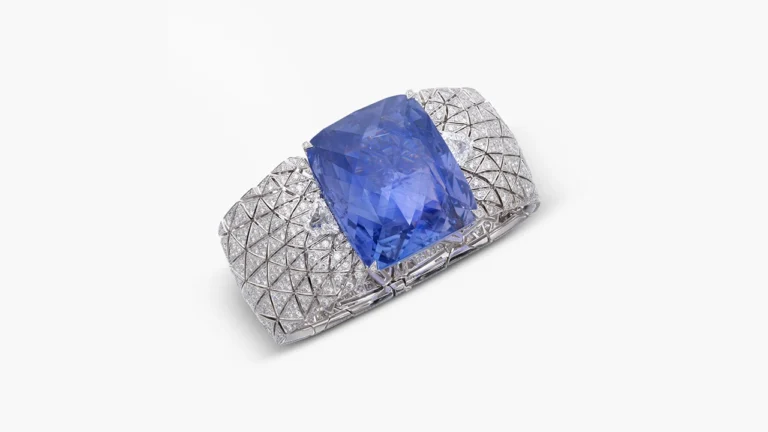
Romanov Sapphire Sails Past Estimate to Score $5M at Sotheby’s
Auction house originally predicted Cartier bracelet would bring in up to $2 million.