

RAPAPORT… Alrosa has introduced a provenance program that allows customers to trace diamonds back to their origin using nanotechnology.
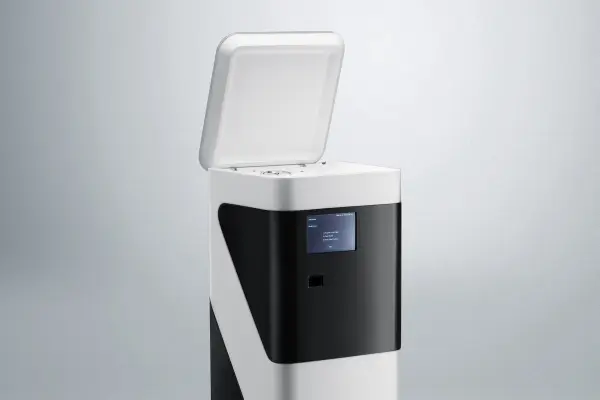
The Russian miner will place a permanent, noninvasive laser marking on rough and polished stones, which participants can “read” using a special scanning machine that Alrosa will provide, it said Tuesday. This will enable people along the supply chain to identify the goods as natural diamonds from Alrosa, and will let them retrieve detailed information on the stones’ history.
This is the first time anyone has used technology of this kind to trace diamonds for commercial purposes, Alrosa claimed. The company has started patent application processes in key diamond trading centers, including the US, China, Hong Kong, Belgium and India.
“With access to the full cycle of manufacturing, we have all the necessary information about our polished diamonds and the rough diamonds from which they were cut,” said Alrosa CEO Sergey Ivanov. “The laser nano-mark technology we have created allows these guarantees to be extended to the diamonds sold by our partners.”
The technology is currently available to business-to-business (B2B) clients. Alrosa plans to expand it to retail at a later stage.
The mark is a “three-dimensional code” that links to Alrosa’s provenance platform, offering a digital passport with details on the diamond’s origin and characteristics, as well as a unique identification number, a photo and video, and information on how it was cut, the company said.
It states the region of Russia in which the stone was extracted; the miner could consider including more precise origin information if there is demand for it, a spokesperson stated. Participants can also add personalized information such as the identity of the jeweler. Scanning the code takes less than a minute.
The miner’s method is “100% accurate” and makes an inscription further from the surface of the stone than do other technologies, it added. The nano-mark goes inside the crystal lattice, across the diamond’s atomic structure, making it invisible without a scanner, the company added.
Alrosa developed the technology with the help of scientists from the Russian Academy of Sciences, as well as the miner’s Research Geological Enterprise (NIGP) and the Yakutniproalmaz Institute.
Consumer surveys in the US and China indicate that traceability is an important factor for purchasers of diamonds, Alrosa noted.
Update, July 7, 2021: This article was been updated with extra information on the technology.
Image: The scanner for reading nano-marks (top); an example of an Alrosa diamond passport (bottom). (Alrosa)

Michael Hill Reports Sales Rise Across All Segments
Same-store revenue up in Canada, Australia and New Zealand.
Luk Fook Revenue Rises as Diamond-Jewelry Demand Improves
Group opens store in London, entering European market for first time.

91ct. Starlight Diamond Necklace to Headline Christie’s Shanghai
William Goldberg jewel carries high estimate of $2.7 million.