

When it comes to understanding the most important elements behind valuing a diamond, expert opinion can prove a cut above the rest.
The 4 C’s have long been the industry standard for determining the value of a diamond. But the characteristics of carat, color, clarity and cut are far from equal when it comes to valuation.
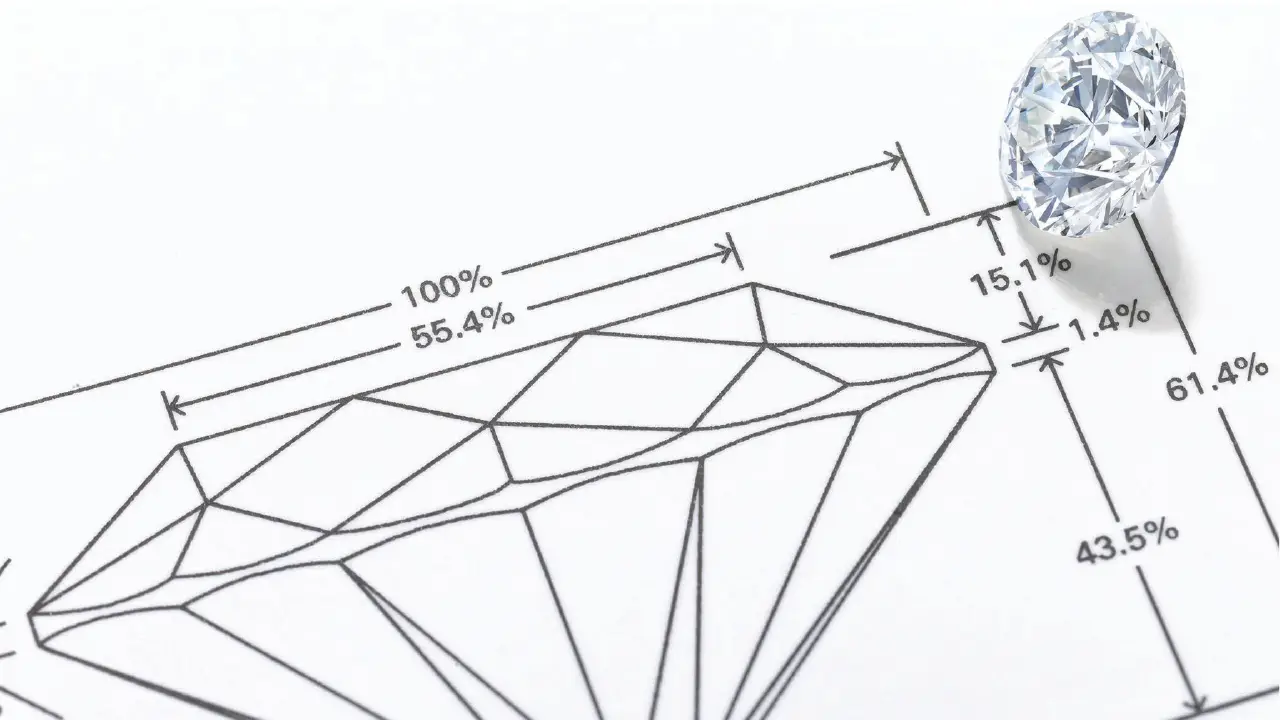
The first three C’s are fairly straightforward, referring to weight size, color purity and number of inclusions in a diamond. However, cut is a more nuanced characteristic, referring to the quality of proportions, symmetry and polish of a diamond. It ultimately has three primary effects on appearance. Cut impacts brilliance, the brightness which light reflects from the surface and inside the polished diamond. It affects fire, the dispersion of light into flashes of color. And it gives a diamond its scintillation, the sparkle it gives off when moved.
But cut can also add a lot more. “Good cut hides other flaws in the color and clarity of a diamond,” explained Bill Boyajian, a former president of the Gemological Institute of America (GIA) who is now an independent consultant to the industry. He believes that cut is the most important factor contributing to the value of a diamond: “Today, you can’t get away with cutting a poor stone.”
Good cut hides other flaws in the color and clarity of a diamond.
Bill Boyajian, former
president of the GIA
Exclusivity counts
The importance of a diamond’s cut grade has resulted in manufacturers constantly targeting a triple EX – excellent cut, polish and symmetry – grading. This has increased the supply of diamonds with the triple EX grading and actually diminished the exclusivity factor of those goods, according to David Wolf, president of Just Appraisers, a New York-based appraisal company. “Given that round diamonds have become fairly standardized and easy to find, large, more exclusive fancy shapes tend to hold their value better as they are more difficult to replicate or replace,” according to Wolf.
Ask an expert
There is a difference, however, when valuing a diamond for a consumer, because consumers are less knowledgeable about cut grade. As a result, they tend to emphasize carat size, color and clarity, while overlooking cut, Wolf explained.
That’s become especially evident as consumers have greater exposure to diamonds online and come to the jewelry store armed with prices and information, Boyajian noted. It’s up to the jeweler to explain the 4C’s so that the consumer doesn’t just rely on the grading report, he stressed. In that way jewelers can improve their margins and show their added value.
“The goal in presenting standardized and more accurate grading was always to better serve the consumer,” Boyajian said. “What the consumer doesn’t realize is that the stone they find online is not a representative of all goods on the market as it doesn’t present the subtleties found in each individual stone. That’s where the jeweler has to show they’re an expert. “So, ultimately, you still need a professional to buy a diamond.”
Image: IIDGR