

There’s an adage that if you don’t know jewelry, know your jeweler. It’s a common-sense statement for shoppers, and a poignant one for those working in jewelry stores: You must understand what you’re making and selling, and only industry-specific education can give you that confidence and savvy.
Gemologists know to look to schools and labs like the Gemological Institute of America (GIA), the Gemological Association of Great Britain (Gem-A), Gübelin, the Swiss Gemmological Institute (SSEF), and others for education in the science of gemstones and their treatments. Good appraisers, meanwhile, assess jewels by the criteria of professional appraisal groups and stay up to date on market prices to provide accurate replacement values for consumers and insurance companies.
Likewise, those at the bench and on the sales floor require knowledge sources of their own to do their jobs well. These two fields are arguably the most necessary positions to fill at fine-jewelry stores. How can the industry make that happen?
A good place to start, says Rich Youmans, is to tell America’s youth that professions in fine jewelry are true career options, and show them where to begin their jewelry journeys. “Jewelry careers involve art, business, science and metallurgy, and you get to work with people usually during some of the happiest moments of their lives,” says the publisher and vice president of communications for Manufacturing Jewelers & Suppliers of America (MJSA). “There’s a lot to sell on a career in jewelry. We just need to make people aware of it.”
Bench education
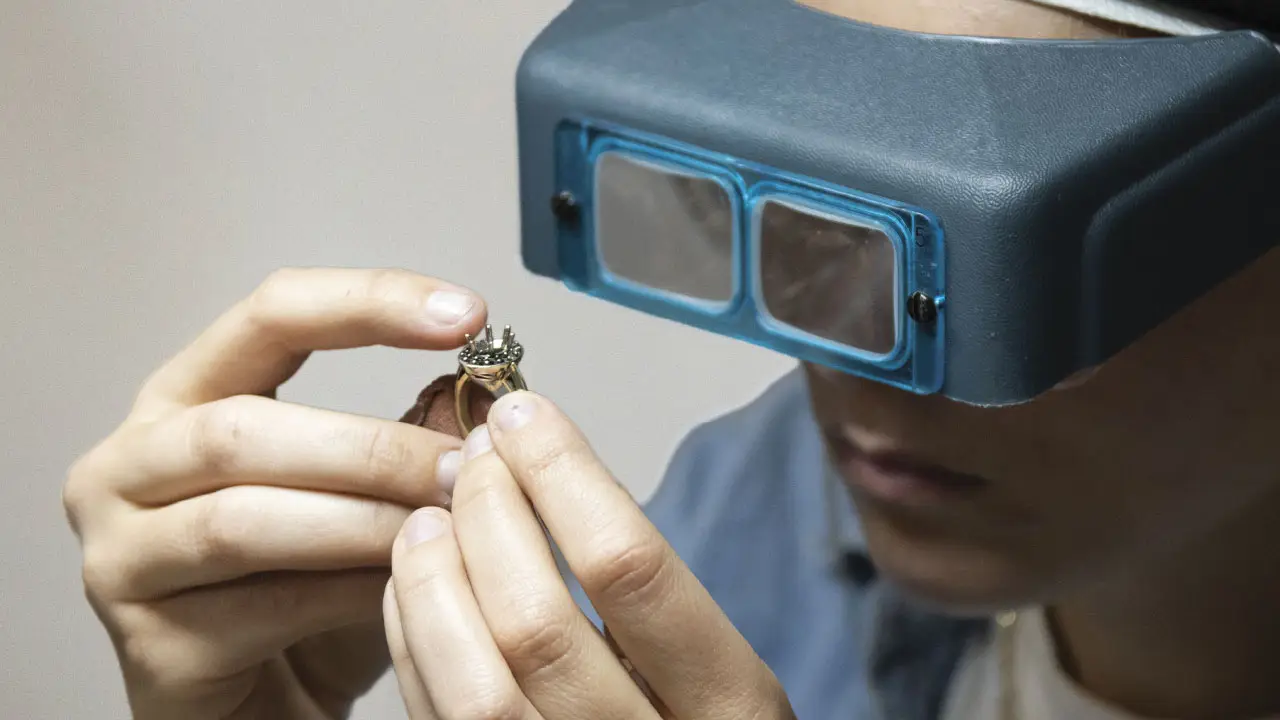
There are many places to learn bench jeweler skills and techniques, among them the Texas Institute of Jewelry Technology in Paris, Texas, and the New Approach School for Jewelers in Arrington, Tennessee. There’s also the GIA’s on-campus Graduate Jeweler program in Carlsbad, California, and – as of this October – New York. But most students still require training after graduation, so the next step is an apprenticeship to learn the finer points of fabrication and casting.
In 2023, MJSA unveiled its Mentor & Apprenticeship Program, a 50-week curriculum to help professional jewelers onboard and train bench workers. The program covers core bench skills such as proper tool knowledge and manufacturing techniques, and students can access more than 200 online technical videos and resources to aid their learning. Student apprentices work with a jeweler near their school to earn certification, a process that includes completing 18 projects.
Once they’ve done that, MJSA grants a certificate of completion. So does the US Department of Labor’s apprenticeship office, because the program is registered with the government, making participants eligible for state and federal funding through grants, tax credits, and tuition support. The program’s first graduate, Grace Barden – who earned a BFA in jewelry and metalsmithing from the University of Wisconsin, Milwaukee – officially joined the workforce this spring, taking a job at a jewelry store on the east coast.
Another possible post-apprenticeship path is to seek Bench Professional Certification from Jewelers of America (JA), which joined forces with MJSA in spring 2025 to unite the manufacturing and retail sectors. The JA bench program builds on the knowledge from the MJSA program, notes Youmans, who also serves as the MJSA Education Foundation’s executive director.
Five bench jeweler schools to know
- Texas Institute of Jewelry Technology at Paris Junior College – Paris, Texas
- New Approach School for Jewelers – Arrington, Tennessee
- North Bennett Street School – Boston, Massachusetts
- Portland Jewelry Academy – Portland, Oregon
- Graduate Jeweler and Jewelry Design & Technology courses – GIA campuses
Sales-associate programs
There are a few behemoths in this space for the gem and jewelry industry. Here are their educational options.
JA has four levels of certification for its members in this field: two for sales professionals, and two for management professionals. All certify that the recipient’s jewelry knowledge and proficiency meet national standards.
JA members can also access the webinars in the group’s online Knowledge Vault, and the interactive workshops of its Emerging Jewelers Accelerator Program. Non-members, meanwhile, can view educational sessions for new jewelry businesses, as well as other free webinars on hot topics and industry issues. There are low-cost learning workshops around the country for members and non-members alike, often in conjunction with state-level jewelry associations. However, only members can view the recordings of those webinars and events afterward.
American Gem Society (AGS)
The AGS has a wide range of courses and accreditations to help members stay current in sales, management, appraisal skills, and other industry aspects. Many of these initiatives require members to recertify annually to retain their credentials. The AGS recently updated many of its online courses to a fresher interactive format that includes video, says Wade Abel, the group’s director of education and gemology.
Monthly webinars also take place, and there are the annual Confluence virtual conference and in-person Conclave. While Conclave is for members only and requires paid registration, non-members can participate in the virtual events for a fee. Then there’s AGS Pro, an on-demand learning platform for all members, not just credentialed ones.
“AGS Pro has all of the group’s webinars, articles and videos, [which] range from beginner to advanced topics,” says Abel. “We want to provide education for anybody at any level of their jewelry career.”
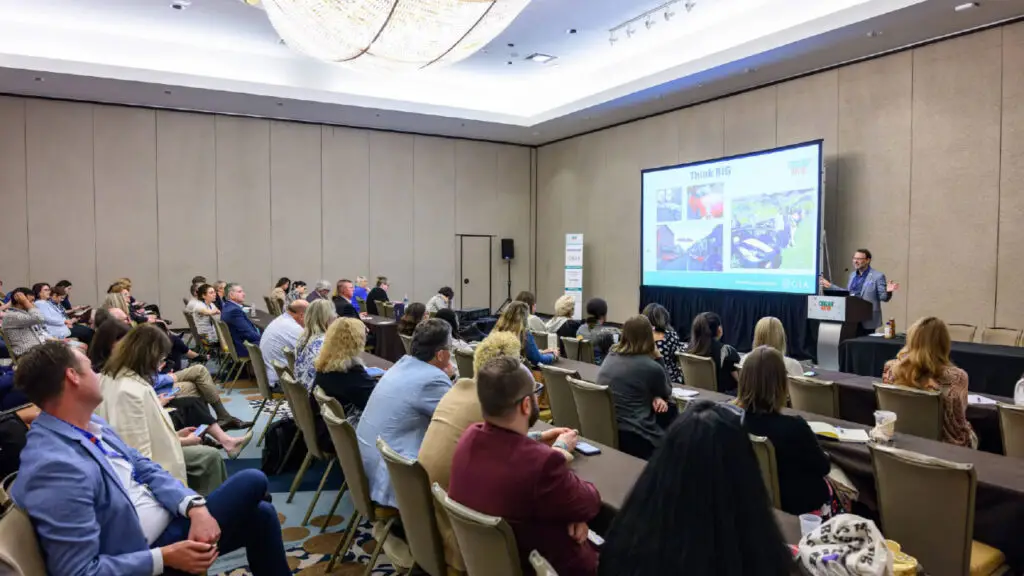
Jewelry Sales Academy (JSA)
This virtual academy debuted in 2022 under founder and CEO William Jones IV. While serving as vice president of operations for retailer Sissy’s Log Cabin, he started recording himself explaining training basics, such as how to display inventory by price point. The videos became a hit, and Jones – now the jewelry chain’s chief operating officer – opened JSA for other retailers to use, complete with customized store assets and more than 1,000 videos. To date, users have completed more than 30,000 lessons.
More recently, JSA added JewelLink, a customer-relationship platform that lives on sales associates’ phones in app form. “JewelLink uses AI tools to show associates who they should clientele to, provides an overview of their sales history with different clients, recognizes patterns in selling, has inventory photos, shows sales goals and analytics, and has all of your communication, from your website to Facebook to Instagram,” says Jones. “It really teaches people how to work in jewelry and gives them a system of tools to do so.”
Mentoring women leaders
This past March, 35 members of the Women’s Jewelry Association (WJA) joined a six-month mentorship program to improve their business skills, part of a partnership with US nonprofit Mentoro.
The initiative offers “access to leaders not only within the jewelry industry, but in other adjacent industries where the functional expertise is critical for women in our industry,” explains Gabrielle Grazi, president and executive chair of the WJA, as well as CEO of Harry Ritchie’s Jewelers. “We are bringing mentors and mentees together in a structured way.”
Each participant has her own mentor, and they meet three times in person to get to know each other. The mentors – most of whom are mid-level professionals and C-suite executives – also host a series of workshops both virtually and face-to-face.
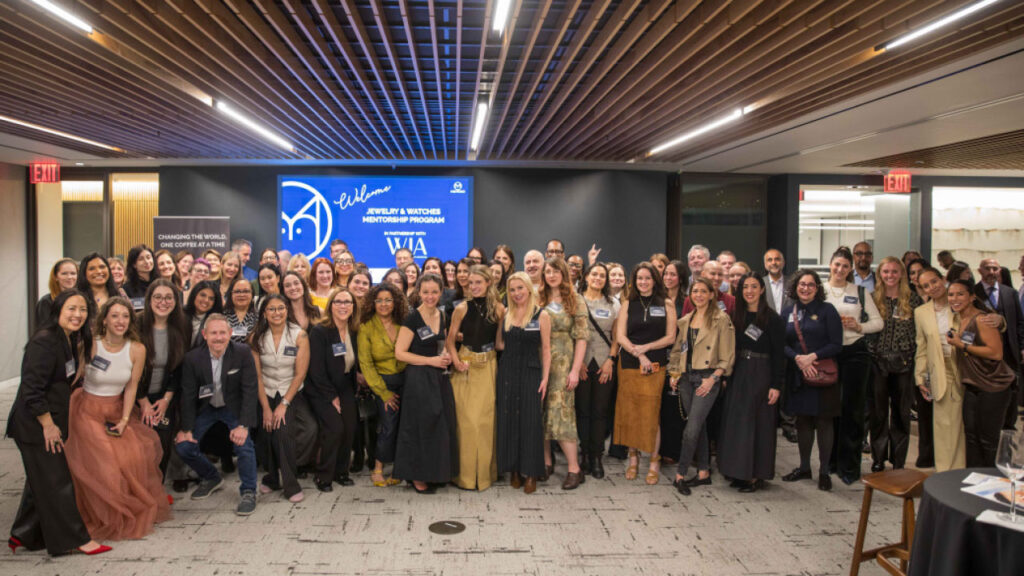
“We decided that the program would be best to launch in the [New York] tri-state area, because that is where our largest membership audience is at the WJA,” says Grazi. It’s different than the mentoring events the GIA has hosted in New York with mentors from the WJA New York Metro chapter. Those will continue, but they are geared toward students; Mentoro events connect jewelry professionals with people looking for guidance in leadership and business skills, negotiation, and financial literacy.
“Those things are lacking for our leaders who work in small businesses,” Grazi says. “I’ve heard this time and time again over the years from our members. That’s why this program with Mentoro is important, because we’re able to bring the outside in…. We have leaders [with] experience in marketing and merchandising, in finance, to be able to help our designers [who are] looking to build and scale their businesses.”
Diamond and gemstone knowledge
For those who want to sell gems and jewelry confidently without taking deep dives into graduate gemology or jewelry fabrication courses, here are some of the top options.
GIA Applied Jewelry Professional (AJP) program
The courses in the AJP aim to help associates learn the vocabulary and confidence they need to guide shoppers through a range of jewels. These courses – “Diamond Essentials,” “Colored Stone Essentials,” and “Jewelry Essentials” – are a lighter touch on industry knowledge than the GIA’s Graduate Gemology and Jewelry Arts programs. Plus, a five-day in-person AJP edition is now available at the institute’s campuses worldwide.
The GIA’s on-demand NextGem courses are an even more foundational option for new retail associates and include “Diamond Basics” and “Colored Stone Basics.” The new “Jewelry Basics” course touches down in August.
Diamond Council of America (DCA)
The interactive online courses from the JA-affiliated DCA offer “quality, affordable distance education that enhances associates’ ability to sell fine jewelry with expertise, integrity and professionalism,” according to the program. Available in diamonds, colored gemstones, and fine-jewelry sales, the courses award students a diploma at the end, after which they can go on to pursue JA Sales Professional certification.
This online course from the Pearl Association of America features units on the history and major types of cultured pearls, pearl valuation and grading, and other subjects. It’s been updated twice since its debut at the end of 2016, with new photos and grading comparisons. Upward of 100,000 students have taken the course, which continues to be free of charge thanks to the association’s mission of education and creating more pearl enthusiasts around the globe.
Diamond Learning Center (DLC)
The Natural Diamond Council (NDC) unveiled this educational resource in April 2025, both on its website and at the separate diamondlearningcenter.org site. The goal: to help sales associates talk about natural diamonds confidently and accurately at the counter. Besides being free, it has several quick-study options, including four “micro modules” that users can complete in under two hours for a certificate of achievement, and videos that range from 30 seconds to just under two minutes. There’s also its Train the Trainer section, which offers a structured guide to training sales staff. Additional resources and FAQs exist for further enlightenment.
“Consumers gather so much more information online before they even enter a store,” explains Grace Isley, the NDC’s head of retail strategy and partnerships. “Once they are in stores, it’s up to us to convey the facts of natural diamonds to instill confidence in the consumer and make sure they’re making informed decisions.”
Scholarships aplenty
A look at the funding opportunities for students and industry employees
Jewelers of America:
- The Seymour & Evelyn Holtzman Bench Scholarship in partnership with Chicago jeweler CD Peacock, which aims to bring new talent into the bench-jeweler profession by providing tuition aid for students enrolled in an accredited bench-jeweler or metalsmith education program.
- The Nina Pugliese Memorial Scholarship, in partnership with Henne Jewelers of Pittsburgh, Pennsylvania. Pugliese, who worked at Henne for four decades, exemplified the highest level of professionalism and values. Applicants for this scholarship receive funds to attend a jewelry school or program.
- Education for JA member-company employees at the American Gem Society, Diamond Council of America, Gemological Institute of America, JA Bench Professional Certification program, or National Association of Jewelry Appraisers (NAJA).
Women’s Jewelry Association (WJA) Foundation:
- The Stuller Bench Jeweler Scholarship gives recipients the opportunity to attend workshops and training programs at jewelry manufacturer Stuller’s headquarters in Lafayette, Louisiana.
- The Cindy Edelstein Jewelry Design Scholarship honors one of the industry’s most respected advocates by providing $5,000 toward business or design coursework.
- The Hedda Schupak-Baum Memorial Media & Communications Scholarship honors an industry editorial legend and pillar of professionalism by giving new industry reporters $7,500 toward coursework in the media field.
- The Helene Fortunoff Retail Leadership Scholarship honors the matriarch of the Fortunoff retail family and her unwavering commitment to growth for women in the industry, offering a $7,500 scholarship for a retail professional who wishes to develop her management skills.
- The WJA-Gabriel Love Foundation Student Scholarship, a partnership with New York-based jeweler Gabriel & Co., awards a $5,000 sum to a deserving female student enrolled in a jewelry, metalsmithing or watch program at an accredited college, university, or training school.
- General student scholarships for women studying design, gemology, bench jewelry, watchmaking, appraisal, retail, and other related occupations.
More information is available at womensjewelryassociation.com/scholarships. Members are also eligible for grants.
American Gem Society:
- The Beatrice Shipley scholarship in honor of Beatrice Shipley, wife of AGS and GIA founder Robert Shipley, provides one candidate with a full scholarship to AGS education courses to earn the AGS Certified Gemologist title and full tuition for the GIA Graduate Gemologist program.
- The AGS Member Scholarship for GIA Education, which offers lab classes in diamond grading and gem identification.
- Two scholarships from the AGS Young Titleholders community for young industry professionals: one to attend AGS Conclave, and another to attend the AGS Way Course, which is a required step in the organization’s jeweler and supplier credential programs.
- The AGS Women in Leadership Scholarship provides one female candidate with complimentary registration to Conclave, as well as a $500 gift card to use toward travel.
MJSA Education Foundation scholarships:
MJSA grants several Future of Jewelry Making scholarships each year to students who are “enrolled in a jewelry program and who intend to pursue a career in the jewelry industry and can demonstrate financial need,” according to the organization. For more information: mjsa.org/career-connections/mjsa-scholarships.
Main image: A student at the Gemological Institute of America. (GIA)