
RAPAPORT… Business in Hong Kong is plodding along, but has been much slower for the past quarter than in previous years. The few months leading up to Christmas are usually the most active, but both retail business and the export of diamond jewelry have not recovered from the low demand since June.
It appears that the recent spate of initial public offerings (IPOs) for some large Mainland Chinese banks has siphoned most of the liquidity in Hong Kong. The Industrial and Commercial Bank of China, the largest bank in China, raised $19.1 billion in what was the world’s largest IPO, soon to be overshadowed by the planned Time Warner IPO, which is aiming to raise $45 billion.
What is astounding is that although the amount raised by the bank IPO was $19.1 billion, this only represents, at best, 20 percent of the money that was tied up during the time of the offer, which ran for about 10 to 15 days.
Investing First
Investors are hooked on this method of investing, as they see sure profits, if they get any allotment of shares. Others are standing by the wayside, money in hand, waiting to pick up shares during the opening days of trading, and make a quick profit in a matter of days.
Hong Kong people are very sensitive to any chance to make easy money, and there is enough liquidity around to fund investments, but this also means that spending on frivolities, such as diamonds, is shelved until later.
For the moment, the Hong Kong stock index is running at all-time highs and could be pushed even further. But profits have been made and there is a constant demand for large, better-color stones all the time, and this is further fueled by the huge shortage of such merchandise. Three carat and larger are the main demand, but there seems to be a move toward 2-caraters down to 1.50-caraters. Carat sizes remain the mainstay of the larger sizes and demand is steady.
Changing Relationship
The recent easing of tensions between Israel and Lebanon has seen more buyers traveling to Tel Aviv after staying away for some months. Israel has been the boon and bane to the Hong Kong diamond market. Hong Kong has always been the second-biggest customer for Israeli diamond manufacturers, and close relationships have developed over the years with most of the larger, local diamond merchants — but this has changed in recent years.
It started with visiting salesmen coming to Hong Kong on ever-increasing trips and selling, not only to the established merchants, but, eventually, to even the smallest retailer. This Israeli practice of selling down to the retail level — and at prices that gradually narrowed down to being at par — eliminated the visible difference between a wholesaler and a retailer.
Wholesalers, although not happy with this incursion into their turf, did not raise too much heat as they still had in their control their main source of business: selling to other countries in the area. China, being at their doorstep, was their exclusive market. But the market has opened up with the help of the Hong Kong jewelry shows, which put buyers from these countries in direct contact with diamond manufacturers from the cutting centers.
More and more Israeli firms have opened offices in Hong Kong to offer direct services to overseas customers, thereby replacing the role of the Hong Kong diamond wholesalers. So much so, in fact, that many old Hong Kong diamantaires have pulled up stakes and moved out of the trade. Those that still remain feel that it is only a matter of time before they, too, are shoved out. For local retailers, however, the competition has meant getting diamonds at prices closer to the source and, with increased competition among the sellers, they sit in the enviable position of being spoiled for choice.
It is unfair to say that only Israeli diamantaires have caused the shift in the structure of the diamond market in Hong Kong. Indian suppliers have also been a factor in this, and even to a greater extent, because of the long credit they are able to offer.
The new kids on the block are the Belgians. Although Belgian companies have an even longer trade relationship with the Hong Kong diamond community, they were satisfied with being the suppliers from afar. But, in recent years, they, too, had to come into Hong Kong and vie for the direct consumers and buyers from the other Asian markets.
The big bone of contention is the huge Chinese market, even though it is just now opening up, offering lower taxes to import goods directly. Hong Kong, however, will remain the focal point for diamond transactions for at least a good many years — at least until the Chinese Mainland opens up completely and lifts, not only taxes, but monetary restrictions as well.
The Marketplace
• 3 to 5 carats in virtually all colors and clarities and D-F colors are in very hot demand. Good makes are in demand. Demand for larger sizes is sporadic. It is not easy to find buyers willing to invest in more expensive stones.
• Demand is great for 1-carat sizes in a wide range of colors and clarities. Make tolerance is also wide.
• Strong sizes — 1.30+, 1.70+, 2.20+, 2.60+ — are being sought. Slight premiums are possible, but not much.
• Dossiers from 0.50 and larger are moving well. Make is important, but not crucial, if price reflects this.
• Pointers below 0.50 are in much slower demand.
• Indian smalls are slow, reflecting lower demand from jewelry manufacturers.


What Does Love Look Like? Not Out-of-Touch Lab-Grown Messaging
The natural-diamond industry won’t attract couples by telling them synthetics devalue their relationship.

Bridal Shopping in the Age of AI
Couples are researching online, but they still want to make the ring purchase personal – and that creates opportunities.
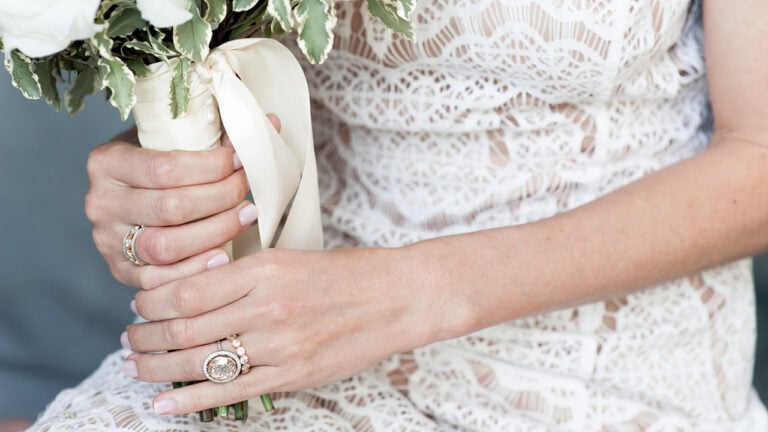
Six Brands Serving Fresh Engagement-Ring Designs
Whether it’s hand-sculpted organic gold or reimagined divorce jewels, these designers are setting trends that resonate with bridal shoppers.