
RAPAPORT… For most jewelers, this time of the year is supposed to be the busiest — preparing for Christmas merchandising, previewing, stocking and planning for advertising. “Those days are long gone,” said Yasuhiro Fujimura, a market observer. “Today, the market is very quiet. Jewelers start stocking for Christmas as late as possible, closer to Christmas day.” In fact, jewelers are pinpointing two weekends before Christmas — December 15 through 16 and December 22 through 24 — for all holiday jewelry shopping. “Except for these two weekends, there’s nothing for jewelers to look forward to this Christmas season,” concluded Fujimura.
Despite the general understanding that the Christmas spirit connotes goodwill exchanges and gift giving, Fujimura said a recent survey revealed that the Japanese are buying more for themselves during this season than for someone else. “The trend was obscure a few years ago, but now it has become clearer,” said Fujimura. One reason may be that the timing of the holiday coincides with companies paying bonuses, so working women’s pocketbooks are heavier with extra money to spend on themselves. Another reason may be that the Diamond Trading Company’s (DTC) various campaigns, such as the one for the “Right Hand Ring,” really reached the increased number of women in the workforce and helped them buy into the idea of reflecting on their accomplishments in the year gone by and rewarding themselves with a jewelry purchase. Whatever the reason, self-purchases are on the increase, according to many dealers.
On the Other Hand
Meanwhile, young men’s work ethics have changed. Whereas young men a generation ago took permanent jobs right after finishing school, many of today’s young men prefer to work on a temporary or part-time basis. That is an idea that was shunned not too long ago. As a result, “young men end up not having enough money,” said Fujimura. “At the same time, they feel they have to spend on new electronic gadgets and cell phones because that industry comes up with new models each year. So, in the end, they have no money to spend on Christmas gifts.”
Looking back to the 1990s when young men lined up at Ginza’s Tiffany & Co. store to buy something nice for their girlfriends for Christmas, Fujimura is critical of the current jewelry industry. “Those were the excessive years and they got a lot of publicity. The long lines made headlines and TV cameras recorded the scenes at the jewelry store because the crowds were unusual. But all the jewelry industry did was sit idle. It did not take advantage of the phenomenon and make [holiday jewelry shopping] into a long-lasting consumer habit. Even today, electronics companies spend more on advertisements than the jewelry industry does,” said Fujimura.
Takenobu Ishikawa of Bambi Jewelry Co., Ltd. agreed that the jewelry industry’s Christmas excitement has declined steadily over the past decade, and predicted that this year’s outlook would be even bleaker. “Fortunately, we are busy,” said Ishikawa. Bambi manufactures and wholesales jewelry made of stainless steel and its product line – which includes rings, pendants and bracelets — is priced from $40 to $180 [5,000 to 20,000 yen] at retail. “At these price levels, people are still willing to buy for Christmas or other occasions,” said Ishikawa.
As a subsidiary of Bambi Watch Band Co., Ltd., a manufacturer and supplier of stainless steel watchbands for decades, Bambi has an advantage over other jewelry manufacturers because it works in stainless steel, which is a relatively inexpensive jewelry material compared to gold and platinum.
Changing Times
While Christmas is not exactly the bridal season in Japan — spring and fall are — December is bonus season, so that is when people buy big-ticket items, including engagement rings. Bambi is doing well with bridal items right now. The company’s engagement rings sell for about $1,800 [about 200,000 yen] and wedding bands at $900 to $1,800 [100,000 to 200,000 yen] at retail. “Many engaged couples skip engagement rings these days,” said Ishikawa. “Rather than spend the money on engagement rings, they spend more on better wedding bands.” High-quality wedding bands from Germany and Switzerland are doing well.
Engagement rings were once the staple of the diamond industry, but with the declining population and the decision by young people to pass on engagement rings, the impact is felt on the engagement ring industry. “The engagement business is the better part of the industry. There will always be people getting married. The fashion jewelry is suffering from worse drops,” said Ishikawa.
In part, Ishikawa blames the lack of interest on the steep price hikes of diamonds and precious metals because the metals are so expensive that jewelers are unable to produce the kind of pieces that consumers desire.
“So far we have been lucky, but with the country’s population shrinking, it is only a matter of time before we need to come up with something else to keep us going,” said Ishikawa.
The Marketplace
• Prices of 4/4 grainers are firming up. Demand for 4/4 is not that strong but goods are becoming scarce.
• Foreigners are buying large stones of 5 to 10 carats but Japanese demand for such stones is slow.
• Dealers favor fancy shapes as round brilliants have gone up in prices.
• Smaller than 1-carat pointers continue to be weak, as bridal market is quiet.
• Except for high color and high qualities, demand for melees and smalls is weak.


What Does Love Look Like? Not Out-of-Touch Lab-Grown Messaging
The natural-diamond industry won’t attract couples by telling them synthetics devalue their relationship.

Bridal Shopping in the Age of AI
Couples are researching online, but they still want to make the ring purchase personal – and that creates opportunities.
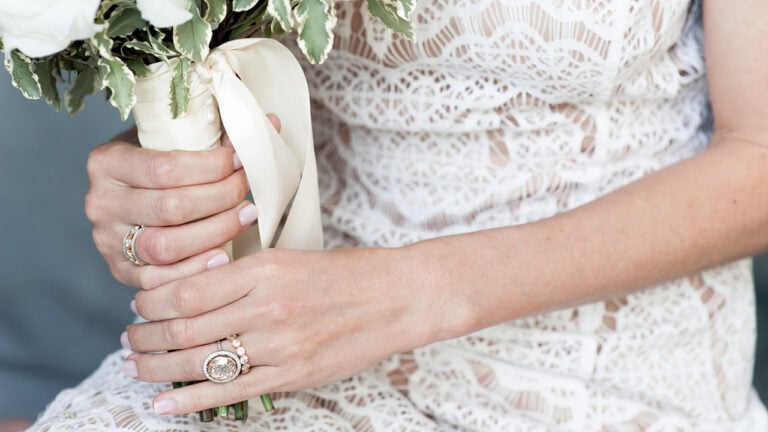
Six Brands Serving Fresh Engagement-Ring Designs
Whether it’s hand-sculpted organic gold or reimagined divorce jewels, these designers are setting trends that resonate with bridal shoppers.