

RAPAPORT… During 2009’s economic turmoil, the diamond industry tried to promote diamonds as the best friend of investors, as well as girls. But unlike gold, the stones seem to have failed to win either hearts or money. This failure was confirmed by Fyodor Andreev, president of ALROSA. Speaking at the three-day “Russian Forum 2010” held in Moscow February 3 to 5, he said, “Attempts to create funds out of diamonds that would be able to protect money were unsuccessful.
Many in the industry agree with this view, saying diamonds are difficult to position as an investment because they are not traded in any commodity market, as are gold and oil. In addition, Russia has no laws in place to regulate how securities can be based on diamonds.
In spring 2009, ALROSA and Leader, a Russian asset-management company, announced their plan to promote polished diamonds as an investment and they started polishing diamonds suitable for this purpose. Meanwhile, Alfa Capital, a Russian investment company, announced its own plans to set up a diamond investment fund. However, neither of the projects came to fruition.
According to Andreev, ALROSA’s sales to Gokhran, Russia’s state treasury, were the only example of a successful investment in diamonds. “According to our estimates, the government has already earned 5 percent,” he said. Gokhran purchased almost $1 billion worth of rough diamonds from ALROSA in 2009. Neither side would disclose the exact price at which diamonds were purchased throughout the year but, as rough prices continue to grow, the stockpiled parcels are increasing in value.
Rough Speculation
With rough prices growing slowly, but steadily, there are concerns that the increase is being stimulated by speculation and not by healthy demand. “There’s a strong feeling of speculation in the market,” said Alex Popov, the president of the Moscow Diamond Bourse. And while dealers can profit from the price hike, manufacturers are seeing their profit margins shrink. “The prices are very high in the secondary market; sometimes, it’s more profitable to resell a stone than to polish it,” admitted Valery Morozov, director general of Ruis Diamonds, owned by Lev Leviev.
Many manufacturers say the demand is heightened by Indian companies, who are once again getting low-interest loans backed by their government. Talk about a new rough “price bubble” has been circulating since late 2009, with both ALROSA and Kristall Smolensk, the country’s largest manufacturer, expressing concern. The fear is that if the bubble bursts, it will undermine the fragile recovery of both the global economy and the worldwide diamond industry.
Polished Sales
Polished sales have been picking up since late 2009, but they are still a far cry from previous years. “If the global diamond market fell around 50 percent in 2009, the Russian market fell 70 percent,” Valery Bogomolov, the head of the Russian Diamond Manufacturers Association, told Interfax news agency. He said only $330 million worth of polished diamonds were produced in Russia in 2009, against $1.2 billion in 2006 to 2007. Manufacturers and dealers say it’s still unclear if there will be enough jewelry sales to push the demand for gems. “There’s definitely more liquidity in the market, and prices are growing in general,” said Morozov. But Rajesh Gandi, chief executive officer (CEO) of Choron Diamonds, said he “expects 2010 to be very slow because people still have little disposable income.”
Staying Afloat
Russia produced 38 percent fewer gold jewelry items in 2009 than in 2008, according to the country’s Assay Chamber. The chamber doesn’t make separate calculations for diamond jewelry but, according to various estimates, the production of diamond jewelry fell by 30 percent to 50 percent. “Most wholesalers want items with semiprecious stones or no stones at all, while the sales of luxury jewelry have fallen slightly,” said Vyacheslav Tikhonov, from Moscow-based Almaz-Holding.
“Many companies shifted to producing cheaper silver items because they lacked working assets and it would be difficult for them to go back,” said Fyodor Poludenny, deputy director of Estet, a jewelry company. But, said Popov, “Those companies who could afford to create new collections and present a wide variety did well in 2009.”
Doing well in 2009 required either having good turnover and a well-developed retail network, or being backed by government or private investors. Jewelry makers and manufacturers find it more difficult to borrow money in Russia than in other countries because Russian banks do not take diamonds and jewelry items as collateral on loans. In addition, the interest rates are two or even three times higher than in Europe and the U.S.
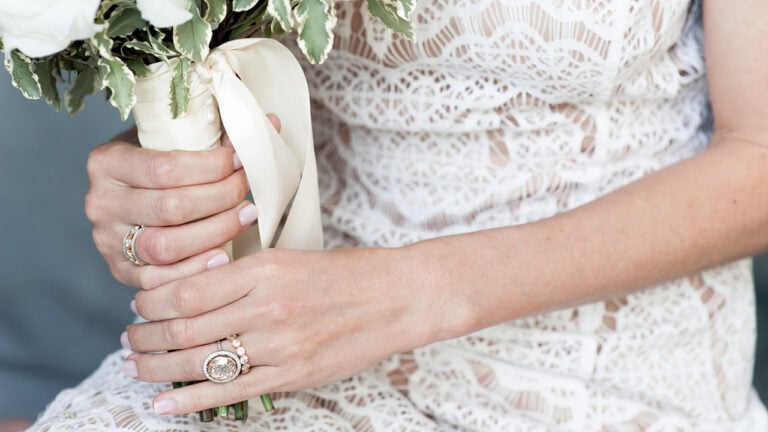
Wedding rings may be the only piece of jewelry that has seen stable sales despite the crisis. The engagement rings have yet to enjoy widespread popularity, although the demand for them is growing.
Many in the industry agree with this view, saying diamonds are difficult to position as an investment because they are not traded in any commodity market, as are gold and oil. In addition, Russia has no laws in place to regulate how securities can be based on diamonds.
In spring 2009, ALROSA and Leader, a Russian asset-management company, announced their plan to promote polished diamonds as an investment and they started polishing diamonds suitable for this purpose. Meanwhile, Alfa Capital, a Russian investment company, announced its own plans to set up a diamond investment fund. However, neither of the projects came to fruition.
According to Andreev, ALROSA’s sales to Gokhran, Russia’s state treasury, were the only example of a successful investment in diamonds. “According to our estimates, the government has already earned 5 percent,” he said. Gokhran purchased almost $1 billion worth of rough diamonds from ALROSA in 2009. Neither side would disclose the exact price at which diamonds were purchased throughout the year but, as rough prices continue to grow, the stockpiled parcels are increasing in value.
Rough Speculation
With rough prices growing slowly, but steadily, there are concerns that the increase is being stimulated by speculation and not by healthy demand. “There’s a strong feeling of speculation in the market,” said Alex Popov, the president of the Moscow Diamond Bourse. And while dealers can profit from the price hike, manufacturers are seeing their profit margins shrink. “The prices are very high in the secondary market; sometimes, it’s more profitable to resell a stone than to polish it,” admitted Valery Morozov, director general of Ruis Diamonds, owned by Lev Leviev.
Many manufacturers say the demand is heightened by Indian companies, who are once again getting low-interest loans backed by their government. Talk about a new rough “price bubble” has been circulating since late 2009, with both ALROSA and Kristall Smolensk, the country’s largest manufacturer, expressing concern. The fear is that if the bubble bursts, it will undermine the fragile recovery of both the global economy and the worldwide diamond industry.
Polished Sales
Polished sales have been picking up since late 2009, but they are still a far cry from previous years. “If the global diamond market fell around 50 percent in 2009, the Russian market fell 70 percent,” Valery Bogomolov, the head of the Russian Diamond Manufacturers Association, told Interfax news agency. He said only $330 million worth of polished diamonds were produced in Russia in 2009, against $1.2 billion in 2006 to 2007. Manufacturers and dealers say it’s still unclear if there will be enough jewelry sales to push the demand for gems. “There’s definitely more liquidity in the market, and prices are growing in general,” said Morozov. But Rajesh Gandi, chief executive officer (CEO) of Choron Diamonds, said he “expects 2010 to be very slow because people still have little disposable income.”
Staying Afloat
Russia produced 38 percent fewer gold jewelry items in 2009 than in 2008, according to the country’s Assay Chamber. The chamber doesn’t make separate calculations for diamond jewelry but, according to various estimates, the production of diamond jewelry fell by 30 percent to 50 percent. “Most wholesalers want items with semiprecious stones or no stones at all, while the sales of luxury jewelry have fallen slightly,” said Vyacheslav Tikhonov, from Moscow-based Almaz-Holding.
“Many companies shifted to producing cheaper silver items because they lacked working assets and it would be difficult for them to go back,” said Fyodor Poludenny, deputy director of Estet, a jewelry company. But, said Popov, “Those companies who could afford to create new collections and present a wide variety did well in 2009.”
Doing well in 2009 required either having good turnover and a well-developed retail network, or being backed by government or private investors. Jewelry makers and manufacturers find it more difficult to borrow money in Russia than in other countries because Russian banks do not take diamonds and jewelry items as collateral on loans. In addition, the interest rates are two or even three times higher than in Europe and the U.S.
Wedding rings may be the only piece of jewelry that has seen stable sales despite the crisis. The engagement rings have yet to enjoy widespread popularity, although the demand for them is growing.
The Marketplace
- Standard and Poor’s (S&P) reinstated ALROSA’s B+ long-term corporate credit rating.
- The greatest demand is for jewelry with tiny diamonds surrounding pearls or semiprecious stones.
- For jewelry makers, the best-selling diamonds are 0.3 to 0.5 carat, followed by 1 to 3 carats, which are usually bought to fill specific orders.
- Demand remains strong among private buyers for certified stones with good characteristics weighing 1 carat and more.