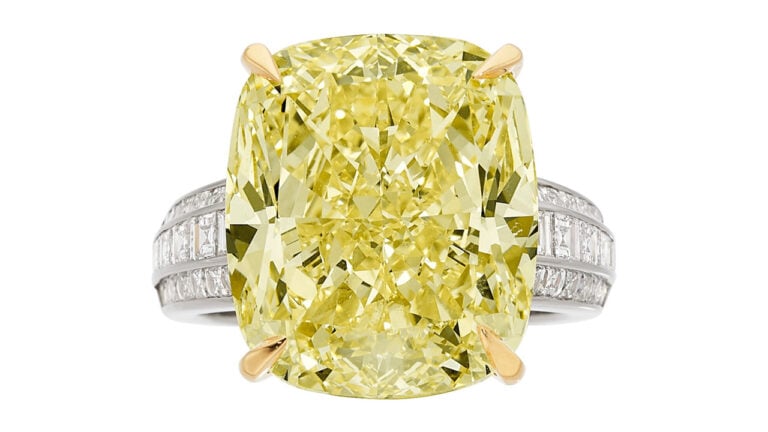
Large diamonds in low colors are a hot market in the US. The Rapaport Intelligence Report asks why.
The trend represents an important shift in how higher-end consumers perceive diamonds. Those seeking 2.50-carat and larger goods are increasingly asking for J grade or lower, and sometimes a long way down the color scale, jewelers and dealers report.
The main impetus, sellers say, is consumers’ preference to show off that their diamond is natural. Lab-grown diamonds overwhelmingly have high color and clarity. A D-flawless is no longer an obvious flex in an era in which, according to The Knot, 61% of American couples are opting for synthetics when buying engagement rings.
The latest issue of the Rapaport Intelligence Report, formerly the Rapaport Research Report, investigates whether this development is visible in retail and wholesale data, including in exclusive Rapaport figures on pricing and trade flows. It also looks into who’s buying these diamonds, how celebrities such as Taylor Swift influenced the movement, why stones with these colors are especially strong in antique cuts, and how the topic relates to De Beers’ campaign promoting Desert diamonds.
The diamond industry has started to show signs of recovery in certain areas. Goods in 2-carat and larger sizes were already relatively solid, outperforming smaller stones over the past year, especially in long fancy shapes. This report pinpoints a specific area where jewelers have enjoyed growth and asks whether this segment is safe from the threat of lab-grown replacement.
In addition, this month’s Rapaport Diamond Price Analysis focuses on a sharp improvement in prices of 0.30-carat collection goods in April. We explain why this happened, zeroing in on individual categories that saw sharp upward corrections in the past month and a half.
As always, this report presents exclusive Rapaport data on 0.30-, 0.50, 1- and 3-carat diamonds, including average prices, discounts, inventory by country, search volume, and turnover time.
The industry will gather in Las Vegas later this month for the JCK and Luxury shows, the most important indicators of the US market’s condition. The trends this report outlines are likely to be visible on the exhibition floors.
Subscribers can access the full edition of the Rapaport Intelligence Report below or here.
Not yet subscribed? Click here to sign up for the latest edition, featuring Rapaport data as well as detailed analysis of diamond-price movement and supply and demand trends.
This month’s issue includes:
- An analysis of demand for low-color natural diamonds in 2.50 carats and larger in the US market and what has driven this trend.
- Explanations for a recent upturn in prices of 0.30-carat collection goods.
- Exclusive Rapaport data for 0.30-, 0.50-, 1- and 3-carat diamonds.
Why Low-Color Diamonds Are the Latest Luxury Item
Lab-grown diamonds have transformed the jewelry business in ways that we have outlined in multiple editions of this report. One of the impacts that perhaps gets less attention is how synthetics have altered preferences for those who still want to buy a natural diamond.