 WhatsApp
 Email
Email
 Facebook
 Twitter
 LinkedIn

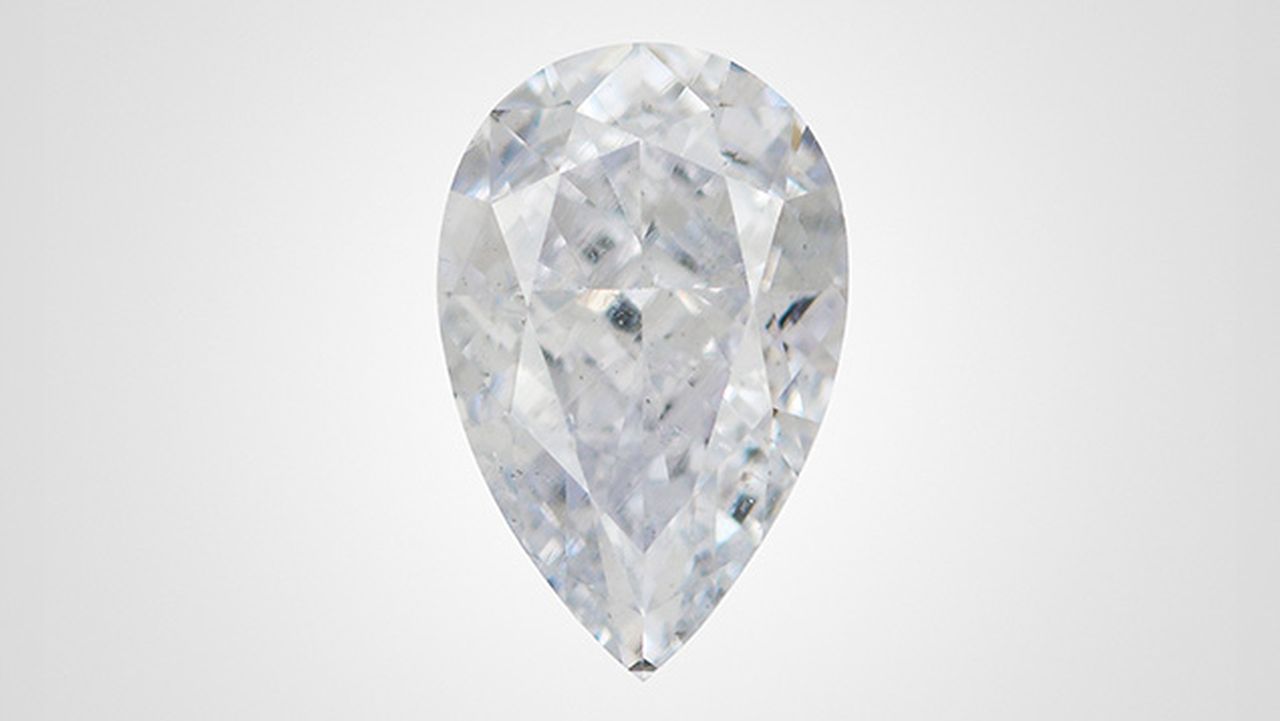
Scientists at the Gemological Institute of America (GIA) found cloud inclusions to be the cause of the greyish-blue color in a diamond that its New York laboratory recently received for grading.
When examining the 2.20-carat diamond, staff ruled out the major sources of blue color in diamonds. The most common is the presence of boron (type IIb), as was the case with the fancy-vivid-blue Cullinan Blue diamond. In other diamonds, the blue color is due to hydrogen-related absorption, which has been found with some stones from Australia’s Argyle mine. Natural or artificial irradiation is another cause, explained the GIA in the spring issue of its Gems and Gemology Journal.
The heavily included diamond submitted to the New York laboratory was type IIa, with no boron-related impurities. Nor was it found to have any hydrogen-related impurities or GR1-related color centers caused by radiation. Instead, the UV absorption for the diamond was similar to what would be expected for a yellow type Ib diamond, the GIA said.

In this case, the diamond’s fine cloud-like inclusions, which gave it a milky appearance, were found to be responsible for its natural blue color.
Clouds often lead to grey, brown, black or white color in natural diamonds, the GIA observed. However, the scientists found that the cloud micro-inclusions in this diamond caused Rayleigh light scattering (the same reason the sky looks blue during the day), which created a desirable blue color and not the expected yellow.
The lab gave the diamond a final color grade of fancy-light-greyish-blue, a natural origin of color, and an I3 clarity grade.
Main image: The fancy-light-greyish-blue diamond. (GIA)
Stay up to date by signing up for our diamond and jewelry industry news and analysis.