
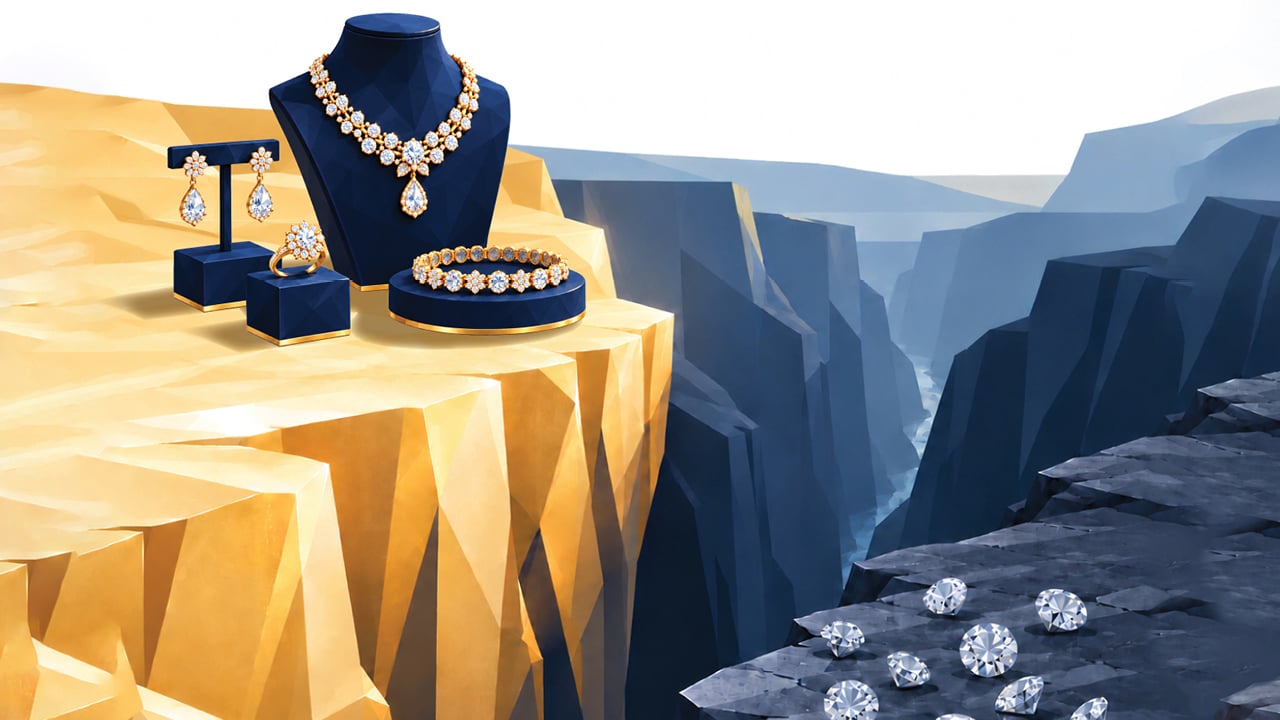
Few corners of the jewelry business have looked as healthy in recent years as the big luxury houses. Quarter after quarter, Richemont, LVMH and, more recently, Kering have singled out their jewelry maisons as engines of growth, even as other parts of the luxury market, from fashion to leather goods, have stumbled.
The diamond trade has had a different experience. Over the same period, polished prices have fallen sharply, manufacturers have cut production, and many dealers have struggled to stay profitable. Cartier, Van Cleef & Arpels, Tiffany & Co., and Bulgari are among the most prestigious buyers of diamonds in the world. So why hasn’t their success filtered back up the pipeline?
That is the question at the heart of this month’s Rapaport Intelligence Report. To answer it, we spoke with suppliers who sell to the leading brands, as well as industry advisers familiar with how those brands source their goods. We combined their insights with the companies’ financial results, exclusive Rapaport pricing data, and our knowledge of the diamonds the brands buy.
The answer is not simple, and dealers do not all agree on it. As this report explains, several forces have kept the diamond midstream from sharing in the brands’ prosperity. Some relate to what the maisons are selling, others to how they buy, and others to the balance of power between the brands and their suppliers.
The report also looks inside a part of the supply chain that few in the trade see up close: what kind of companies supply the top brands, what they look for, and what it takes to win and keep their business. It shows that the luxury sector is far from uniform. The Paris jewelry houses and the Swiss watchmakers have very different needs, and they work with their suppliers in very different ways.
Only a handful of companies sell directly to the brands, but the luxury retailers are among the biggest buyers of top-quality goods. Their buying helps explain why strong jewelry sales do not always mean more demand for polished.
As always, the Rapaport Diamond Price Analysis section includes exclusive data on 0.30-, 0.50-, 1- and 3-carat diamonds, covering pricing, discounts, inventory by country, search volume and turnover time. This month, we take a closer look at 0.30-carat diamonds, where the recovery of recent months has hit a bump.
Subscribers will receive the full edition of the Rapaport Intelligence Report by email.
Not yet subscribed? Click here to sign up for the latest edition, featuring Rapaport data as well as detailed analysis of diamond-price movement and supply and demand trends.
Image: David Polak.