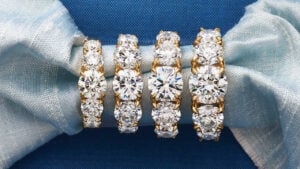



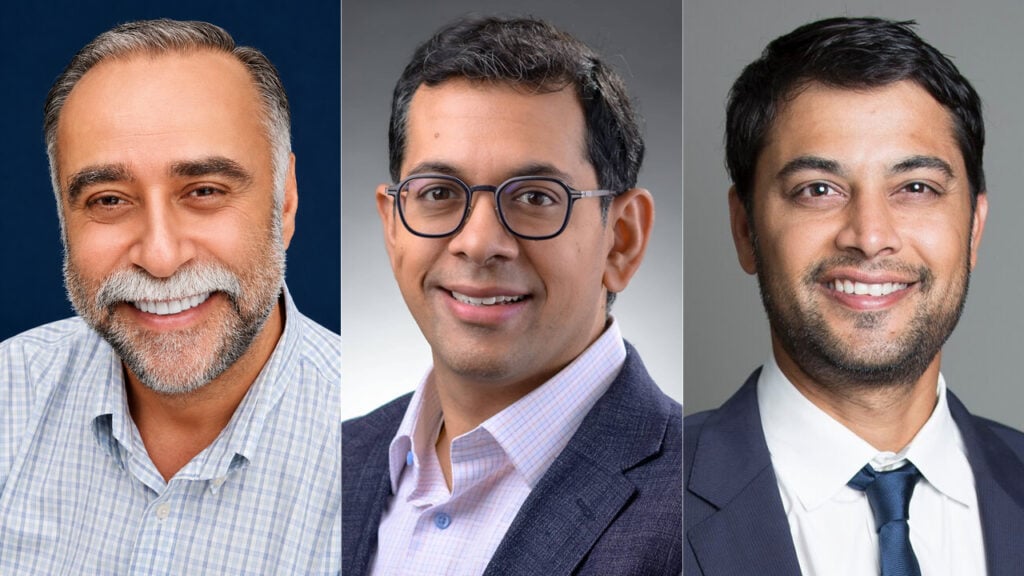
Diamonds may still capture the sparkle of romance, but the bridal wholesale business continues to be challenging, with low prices for both natural diamonds and lab-grown. “Given the changes to consumer preferences and prices, we’re trying to make sense of the market,” says Gaurav Khandelwal, sales director of Union Gems in Houston, Texas, reflecting the general sentiment.
Comparisons of first-half sales vary. Jai Bhansali, sales director at Diagem in Chicago, hasn’t seen “too much consistency” but has maintained the same sales volume by selling more carats and more units. His total sales volume is approximately 92% mined – up from 85% in 2025 – which he attributes to a combination of resurgent interest in natural diamonds, and the declining value of lab-grown.
For Tony Ayvazian, first-half sales were down from the same period last year. The owner of Ayvazian Company in Los Angeles, California, only sells natural diamonds, but says the value of the rings’ gold settings can be a driving factor behind diamond sales.
Others in the trade share that opinion, but they all agree that there’s a bigger factor: fancy shapes.
Fancies reign
“Fancy shapes have just steamrolled into the autocracy once ruled by rounds,” says David Rakower, president of New York-based manufacturer Joseph Asher Collection. He points to extra-long cushions, “funky-looking” emerald cuts, marquises, ovals, and movals – a combination of marquise and oval cuts – as taking up a “huge chunk” of the business. Fancies now account for about 75% of his sales, with rounds at 25% – a complete flip in the traditional percentage.
“Fashionation is happening,” he declares, referring to a lab-grown-driven trend he says is “changing the diamond world.”
“Given the inexpensive rough and its unlimited supply, we’re seeing interesting cuts that could not have been created with expensive, natural rough,” he explains.
“The lab-grown business feels a little more fast-fashion-esque, with exotic and unique cuts,” agrees Khandelwal, aka “GK.” He attributes this trend entirely to the impact of social media. Fancy shapes account for 75% of his lab-grown sales. “Conversely, 47% of natural-diamond business is in rounds, followed by oval and emerald cuts.”
While rounds account for “just below 50%” of Bhansali’s natural-diamond sales, he identifies marquise as “certainly a trend,” and sees higher sales volume in antique, old mine and radiant cuts.
Ayvazian also cites antique cuts and old mines, along with cushion brilliants, as having taken market share from rounds, which had accounted for up to 70% of his business. “Fast-forward, rounds are maybe 15% max now,” says the wholesaler, who also serves on the board of the Diamond Club West Coast.
Size, color and clarity
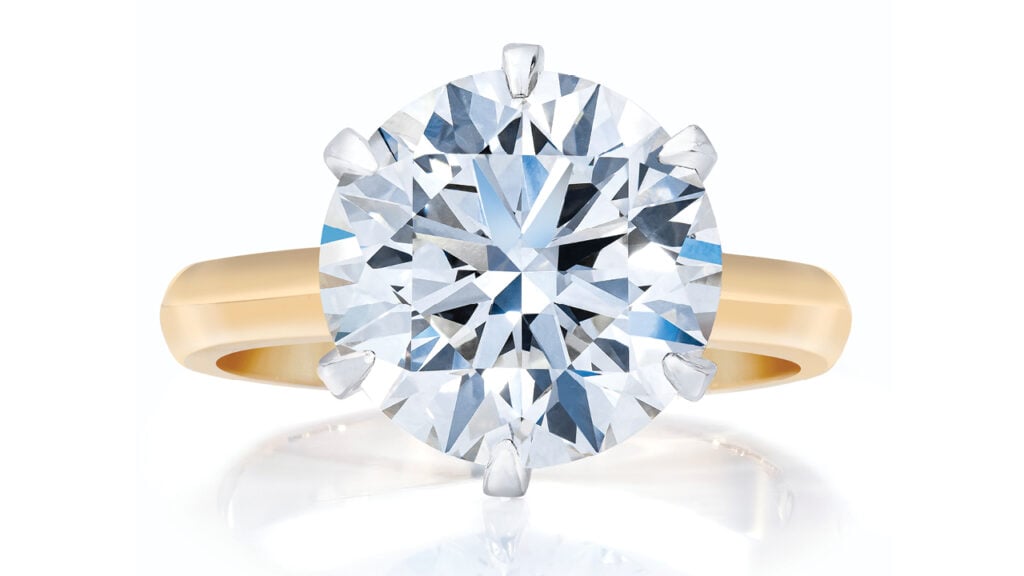
Khandelwal cites “a healthy business” in the 1- to 1.50-carat mined-diamond space. “But as a relative percentage of sales, we have more sales of larger diamonds than in any time in the past. The strength of the 2-carat-plus polished in the luxury segment is driving sales and profitability.” The median size for his lab-grown sales is 2.50 carats.
Bhansali’s top sellers are 1.50- to 2-carat mined goods and 2- to 3-carat lab-growns. “Clients seem to be reverting to the value of a natural diamond after seeing the steep decline in the values of lab-grown,” he comments.
Ayvazian has also seen good movement in the 1.50- to 2-carat range, but anything under that has been “comatose,” he reports. For Rakower, hot sizes are 1.25 to 3 carats in natural and 2 to 5 carats in lab-grown.
Color-wise, Bhansali identifies G, H and I as driving “50%-plus” of his business, and he has seen “some resurgence” in J, K and L. Ayvazian notes “very close pricing, with only a minimal difference,” among E, F and G stones. For Rakower, F, G, H and I are the most sought-after in “solid SI1s and good SI2s,” with an occasional VS2.
Khandelwal has found that the market is not viable for small or white imperfect goods; his sales are concentrated in G, H and I diamonds of VS2 to SI2 clarity with top makes.
Cautious optimism
Khandelwal predicts a strong finish to the year, “but it will be driven by fewer, more important sales in the natural-diamond market.”
While there is “no shortage of people looking for lab-grown,” according to Rakower, there is also “an uptick of people looking for natural.” He attributes this to “falling prices and values in lab-grown, which is basically unsellable on the secondary market.”
This means “we’re seeing a bit of daylight,” he continues. “There is no longer a dark cloud over the natural inventory. Prices are stable, and I think they will continue to firm up.”
The impact of De Beers’ recent “Desert diamonds” campaign was negligible, according to the interviewed wholesalers. Still, Ayvazian and Bhansali stress the need for sustained, aggressive advertising to promote natural diamonds.
“Brokers and dealers can’t add liquidity if lab dominates market share,” says Bhansali – though he is seeing “some recalibration where people are going back to mined diamonds or don’t see the value in buying anything but. And that’s a good thing.”
Main image: A three-stone ring centering an emerald-cut diamond. (Union Gems)
What Does Love Look Like? Not Out-of-Touch Lab-Grown Messaging
The natural-diamond industry won’t attract couples by telling them synthetics devalue their relationship.
Bridal Shopping in the Age of AI
Couples are researching online, but they still want to make the ring purchase personal – and that creates opportunities.
Six Brands Serving Fresh Engagement-Ring Designs
Whether it’s hand-sculpted organic gold or reimagined divorce jewels, these designers are setting trends that resonate with bridal shoppers.