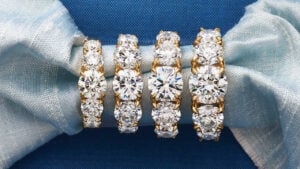


Wedding bands have shed their reputation as an afterthought, and the numbers prove it.
The average band is selling for just under $1,500 at retail this year, and diamond-set bands average about $2,500, according to Edahn Golan, managing partner of analytics firm Tenoris, which tracks sales data from thousands of US jewelry retailers. People are spending 16% to 18% more on bands this year than last, even as units decline – a value-up, volume-down pattern echoing broader trends across the jewelry market.
Accessories in their own right
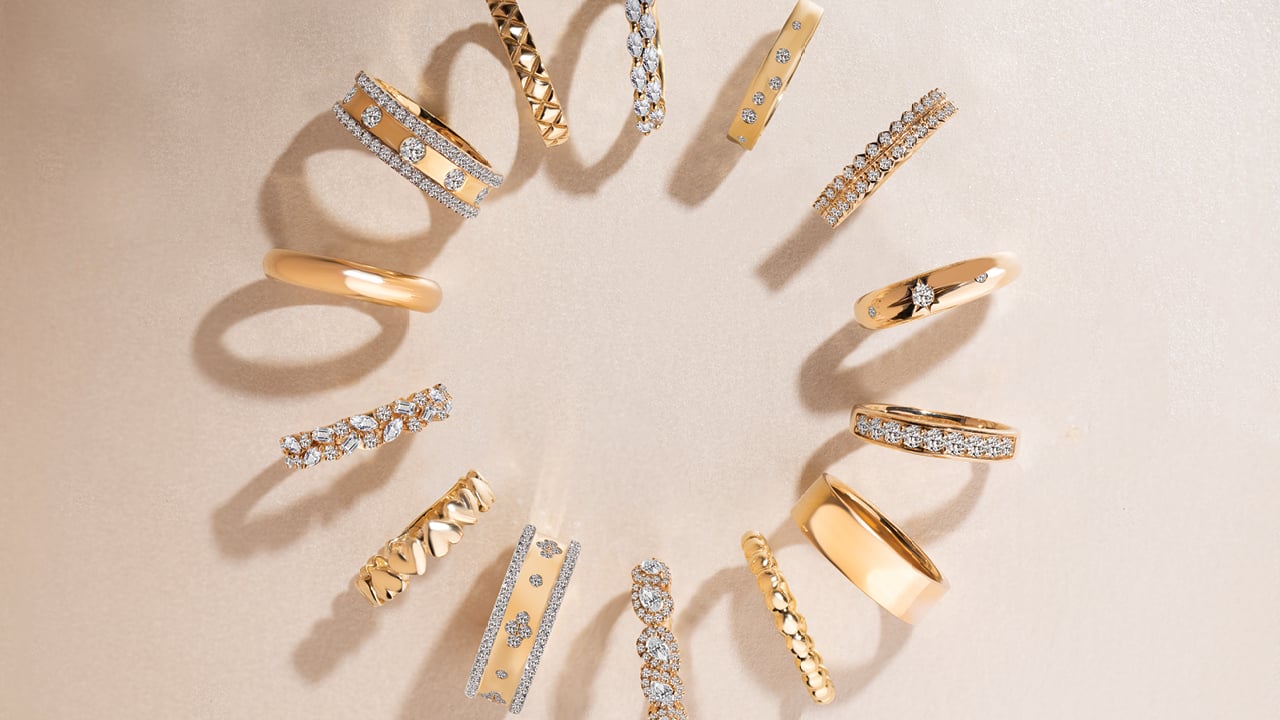
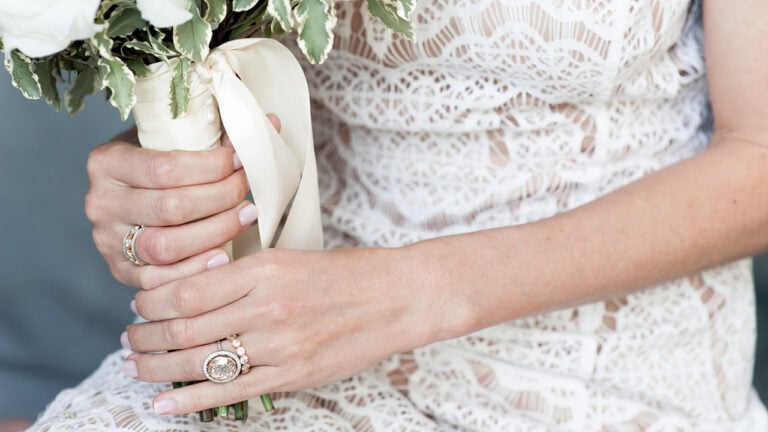
What’s driving the growth is a fundamental shift in how consumers think about wedding bands, says Craig Rottenberg, president of Boston-based Long’s Jewelers. The rise of anniversary bands, stacking bands and self-purchases shows consumers increasingly treating them as versatile fine jewelry rather than wedding-only purchases.
Jabbar Ford sees a generational change behind the shift. “The character of the ring has changed significantly as the customer has changed,” says the senior vice president of merchandising and design at wedding-band manufacturer Frederick Goldman. Younger clients, who tend to value individual expression, “are willing to pay a bit more if it’s customized, modified or personalized in some way. Bling is becoming an important part of the wedding-band journey.”
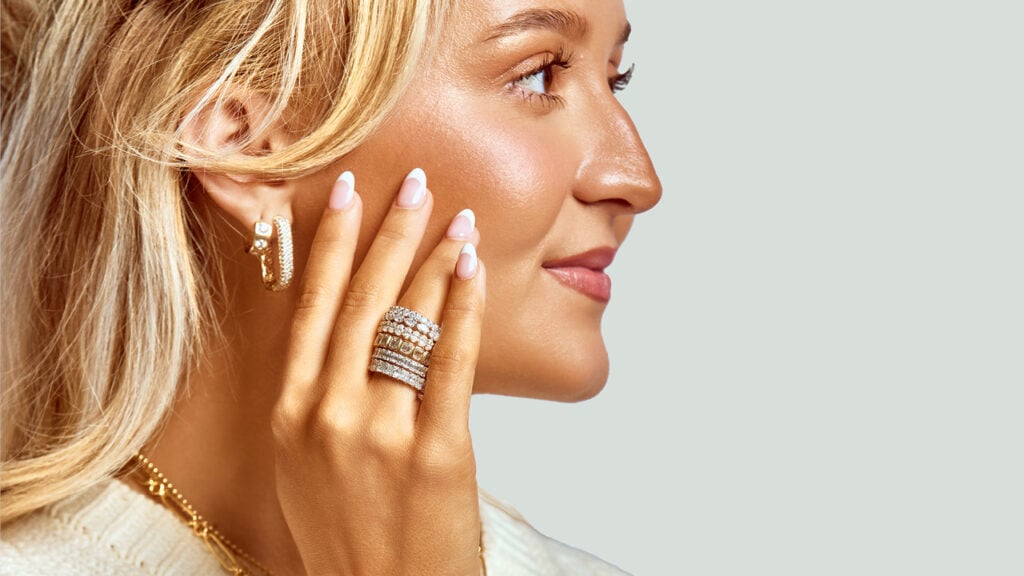
Geraldine Pingul, bridal jewelry buyer for Los Angeles-based Robbins Brothers Jewelers, agrees: The band is now a fashion piece that can elevate basics, make a statement, or serve as a gift for almost any occasion. Some couples are forgoing petite engagement rings for wider styles that were once reserved for anniversary bands, and stacking has spread across both hands and multiple fingers rather than staying confined to one.
The trend shows up throughout the supply chain. For Louisiana-based manufacturer Stuller, bands – metal, diamond-set metal, and enhancers – now account for 67% of bridal business, compared with 33% for engagement rings. Fully set eternity styles are pulling prices higher, beyond what gold pricing alone would suggest, according to Angela Daigle, Stuller’s bridal product manager.
The engagement influence
Engagement-ring trends are shaping band design in turn.
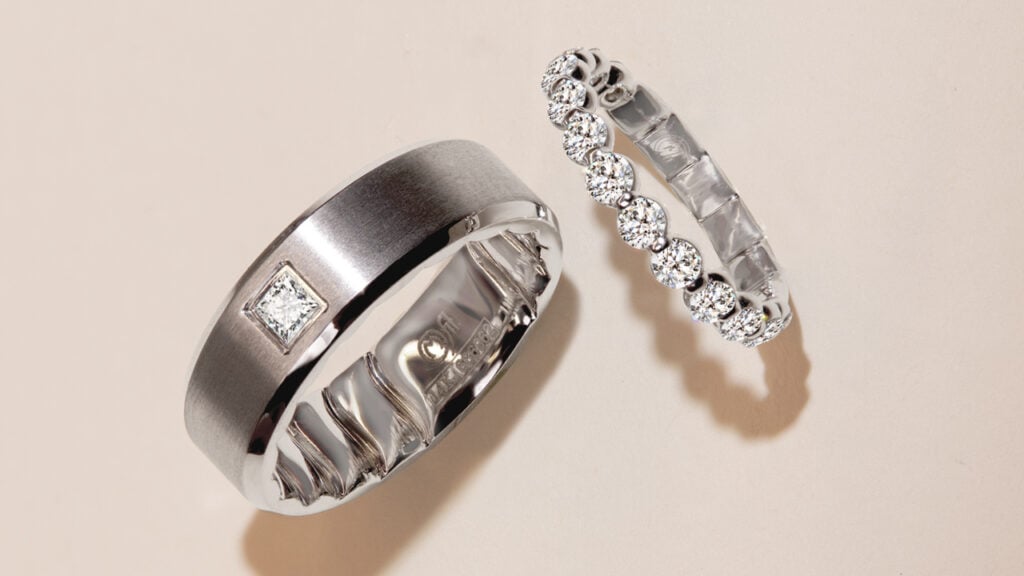
“As fancy-shape center stones have become more popular in engagement rings, they’ve opened the door to bands featuring ovals, emerald cuts or mixed-shape combinations,” Pingul says. “The trends in solitaire engagement rings have led to a coordinating band with larger diamonds, [which] has increased our average ticket.”
Robbins Brothers is also testing open-band styles with a gap at the top to fit around the engagement ring’s basket, letting the diamond sit flush with the band rather than perched high. This appeals to shoppers with larger or fancy-shape center stones.
While round diamonds still prevail in bands at Stuller, Daigle says consumers are also choosing oval, emerald and marquise cuts, or mixed-stone combinations pairing rounds with marquise or straight baguettes.
For the groom
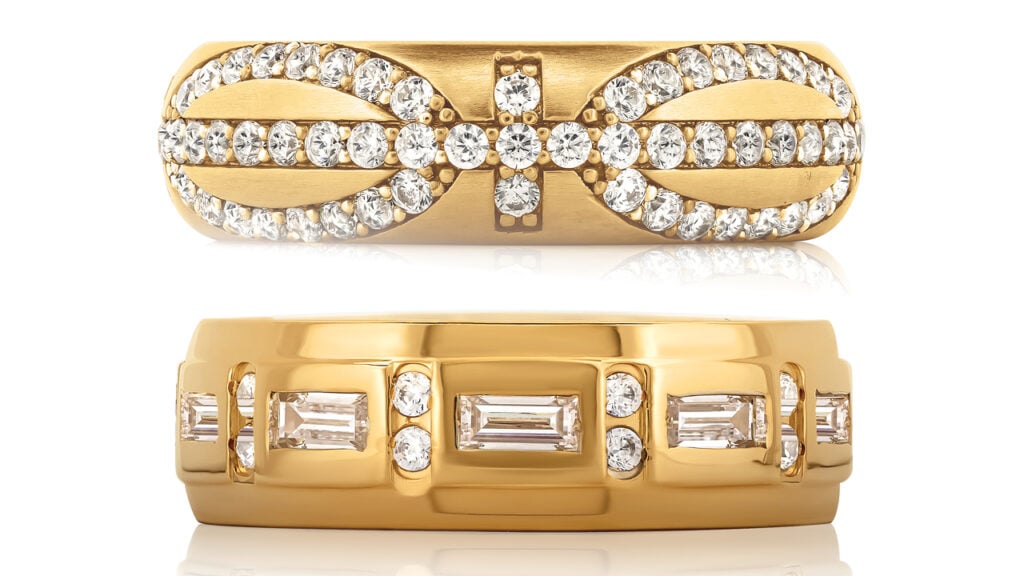
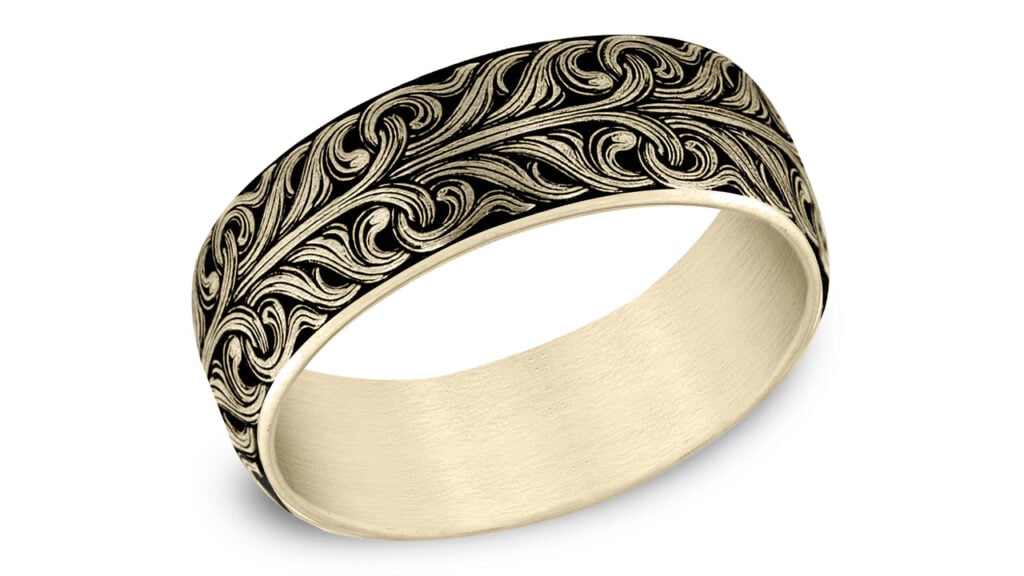
Men’s wedding bands are becoming one of the category’s biggest opportunities. Men are more open to hammered finishes than they’ve been in the past, and they’re choosing alternative metals and durable platinum to fit their lifestyles. Frederick Goldman’s Ford is seeing customers combine nontraditional metals – once positioned as lower-cost options – with precious-metal touches that elevate both look and price.
A. J. Tosyali, president of Alabama-based Benchmark Wedding Rings, confirms that the shift is industry-wide: Men are spending more than they did five years ago and aren’t afraid to express themselves through their wedding-band purchases, while also gravitating toward simple, durable textures and finishes. Mixed metals, yellow gold, and dark or grey metals are popular.
Robbins Brothers is dedicating more showcase space to men’s bands, adding more designers and silver. The retailer is also testing designs that expand without resizing.
Metal breakdown
In bands overall, yellow gold now drives more than 55% of Stuller’s unit sales, with 14 karats being the top performer even as 10-karat editions gain ground. Tosyali describes a similar resurgence “after years of white metals dominating,” together with rising platinum demand as a value alternative to gold’s high price.
Meanwhile, geographic differences are narrowing in the US, according to Pingul. The west coast has long leaned toward yellow gold, and the east coast toward white metals and platinum, she says, but she’s seeing less of a disparity than she did in the past. Benchmark reports no significant regional splits in recent data.
Ford ties yellow gold’s comeback partly to nostalgia, with younger shoppers “hell-bent on reliving the 1990s” – not just with yellow-gold bridal, either, but also with the hoops and heavy chains that characterized that decade and the one before it.
Selling the package
Of course, bigger tickets and richer designs only matter if retailers can close the sale.
Getting customers to buy the band together with the engagement ring remains a challenge, though wedding website The Knot’s Real Weddings Study tracked a rise in the share of couples purchasing both rings from the same retailer – from 53% in 2015 to 68% in 2019, the last year the data was available.
Success comes down to making the purchase easier – and giving couples a reason to buy sooner. Stocking matching bands instead of relying on special orders helps Robbins Brothers secure the second sale earlier, as part of a coordinated set, Pingul says. Benchmark’s data suggests the buying window itself hasn’t moved: Couples still buy bands three to six months before the wedding, regardless of when they purchased the engagement ring. Customization is increasingly the clincher for Benchmark, with 20% to 30% of its band orders now including a customized element.
In some cases, it’s about leveraging the couple’s spending plans. Chae Carter Wooton, owner of Carter’s Collective in Hattiesburg, Mississippi, says clients who have bought synthetic-diamond engagement rings often have more of a budget left over for elaborate bands, which helps offset the lower revenue those engagement rings generate on their own. After the ring sale, Carter Wooton’s team meets with couples, gift bag and wedding checklist in hand, and encourages them to buy bands while wedding budgets are still intact. About 20% buy on the spot.
At Long’s Jewelers, Rottenberg sells bands to nearly all his engagement-ring customers, plus many who have bought rings elsewhere. He leans on education-driven marketing across Instagram and TikTok.
“There are more choices than ever in the [wedding-band] category – different metals, finishes, widths, diamonds and styles – and for many couples, it can feel overwhelming,” he says. “Our role is to simplify that process and help clients make an informed decision.”
Long’s reinforces that relationship through its annual Wedding Band Weekend, pairing promotions with hospitality touches. “We believe the best customer relationships are built over time, so we’re always thinking beyond the immediate purchase,” Rottenberg says. After the wedding, “many clients continue to add anniversary bands or rings that commemorate other milestones.”
Main image: A selection of gold and diamond bands. (Robbins Brothers)
What Does Love Look Like? Not Out-of-Touch Lab-Grown Messaging
The natural-diamond industry won’t attract couples by telling them synthetics devalue their relationship.
Bridal Shopping in the Age of AI
Couples are researching online, but they still want to make the ring purchase personal – and that creates opportunities.
Six Brands Serving Fresh Engagement-Ring Designs
Whether it’s hand-sculpted organic gold or reimagined divorce jewels, these designers are setting trends that resonate with bridal shoppers.