
RAPAPORT… Jewelers dismissed a Human Rights Watch (HRW) report which claimed companies and the Responsible Jewellery Council (RJC) did not provide sufficient ethical sourcing guarantees.
“We have reviewed the Human Rights Watch report and reject the suggestion that RJC has got ‘flawed’ standards, governance and certification systems,” Gerhard Humphreys-de Meyer, communications coordinator for the RJC, told Rapaport News. HRW has itself acknowledged the RJC’s progress in making jewelers more aware of the importance of responsible sourcing and getting them to adopt more responsible practices, he added.
HRW stressed in a report last week that the RJC needed to strengthen its standards and auditing practices. It also ranked 13 major jewelry retailers on responsible sourcing of gold and diamonds, stating that most of the companies [fell] “short of meeting international responsible sourcing standards.” Criteria included the absence of child labor and human rights abuses.
Humphreys-de Meyer argued that the standards the RJC uses were “internationally recognized as robust, and continually open to comprehensive and transparent review.”
Signet Jewelers, which received a moderate rating in the report, said it relied on the RJC to ensure its suppliers practice responsible sourcing. For that reason, all its suppliers must be members of the council, David Bouffard, Signet’s vice president of corporate affairs, told Rapaport News.
“RJC membership reinforces Signet’s industry leadership
position on responsible practices and requirements in the areas of human
rights, health and safety and labor practices throughout the global Signet
supply chain,” he said.
Signet has been the only jewelry company to provide independently audited conflict-free gold reports to the US government annually, Bouffard added. The RJC’s provenance claims provide independently
certified assurance about Signet’s gold supply chain, he explained.
Bouffard said Signet supported frequent reviews and
improvements to RJC standards, adding that the company was “disappointed at
HRW’s inaccurate characterization and misrepresentation of the information.”
Bouffard called on HRW to engage more constructively with
the RJC and other participants in the jewelry industry.
Of the 13 companies HRW investigated, seven are certified
members of the RJC. These include Tiffany, Bulgari, Cartier, Pandora, Signet,
Chopard and Harry Winston.
Of the six that do not appear on the RJC’s current list of members, Boodles and Christ received
a ‘weak’ rating, Tanishq was rated ‘very weak’, and Kaylan, Rolex and TBZ could
not be ranked because they failed to respond to HRW requests for information.
Credit:
Juliya_Ka/Shutterstock


Qatar Diamond Exchange to Collaborate with Italian Bourse
Parties signed MoU to extend connection among their members, broaden cooperation and advance commercial relationships.
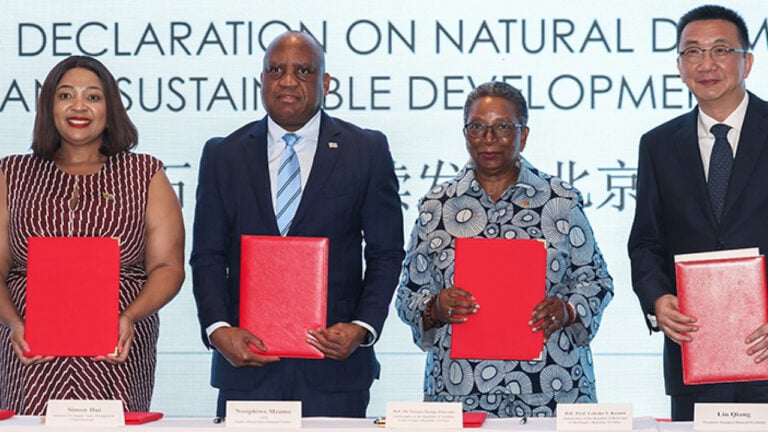
China Signs Deal to Reinvigorate Interest in Natural Diamonds
Shanghai Diamond Exchange hosts signing of Beijing Declaration, with government representatives from Botswana, Namibia and South Africa.
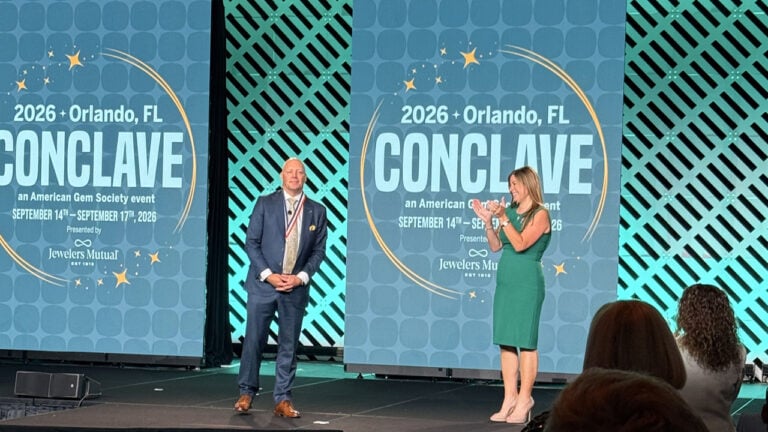
AI, Gen Z Are Hot Topics at AGS Conclave
This year’s edition is last to take place in September, as event returns to spring in 2027.