
RAPAPORT… Canada’s Northwest Territories (NWT) has abolished its ban
on diamond manufacturers sending rough to other locations for processing,
potentially enabling significant cost savings for the industry.
Rules in place since 1999 have required the region’s cutting-and-polishing
firms to keep all their goods inside the NWT for manufacturing. That has restricted
growth, as diamonds cost about $300 per carat to manufacture locally, versus
$80 per carat in countries such as Namibia, according to Canadian news website
CBC.
Companies will now be able to export 70% of their goods in
return for investing in other areas such as local jewelry manufacturing, retail
and tourism, CBC reported. The government will assess businesses’ various
contributions to the NWT economy, and use its conclusions to decide how much
rough a company can send. In rare cases, firms could be allowed to ship 90% of
their diamonds, the NWT government added.
The changes also pave the way for companies to carry out
higher-value manufacturing in local hubs such as Yellowknife, while farming out
lower-end goods to cheaper centers, authorities said.
“The government of the Northwest Territories recognizes that
the NWT is an expensive jurisdiction in which to operate a manufacturing
facility,” the region’s department for industry, tourism and investment noted.
Rough diamonds available to NWT-based manufacturers have
an estimated value of $150 million per year, the government
said. Relaxing the rules would help realize that potential and strengthen the
local economy, it added.
Correction: The estimated value of rough diamonds available to NWT-based manufacturers is $150 million, not CAD 150 million, as incorrectly stated in an earlier version of this article.
Image: Diamonds from the Gahcho Kué mine in the Northwest Territories. (Mountain Province)

Michael Hill Reports Sales Rise Across All Segments
Same-store revenue up in Canada, Australia and New Zealand.
Luk Fook Revenue Rises as Diamond-Jewelry Demand Improves
Group opens store in London, entering European market for first time.
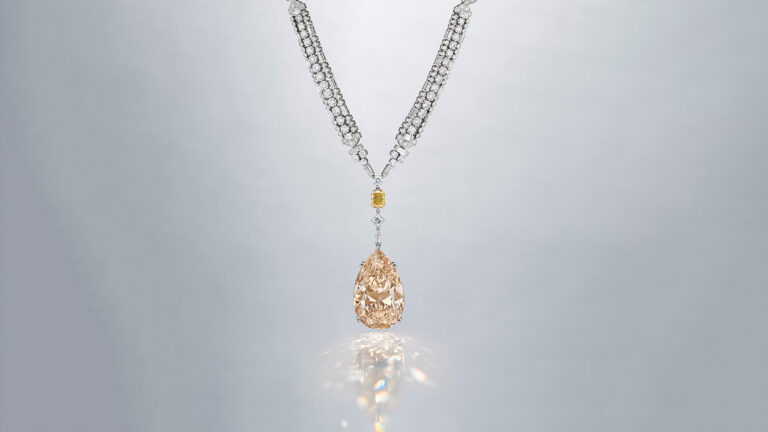
91ct. Starlight Diamond Necklace to Headline Christie’s Shanghai
William Goldberg jewel carries high estimate of $2.7 million.