

RAPAPORT… An official industry-wide project to test lab-grown detectors has expanded its efforts to melee, a segment of the market highly prone to undisclosed synthetics.
The Assure program —
an initiative of the Diamond Producers Association (DPA) and Signet Jewelers —
reviewed 12 machines using a sample of 1,000 mined diamonds and 200 synthetics, as well as 200 diamond simulants. The stones ranged in size from 0.005 to 0.02 carats, with D to J
color.
Six instruments achieved a “diamond false-positive rate”
of 0%, meaning they didn’t mislabel any lab-grown stones as natural. The others
received scores ranging from 0.3% to 9.4%, representing the percentage of
stones they wrongly classified as being from the earth.
Mixing of natural and synthetic diamonds has been a major threat to the melee sector in recent years. Last year, the Gemological Institute of America (GIA) received a batch of more than 1,000 tiny stones that contained only one natural diamond, noting there had been an “exponential” increase in the volume of synthetic melee — both disclosed and undisclosed — customers sent for identification since 2016.
“Undisclosed synthetic diamonds in the natural-diamond pipeline is a growing concern in the trade, especially in the smaller
sizes,” the DPA said in an email to Rapaport News Tuesday. “Ensuring that you adopt testing procedures that include effective diamond verification instruments is a key preventive measure.”
The overall performance in the latest DPA analysis for checking melee was roughly on a par with tests the
Assure program carried out using a core sample of larger natural diamonds,
synthetics and simulants. In those tests, 10 out of 16 detectors scored the
ideal 0% when scanning the stones, which ranged from 0.02 to 0.20 carats. The Assure
project initially tested 11 scanners against that sample earlier this year, and
recently added a further five machines.
Out of the total of 16, four instruments were not tested on
melee because they do not claim to work with stones of that size.
The
DPA released the initial 11 performance reports on its online Assure directory
in March, and published the additional five results to coincide
with the start of the JCK Las Vegas show in late May and early June.
UL, the third-party testing agency carrying out the assessments, also retested the GIA iD100 machine, after the Assure steering committee approved the
manufacturer’s request to provide additional training and guidance to the
technician carrying out the procedure.
The scores show machines’ performances in a range of
criteria, including the ability to state conclusively whether a diamond is
natural or synthetic, rather than referring the stone for further testing.
“We are positively encouraged
by feedback that manufacturers are taking learnings from the Assure
program into their research-and-development efforts to further excel the
performance of their instruments,” added Lisa Levinson, strategic project manager
at the DPA.
A handful of additional machines are currently going
through testing, with the DPA planning to release the results when they become
available.
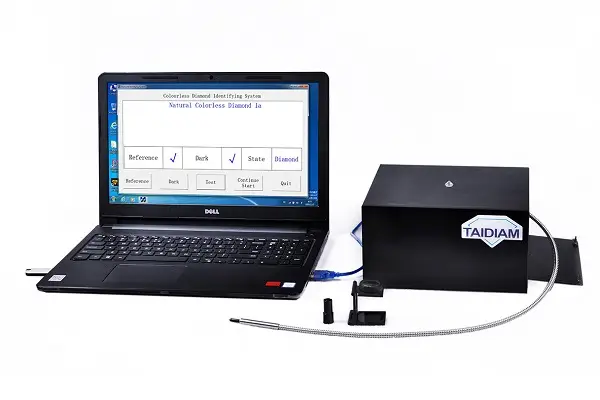
Image: Taidiam Technology’s DiamondDect 3 machine. (Diamond Producers Association)
AGTA Elects New Board Members
The four incoming directors will start their term in February 2027.

Signet Sales Slide in Second Quarter
Revenue down 0.5% year on year to $1.53 billion for the period.

Phillips Names New Jewelry Specialist in Italy
Gaia Maffioli brings 15 years of experience to the role.