 WhatsApp
 Email
Email
 Facebook
 Twitter
 LinkedIn
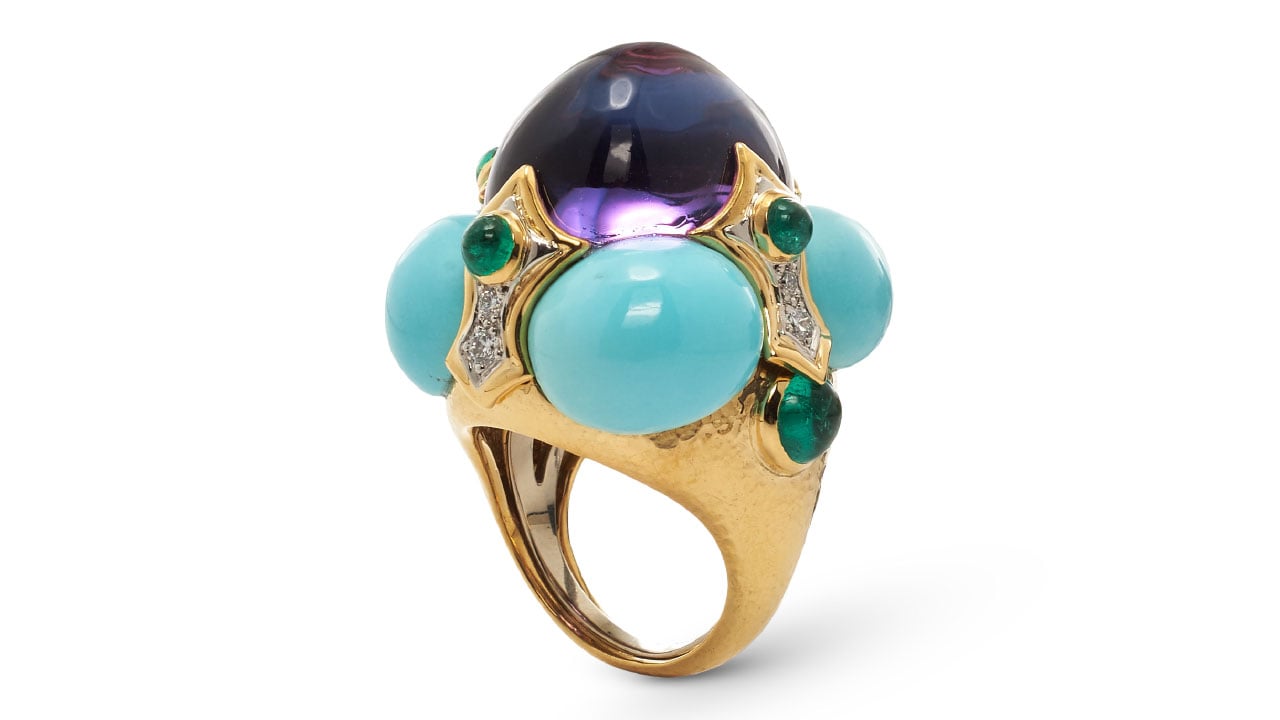
It’s hard to avoid clichés when describing David Webb. It’s a rags-to-riches tale of a poor boy from the American south coming to New York to find success, proving the American dream that anyone from anywhere could become someone. He was also the right man at the right time in the right place: New York in the 1960s and ’70s. He epitomized the line from E. B. White’s Here Is New York: “No one should come to New York to live unless he is willing to be lucky.” And luck – to which Webb often attributed his success – coupled with a uniquely American “anything goes” approach, led him to become one of the country’s most important, celebrated jewelry designers.
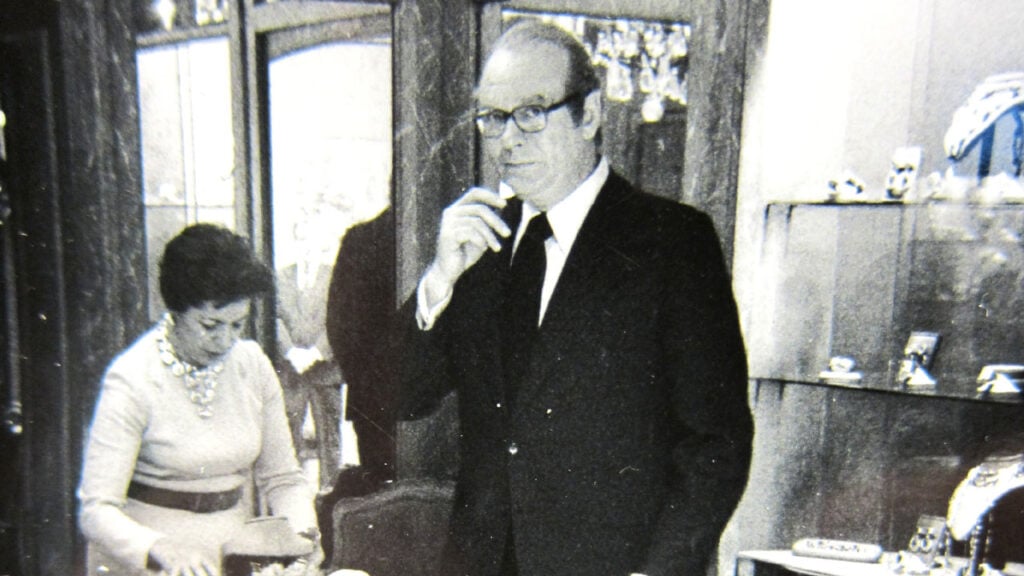
Rise to prominence
That dream was kickstarted when he took a government-sponsored metalwork class at the age of nine and decided to become a jeweler. By the time he was 17, he was on his way to New York, where he soon found bench work in the trade. Six years later, in 1948, he opened up shop with a French socialite as his business partner. He was only 23.
Success arrived quickly. In 1950, his earrings featured on the cover of Vogue. A few years on, The New Yorker gushed that “one of the most creative meteors around town is the jeweler David Webb.”
What he offered was a fresh and utterly original look. Here was big jewelry packed with color, and its boldness anticipated the wholesale changes coming in the ’60s. Above all, David Webb jewelry was fun to wear. The fashion magazines, forever in the business of forecasting the newest looks, were quick to seize on this vibrant, youthful sensibility. Moreover, David Webb put jewelry on equal footing with couture, showing American women a new way to dress.
Wild for the look
Stefan Richter of estate jeweler Richters of Palm Beach, who has been buying David Webb pieces for decades, is one of the most knowledgeable dealers of this brand. For him, that youthful look is key.
“When I began in 1980, we loved David Webb,” he recalls. “At the time, we were buying jewelry of the ’60s and ’70s, but it was only the ’80s. I was too young to understand that what we enjoyed about Webb wasn’t jewelry that was particularly old then. For me, the appeal has always been the color and scale, the youthfulness and whimsy. My older clientele wanted to look younger, and that’s what they liked about David Webb.”
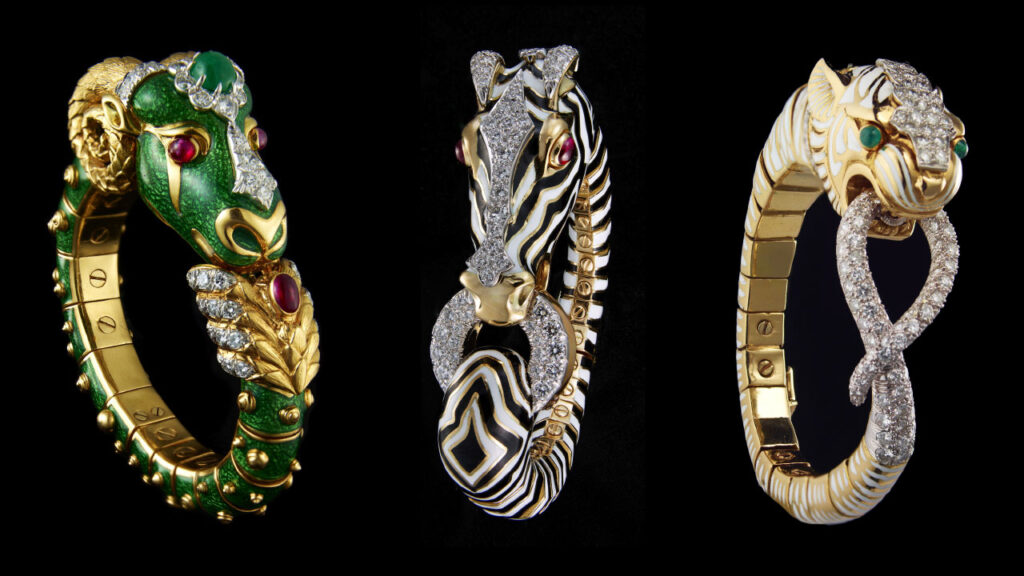
Seemingly overnight, Webb’s eye-catching animal bracelets had become ubiquitous on the wrists of American high society and Hollywood, including those of Jackie Kennedy, the duchess of Windsor, Barbra Streisand, Brooke Astor, Leonore Annenberg, Estee Lauder and Elizabeth Taylor. In fact, Taylor purchased the first animal bracelet he’d ever made – a chimera from 1957 – and continued buying custom David Webb pieces. The zebra, which he introduced in 1963, became the company mascot. Also popular were the big cats – lions, leopards and tigers – often with diamond blazes, their gold bodies painted in black enamel or boasting diamond-tipped tails. Today, New York’s Metropolitan Museum of Art owns one of the zebra bracelets.
Dedication to art
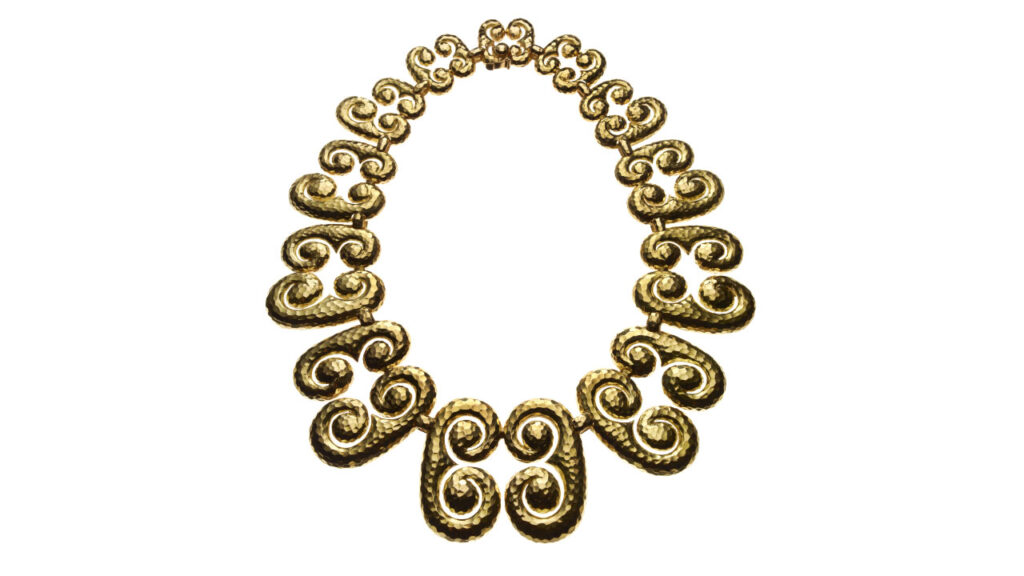
The key to the Webb look was creating art, using the jeweler’s canvas of gold and gemstones. As he told a journalist in spring 1975, “I had a tremendous feeling for art in me. I wanted to be an archaeologist, a ceramicist, or a jeweler. Jewelry won out.” From his earliest years in business, he explored the works of faraway cultures – buying art books, going to galleries, making weekly trips to the Met. The influences of ancient Greek and Roman jewelry turned up in his heavy gold collars and cuffs, and his unabashed borrowing from Art Deco jewelers, such as the use of rock crystal and enamel, showed in his striking sautoirs. His only published article, which he wrote in 1963, was titled “Why Not Hang Gems?” He wasn’t kidding.
That dedication to making jewelry as art was cut short when Webb died in 1975 at the early age of 50. The following decades at the company were less dynamic, until 2010, when Mark Emanuel, Robert Sadian, and Sima Ghadamian acquired the business. Straightaway, there was a mandate to reinvigorate the David Webb design voice.
“Being a legendary house involves both a duty and a privilege,” Emanuel says. “My particular privilege was to enter the David Webb design skin and have the proper time to do research and look at his original drawings.”
Although he disdains labels like “old Webb” and “new Webb,” Emanuel nonetheless felt a “duty to execute works that came directly from the archive, as well as the numerous iterations based on past designs.” For him, it also meant “rehiring many of our former jewelers and putting significant capital into making exquisite jewelry.”
Auction favorites
The 2013 publication of David Webb: The Quintessential American Jeweler – the first monograph about the designer – further optimized the brand, and auction results offer proof of its continuing desirability.
At Christie’s, customers ranging “from Millennials through to Baby Boomers are entranced by the instantly recognizable and wearable designs that make up Webb’s repertoire,” says Claibourne Poindexter, the auction house’s head of jewelry for the Americas.
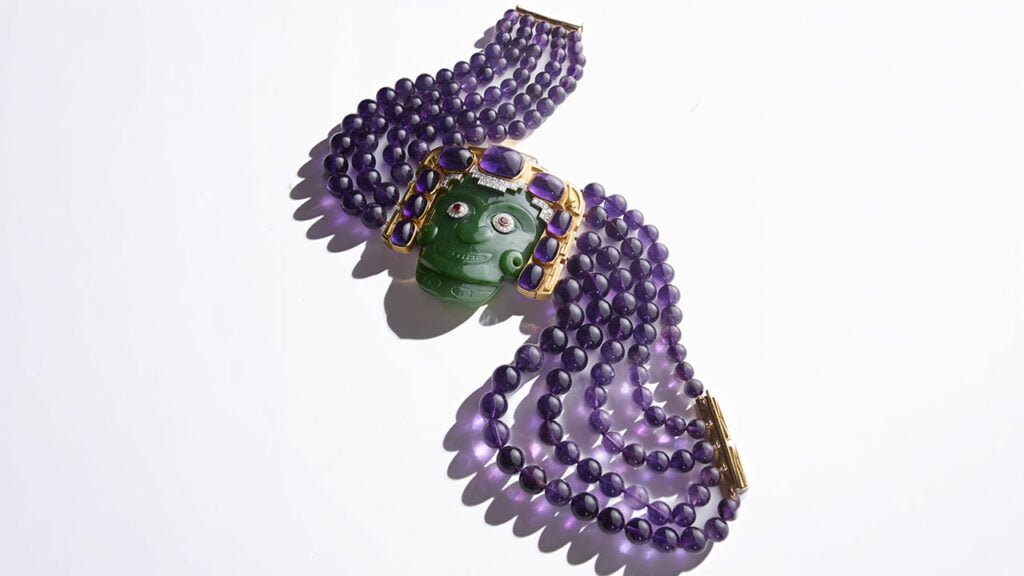
Designs that feature distinctive exotic motifs fare especially well under the hammer. A carved ruby, emerald and diamond Mughal necklace that belonged to philanthropist Anne Bass went for $201,600 in June 2025 at Christie’s. The circa-1973 Demon Mask necklace from the estate of philanthropist Geri Brawerman sold at Sotheby’s this past December for $508,000, against a high estimate of $30,000. Art Deco-themed David Webb works are likewise strong performers, such as an especially striking sautoir of carved rock crystal, diamonds, and gold, which went for $106,250 at Christie’s in April 2017 – more than triple its high estimate.
In January 2025, private equity group Middle West Partners purchased David Webb, retaining Emanuel as a co-owner with a minority stake in the business. But change is nothing to fear for this jeweler. As longtime client and patron of the arts Irene Roosevelt Aitken once said: “To wear David Webb jewelry, you must have courage.”
Ruth Peltason is the author of David Webb: The Quintessential American Jeweler (2013) and The Art of David Webb: Jewelry and Culture (2023).
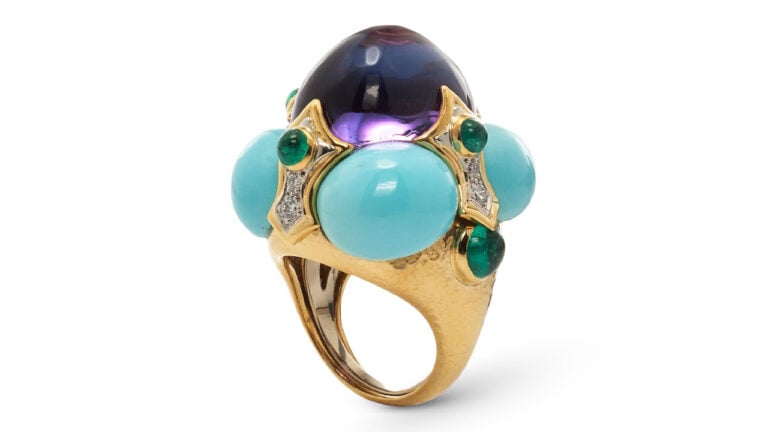
Main image: Crown ring with amethyst, turquoise, emeralds and diamonds. (David Webb)