 WhatsApp
 Email
Email
 Facebook
 Twitter
 LinkedIn
Thailand has a deep jewelry-making culture. Its goldsmithing heritage goes back centuries, and the country has long been known for colored stones, gem-cutting and craftsmanship. In 2025, the gem and jewelry sector ranked as the country’s third-largest export category, totaling $26.59 billion. Bangkok has become one of the world’s great jewelry and gemstone centers – “not by accident, but because the conditions for excellence exist here,” says Adam Komarnicki, general manager of manufacturer K.S. Jewelry.
He points to a richness of international influence: European jewelry knowledge has mixed with Thai craftsmanship and discipline, becoming deeply embedded in the local jewelry-making process. This has made Thailand an attractive place to produce fine and high jewelry.
The country’s diamond and colored-gemstone manufacturers range from international entrepreneurial investors like K.S. Jewelry and JewelArc, to long-established family businesses like the Pranda Group and Beauty Gems, to boutique-size operations like Gianna Jewellery.
What Thailand offers is something quite rare, says Komarnicki: “skilled hands, serious technical knowledge, access to materials, and a manufacturing culture capable of both discipline and patience. Many people here are genuinely prepared to master highly repetitive, detailed work, and in jewelry, that patience is not a small thing.”
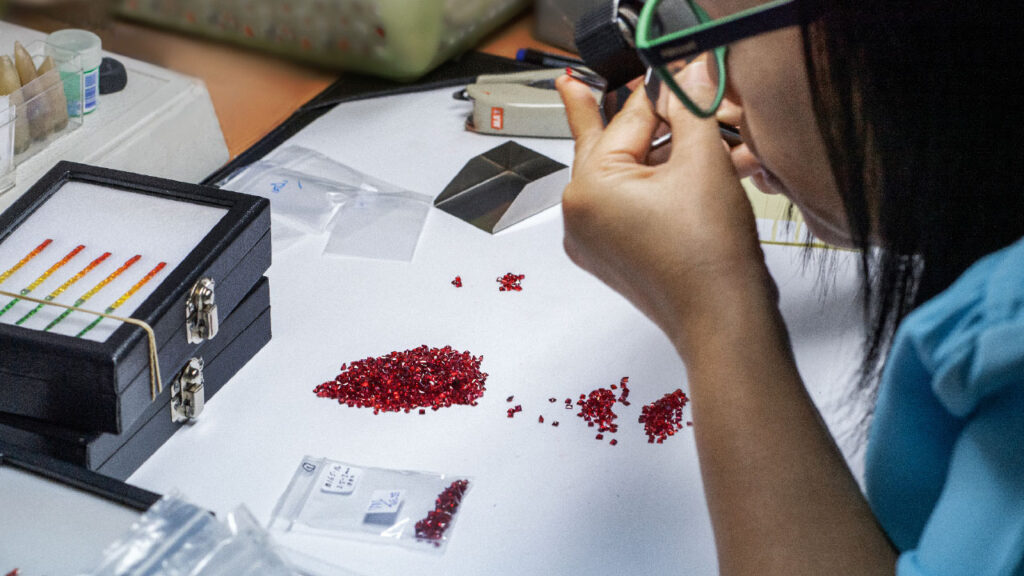
The cutting edge: K.S. Jewelry
Founded by Klaus Stenzhorn in 1979, this company is one of Thailand’s larger jewelry manufacturers, with approximately 550 total employees between the main K.S. business and its sister manufacturer, Amanda. The majority of its clients are in Europe, including Place Vendôme jewelers, though it has American and Australian clients as well.
The firm is a keen investor in technology that improves quality and consistency. Some of its most visible investments are in laser cutting, X-ray metal analysis, computer numerical control (CNC) machines for complex precision work, and diamond screening to keep lab-grown stones out of its products.
K.S. sources its polished diamonds from both Antwerp and India, and buys Kimberley Process (KP)-certified rough when production or a special cut demands it. The company’s in-house master cutter, who has been in the industry for 30 years, can cut any special shapes for high-jewelry pieces if the design requires something that doesn’t exist on the market. “The ability to cut or recut in-house gives us a freedom that is rare,” says Komarnicki.
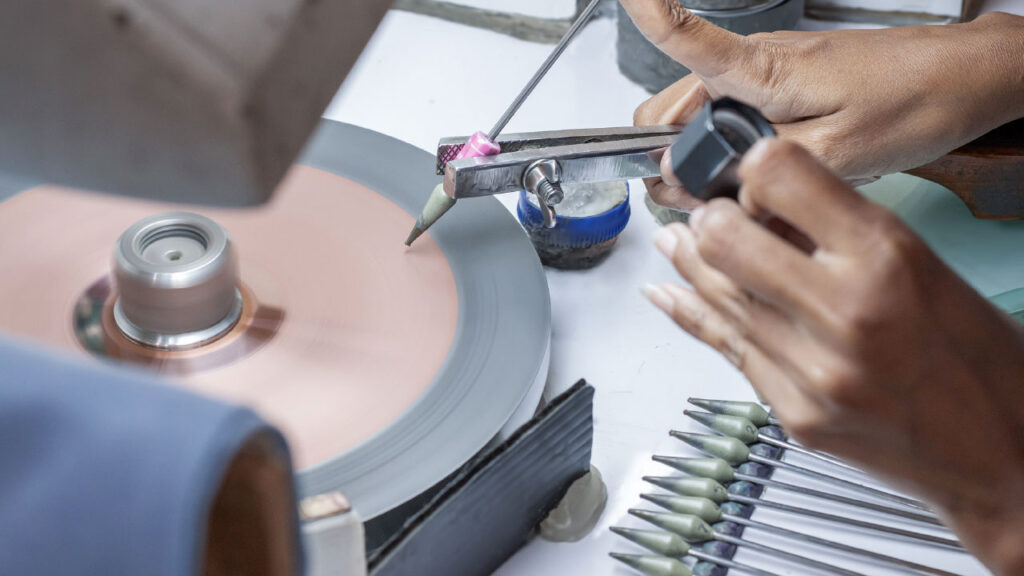
K.S. has taken laser-cutting machines originally designed for rough diamonds, and adapted them to recut polished goods when precision adjustments are necessary. Here, too, the ability to make fine adjustments in-house rather than sending the stones out gives the company more agility. The manufacturer produces both round and fancy shapes, as well as clients’ exclusive proprietary cuts.
“Our founder, Klaus, is also developing his own shapes, forms that reflect a particular vision for how a diamond can move and hold light,” adds Komarnicki. “That work is ongoing and something we are excited about.”
As for metals, K.S. makes an effort to use responsibly sourced Single Mine Origin (SMO) gold, alongside gold from other sources.
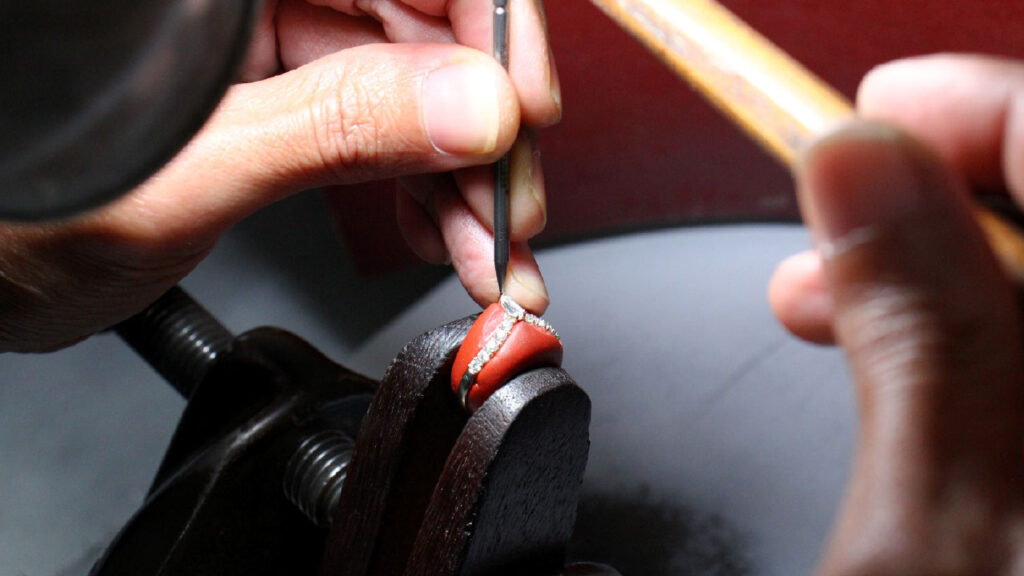
Sustainable focus: JewelArc
Australian entrepreneur Matthew Triglone opened the JewelArc factory in Chonburi, just outside Bangkok, in 2009, having founded the business in Sydney in 2001 and opened a sourcing and distribution office in Thailand in 2005.
JewelArc’s philosophy is rooted in sustainability. It sources traceable diamonds from the Botswanamark platform and other Botswana suppliers, and when those sources are limited for certain types of diamonds, it ensures that the alternative suppliers it uses have Responsible Jewellery Council (RJC) certification. The company gets its colored gemstones from Thai suppliers, all RJC- or SCS-certified. It also puts a focus on archival gems, making efforts to source existing older stocks of both rough and cut stones to reduce the impact of mining.
While JewelArc can cut colored gems on site, it sends diamonds – all of which it screens for lab-grown – to a specialist cutter in Bangkok. Its gold is exclusively SMO, though Triglone admits that few Thai manufacturers have embraced the use of responsibly sourced gold so far. That may change amid growing pressure from both the Thai government and jewelry clients to improve sustainability.
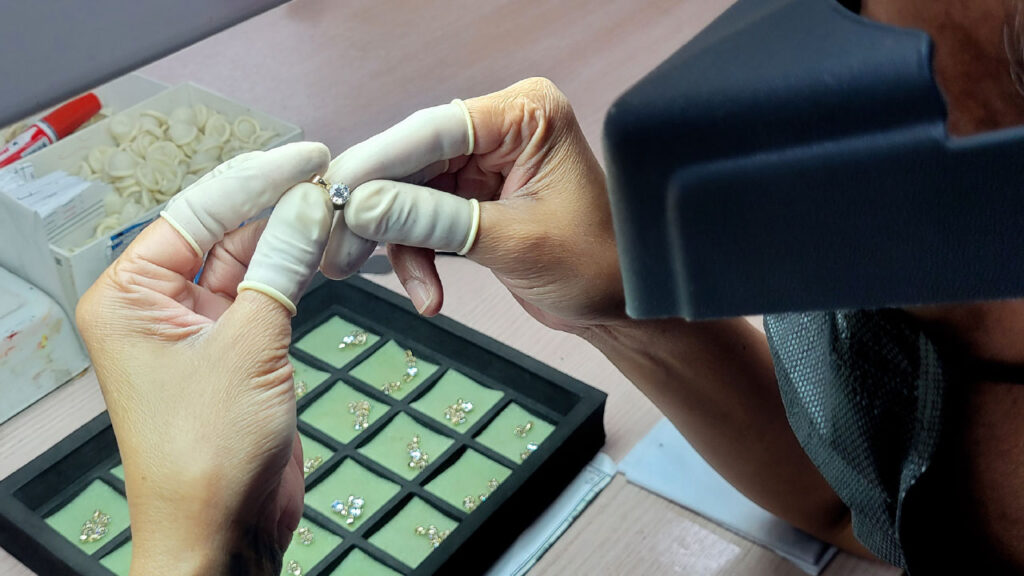
On the technology side, JewelArc uses CNC machines and rapid prototype (RP) 3D printers to convert wax models from computer-aided design (CAD) programs. There are plans to install solar paneling for green energy, and the company is working toward a plastic-free environment, including compostable packaging for shipping its finished jewelry to clients in Australia, the US, Denmark, the UK and Spain.
At 110 workers, JewelArc is a smaller operation than K.S. Jewelry. However, being outside the capital, it is “more of a village than a business,” says Triglone. Some workers have been with him for over 15 years.
“Thailand is attractive for our type of business, mostly because of our workforce,” he explains, describing his staff as “very diligent” in both processing and creative work. “The Thai workforce is very patient and tactile when handling the fine materials [necessary] for great results.”
Good for business
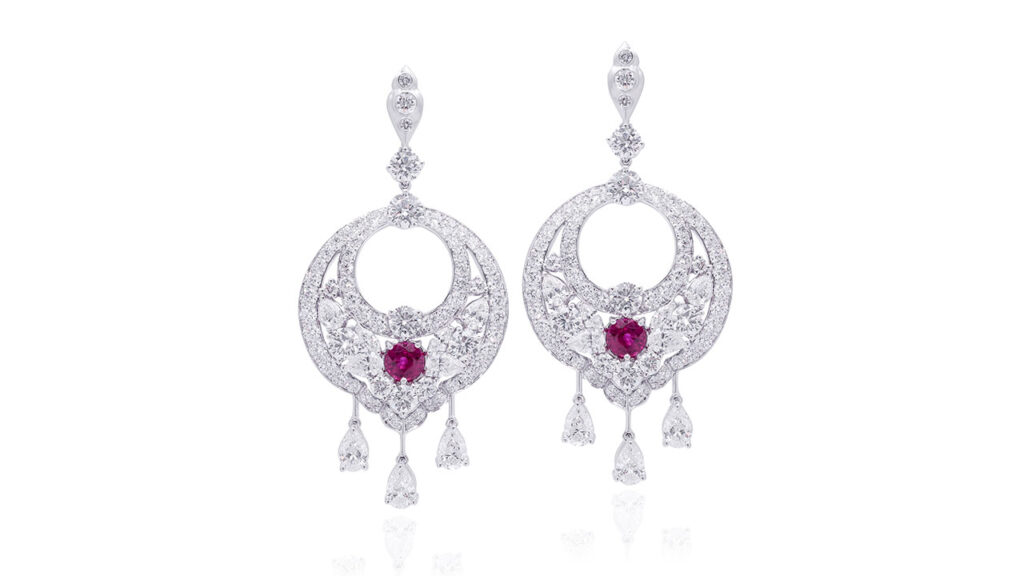
“The Thai government has created an environment, through its Board of Investment, that helps foreign business to function efficiently,” says JewelArc’s Matthew Triglone. The country has clear labor laws, and it has been negotiating a free-trade agreement with the European Union that would put an emphasis on traceability, labor standards and environmental performance. Meanwhile, more companies are becoming involved with the Responsible Jewellery Council (RJC).
The US tariff situation has not disadvantaged Thailand, Triglone maintains. However, it has created uncertainty and affected planning, leading some American clients to consider moving production closer to home, according to K.S. Jewelry’s Adam Komarnicki.
But cost is rarely the deciding factor, Komarnicki suggests; clients want quality, reliability and execution. “What gives us confidence is that the work we do is not easy to replicate quickly, wherever it might be attempted.”
Image: K.S. Jewelry earrings. (K.S. Jewelry)
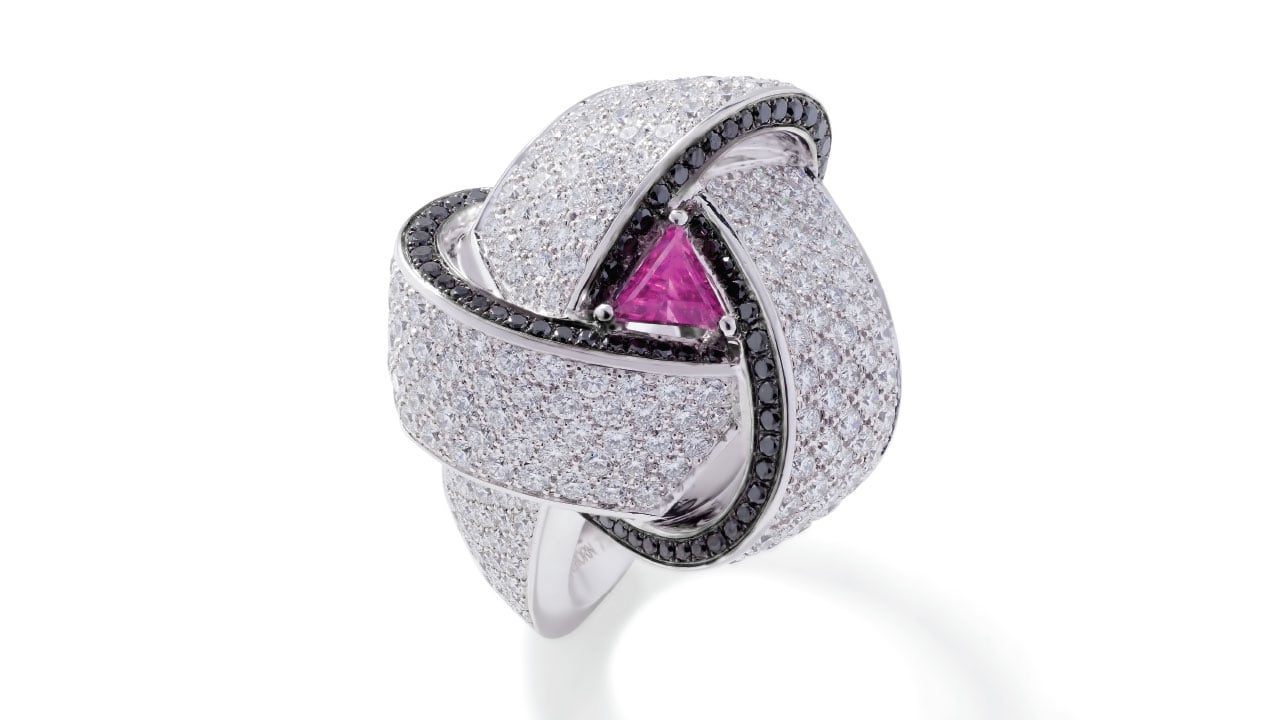
Main image: Ring from K.S. Jewelry. (K.S. Jewelry)