 WhatsApp
 Email
Email
 Facebook
 Twitter
 LinkedIn
Artificial intelligence promises to accelerate tedious tasks and deliver precise, data-driven insights. Over the past few years, it has transformed industries from finance to healthcare. Yet its role in luxury watchmaking remains complex.
Watch-industry executives have named AI one of the biggest trends in the timepiece market, second only to the rise of independent watchmakers, according to the Deloitte Swiss Watch Industry Study from October 2025. Among the trends AI outranked were the use of digital product passports to fight counterfeiting, and brands choosing to expand beyond watches.
At first glance, the ranking might seem surprising. If AI is one of the most disruptive technologies of the century, why does the watch industry appear cautious about embracing it?
The industry is under pressure. After record exports of CHF 26.7 billion ($33.52 billion) in 2023, outbound Swiss shipments dropped 2.8% in 2024 to about CHF 26 billion ($32.64 billion). The decline in volume was sharper: a 9% drop to 15.3 million pieces, about 1.6 million fewer than last year.
In this environment, the efficiency that AI promises is attractive. But how and where to apply it depends largely on the price point. At the entry level – the hardest-hit segment – brands are more readily adopting automation and AI to cut costs and streamline production. The luxury segment, though, uses the technology mainly to enhance forecasting, processes, quality control, and early design – not to replace craftsmen.
Backend benefits
The real impact of AI in watchmaking today is primarily operational, believes Oliver R. Müller, founder of advisory firm LuxeConsult.
“It’s very challenging for an industry relying on a narrative based mostly on tradition and craftsmanship to admit that new technology could help to improve the business,” he says, but there’s “no doubt that by now, many brands are using the new technologies at different levels, mostly to improve internal processes.”
Müller points to customer relationship management (CRM) systems, chatbots, and sales-forecasting tools. AI can analyze more data and do it faster, letting companies test market scenarios and react more quickly to changes in demand. Some executives, he adds, have already turned to AI for forecasting because the results were “tremendously better than before.”
Yet this growing use of data analysis does not mean the watch workshop itself has become automated in the way many people imagine.
The quest for balance
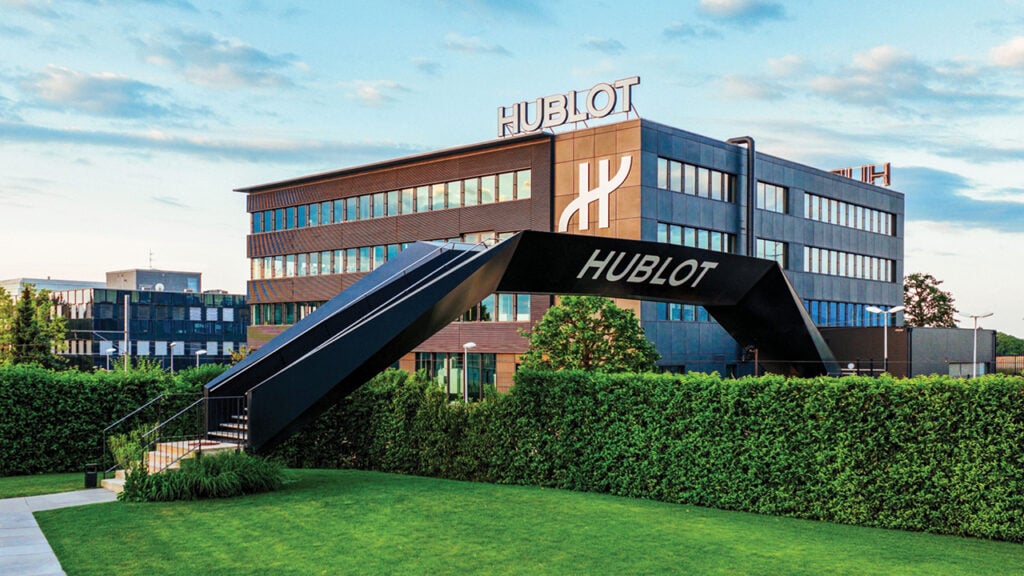
Finding the balance between technology and craftsmanship is a challenge, but that balance does remain intact, stresses Hublot chief product officer Sadry Keiser. “What I can say is that most of the watchmaking operations are done as they were decades ago.”
His point highlights an important distinction. In high watchmaking, the final production stages – assembly, adjustment, decoration and evaluation – still rely on skilled hands and eyes. Machines offer micron-level precision but do not replace the craftspeople who bring a watch to life.
Keiser also emphasizes that speed is not the industry’s main goal. Different watches require vastly different development timelines. Some models can be developed within six months, while others may take years, depending on the complexity of the research, the materials, and the engineering involved.
“Speed is not an objective; quality is the quest,” he says.
As such, high-end watchmakers tend to adopt the technology first in areas where it can improve repeatability and precision. Machining and tolerance control, for example, benefit from advanced tools capable of working at extremely fine scales. Machines today assist “in the highly precise operations and tasks within watchmaking and production, working at a micron level,” Keiser explains, much like the high-precision tools used in surgery.
Over the past five to 10 years, he reports, the most significant technical advances have occurred in two areas: material science and micromechanics. “The moment you find a way to combine the best material and its properties with your ability to machine it at a very low and precise scale, then you are on the right track.”
All about automation
While luxury brands such as Hublot emphasize craftsmanship, the broader supply chain is moving more aggressively toward automation.
The Deloitte report found that 70% of component-makers plan to invest in digital solutions and automation within 12 months, despite company cutbacks elsewhere. These investments aim to improve processes in machining, engraving, gem-setting, quality control, and logistics. AI-driven systems can anticipate maintenance needs, detect anomalies, and optimize manufacturing in real time.
AI-run systems are not glamorous, and watchmakers see no reason to flaunt them, but they are significant. By cutting waste, improving yield and predicting production, they can help sustain margins while preserving the handcrafted image.
Creative processing
AI is also reshaping other parts of the business. Of the 111 watch executives Deloitte surveyed, 63% planned to use AI for content creation, 59% for marketing campaigns, and 57% for improving internal processes. Meanwhile, 29% said they wanted to have AI assist in creative product development – up from 20% in 2023.
Some brands are already experimenting with consumer-facing applications. Swatch, for example, introduced AI-DADA, an AI-powered personalization platform that lets users generate watch designs in minutes. The system was trained on more than four decades of Swatch designs, innovations and artistic collaborations. Starting with a blank digital canvas, customers can prompt the system with an idea and receive a design suggestion almost instantly. They can then customize elements such as indices and movement colors before ordering a watch marked “1/1” on the case back, indicating that it’s a unique piece.
In this case, AI does not replace a watch designer. Instead, it serves as a creative interface between the brand and the customer.
Even the most tradition-oriented manufacturers acknowledge the technology’s value. At Dubai Watch Week this past November, Rolex chief executive Jean-Frédéric Dufour said the company was investing roughly CHF 100 million ($125 million) annually in upgrading its machinery, generally replacing the equipment every eight years. While artificial intelligence is increasingly integrated into production processes, he remarked, skilled watchmakers are still the ones carrying out the final assembly, and customer interaction remains a human responsibility.
His comment neatly summarizes the industry’s current position. Luxury watchmaking today is more technologically sophisticated than brands have historically liked to emphasize. Advanced machinery, automation and data analysis increasingly support the production process. And it looks likely to continue that way, because what makes mechanical watches special compared to the time displays on everything from fridges to bus stop clocks is the human touch.
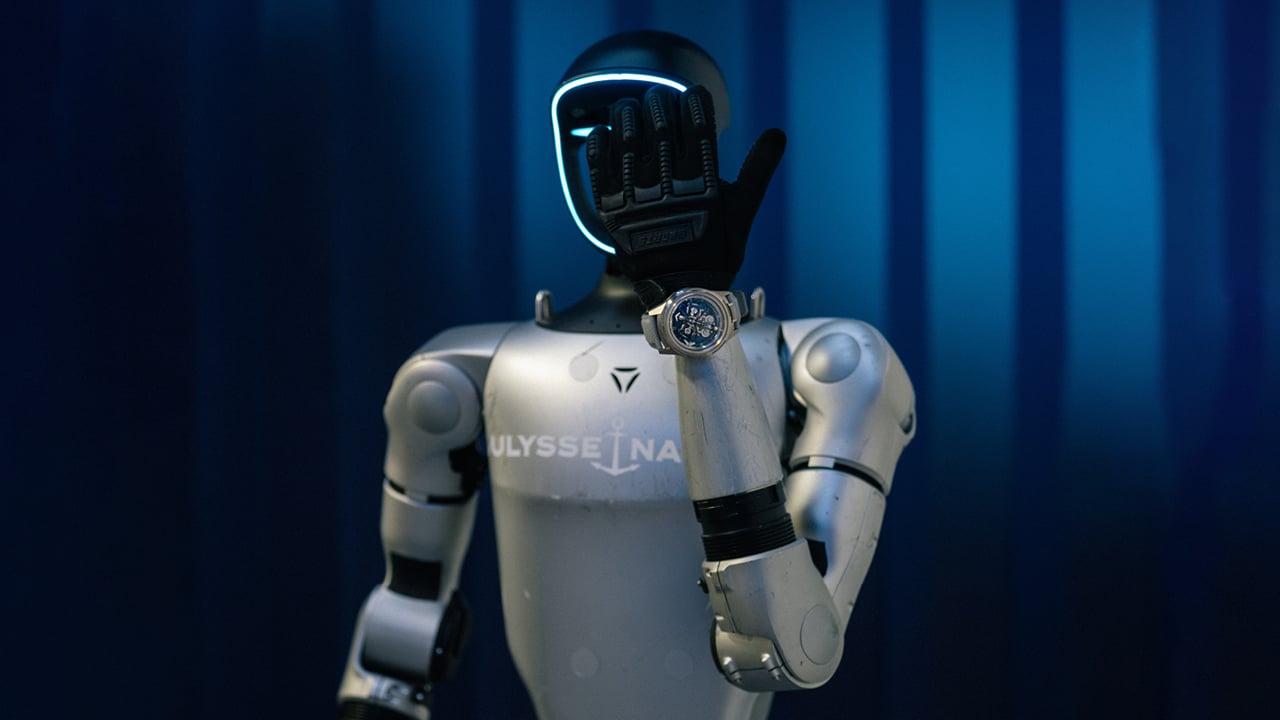
Main image: A Ulysse Nardin robot that greeted guests at Watches and Wonders 2026. (Ulysse Nardin)