 WhatsApp
 Email
Email
 Facebook
 Twitter
 LinkedIn

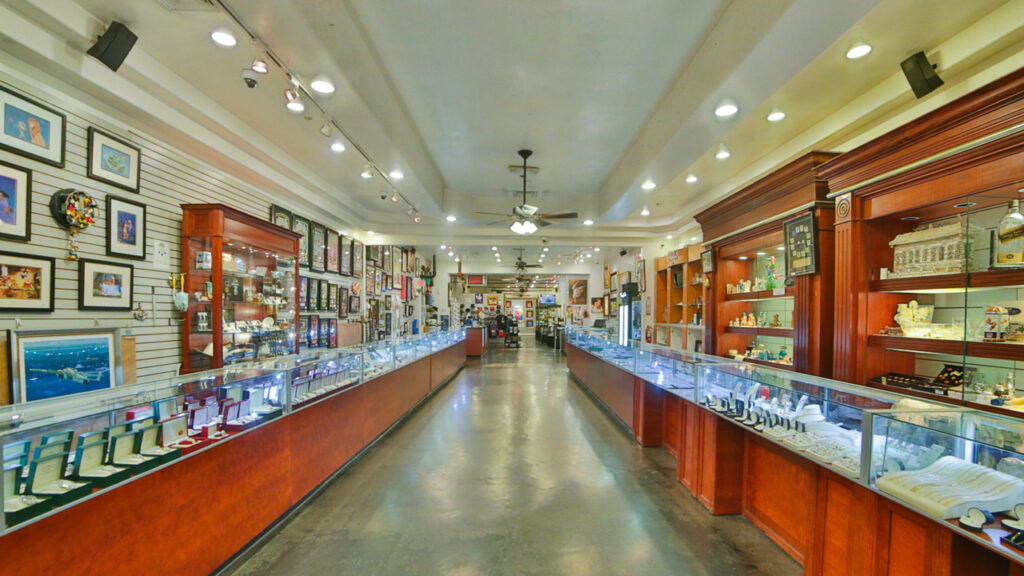
Diamonds account for a huge percentage of transactions at Gold & Silver Pawn in Las Vegas, and because of price drops in the natural-diamond market, the bustling business has had to adjust how much it pays per carat.
“In the past couple of years, we have reduced by 15% to 20% the percentage that we are willing to pay,” explains Judy Sandoval, the shop’s pawn-counter manager. Jewelry accounts for 80% of business, she says, with diamonds representing 50% of that category.
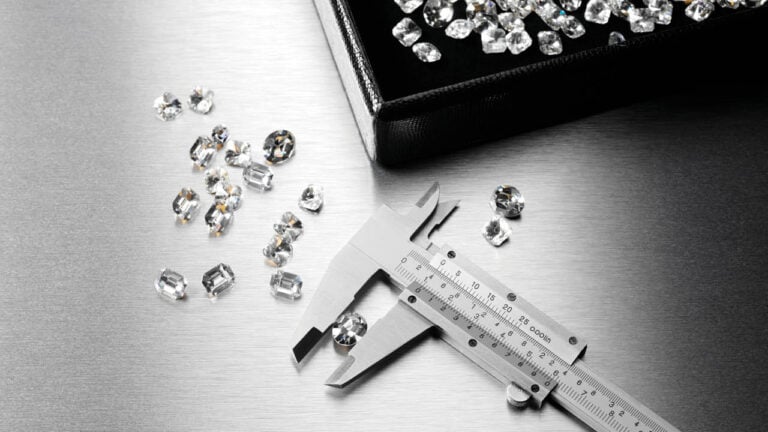
On the secondhand market, natural diamonds have taken a beating from the influx of synthetics, but they still have value. For pawn shops and estate dealers, determining that value is a delicate balance of market demand, diamond size and quality, the cost of new diamonds, the store’s inventory needs, and how much cash it has on hand.
“There are a lot of criteria for how [buyers] choose what to pay,” says Susan Eisen of the eponymous jewelry and watch dealer in El Paso, Texas. “That’s not something physical that you can look up.”
Little market for melee
Anything 1 carat and larger — especially with a lab report — can command respectable sums. Secondhand melee generally doesn’t, because it can come chipped and require maintenance before it’s ready for resale. Some shops just pay a low flat fee.
“Nobody’s paying for melee anymore,” affirms Steve Jacobson, owner of Mr. Steve’s Pawn Shop in Los Angeles.
In the US, very small stones make up more than half of overall diamond sales, according to Edahn Golan of Tenoris, a firm that tracks retail data and market trends in the diamond and jewelry sector.
Manes Bejar has built his business around buying and selling liquidated diamonds. The president of Demond Gems in Miami, Florida, knows firsthand that lower-end melee prices are way down — “probably 30% from just a year ago,” he says. “SI stones are still yielding some decent value, but mostly I1 to I2 and [below] have dropped a lot.”
Diamonds account for 40% of business at Elk River Trading Company in Fayetteville, Tennessee. Owner Robert N. Barnett is a board member of both the Alabama Pawnbrokers Association and the National Pawnbrokers Association, as well as vice president of the Tennessee Pawnbrokers Association. He, too, has seen the challenges of reselling melee firsthand.
“Some of the smaller pieces that are not ultra-fine diamonds, they just kind of sit in the vault until we get enough that we’re going to take them and have them sorted and sold to a diamond seller,” he relates.
The type of diamond is a factor in what secondhand dealers are willing to buy, in melee or otherwise. “A lot of the estate diamonds are single cuts, which we don’t really use that much,” says Eisen.
Cultural trends also play a role. “If the trend is to have an oval-diamond ring because a celebrity just got engaged with an oval-diamond ring, then we are willing to make a higher offer for a stone that we know will resell well,” says Sandoval.
Still in demand
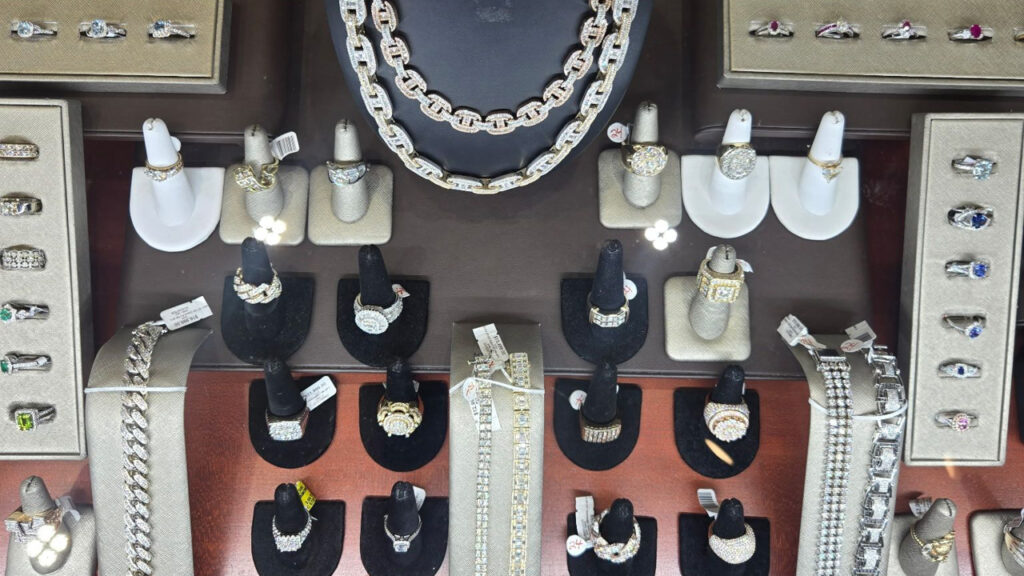
Despite the battered price points, Barnett knows diamonds still drive clients into his shop, where three cases of diamond jewelry stand front and center at the entrance. “The first view that customers see is all large diamonds,” he says. “Diamonds still have the eye appeal and the value perception, and it is still what everyone tends to desire.”
Golan echoes that sentiment. “[Consumers] don’t keep up with inflation, but the value is there nonetheless…especially if they have the means to spend on a natural diamond, which is something we kind of lost over the last 10 to 15 years.”
Insiders know there’s plenty of merchandise on the secondary market thanks to Baby Boomers liquidating their collections. Brad Wilson sells about 150 pieces of secondhand jewelry a week at his Philadelphia store. The Wilson’s Estate Jewelry owner, who buys his wares from trade dealers, doesn’t envy peers who buy directly from the public, as the drop in diamond prices means they have to explain to people why their diamonds aren’t worth what they think.
“Especially if clients have one of these old, elevated appraisals that say their diamond alone is worth $12,000,” he elaborates. “And you’re telling them, ‘Well, I can buy this $12,000 diamond for $1,500 from diamond suppliers right now.’ You make a luxury purchase because you like it, collect it, will enjoy it, and want to wear it. But we never go down that road of implying that it could appreciate in value.”
An upturn ahead?
On the upside, analyst Paul Zimnisky sees a light at the end of the diamond-value tunnel. Tariffs and the ongoing attempt to sell De Beers have been keeping the market off-balance, but once those issues get resolved, he expects some confidence and stability to return to US diamond prices. “I think there are actually more potentially positive catalysts [for diamonds] on the table than negatives at this point,” he says.
Eugene Matteson also sees hope for the natural industry. Diamonds from the pre-owned market make up some 90% of sales for the owner and manager of Rochester Findings in Rochester, New York.
“I know that the same stone I would be selling for 70% off [the Rapaport list] six months ago, I’m now getting back to 55% to 60% off in discounts again,” he says. “That’s a good sign to me, and that’s all larger, 1 carat-and-up stones.”
Main image: Gold & Silver Pawn’s Las Vegas shop. (Gold & Silver Pawn)