 WhatsApp
 Email
Email
 Facebook
 Twitter
 LinkedIn

Beyond the classic Bohemian crimson variety, garnets dazzle in an array of breathtaking greens, zingy oranges, and even rare color-changing combos. In fact, garnet isn’t just a single gemstone — it’s a diverse family of closely related minerals, each boasting its own character, color and energy. Despite their differences, all garnets — like diamonds — share a cubic crystal structure, which gives them their crisp brilliance and enduring strength.
Garnet’s appeal is expanding as more people discover its diversity. “Garnets have really come a long way,” says gem dealer Vlad Yavorskyy, who’s been instrumental in bringing less-common versions such as tsavorite, mandarin, rhodolite and malaya to a wider audience.
Education has been crucial. “Showing people the natural, untreated gem — how it’s cut and [how it] sparkles — and comparing a few fine pieces side by side helps identify [the stone’s distinct] value, beauty and rarity,” Yavorskyy explains. “They’re no longer just the January birthstone. Collectors are realizing there’s a whole world of garnets and [are appreciating] the finer varieties.”
Behind the prices
Demand for garnets has grown steadily over the past 15 years. Bangkok-based dealer Gil Yuda credits social media and high-quality digital imagery with getting these gems greater exposure.
Josh Saltzman of artisanal gem-cutting company Nomad’s affirms the rise in demand. At the same time, he says, “the supply of bright, open material has dwindled.”
Those two factors have driven up prices for most garnet varieties. Rhodolite remains relatively affordable thanks to steady production and availability, but other varieties are increasingly scarce.
“For bright orange mandarin, tsavorite, mint grossular, and demantoid garnets, prices can be particularly high,” says Saltzman. “It is uncommon to find fine pieces over 5 carats, and when they do appear, the rarity pushes prices even higher.”
Given the darker tone of many garnets, experts believe that cut quality and design, which impact a stone’s light performance, are major factors in its value. “Medium to dark-toned garnets suffer greatly from poorly optimized designs that [lead to effects that] darken the stone’s appearance, thus greatly affecting price,” Yuda reports.
Green and orange on the rise
Tsavorite remains consistently popular, though fine-quality stones above 1 carat are extremely scarce. Since 2020, both prices and demand have risen dramatically, with Asian markets favoring deeper green tones, and North American buyers preferring vivid, more open colors.
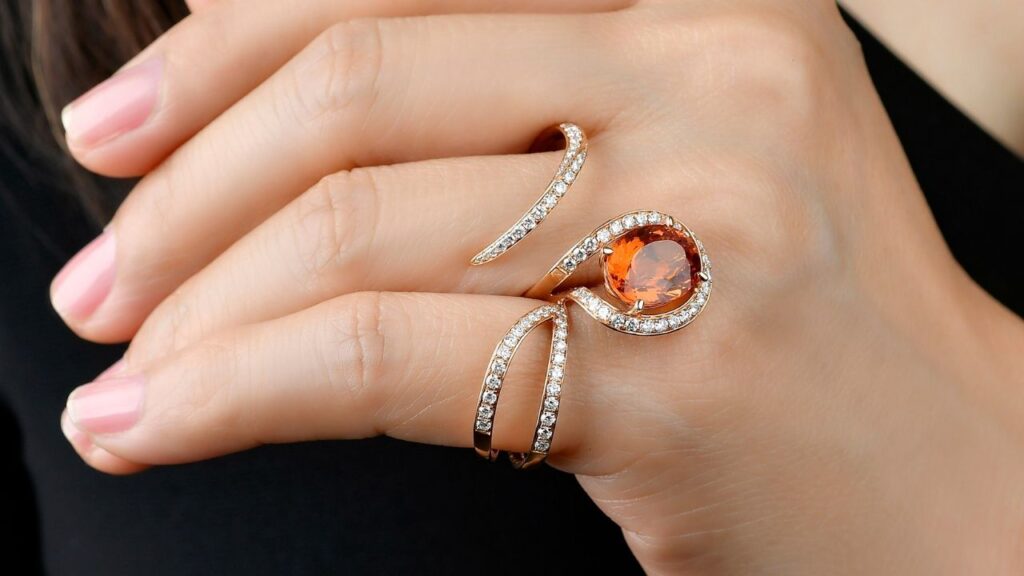
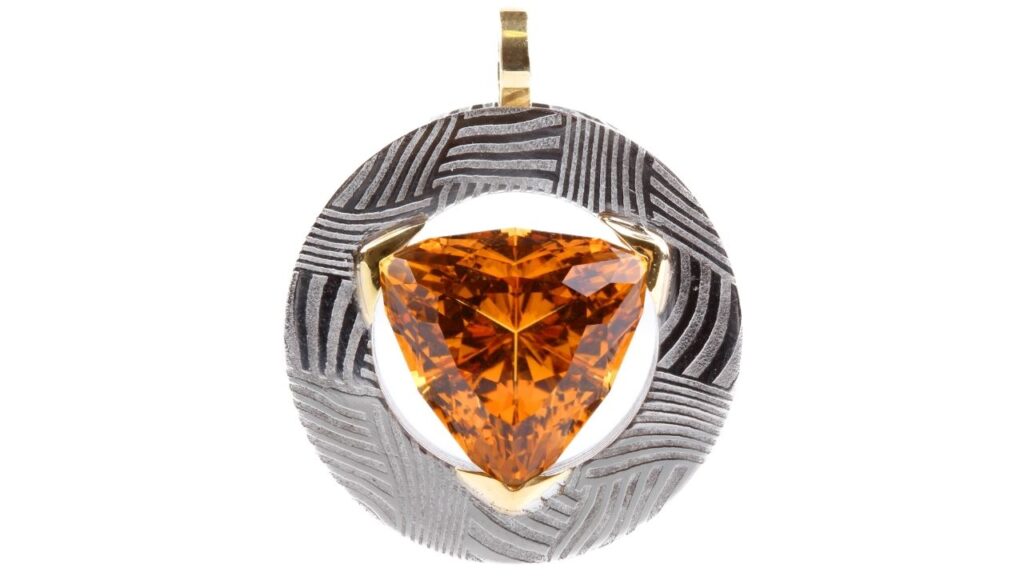
The popularity of mandarin garnet, particularly the vivid “Fanta” hue, has surged in the last several years, according to Saltzman, especially in China. Yavorskyy agrees: “Serious collectors love the bold, juicy orange for modern jewelry. The US and Europe remain key markets, but Asia and the Middle East are catching on fast.”
A type of spessartite garnet, the mandarin variety has also seen the strongest price increase. “Major brands have been accumulating spessartite in unprecedented quantities, driving both awareness and demand,” explains Yuda. “Today, Nigeria and Tanzania are the two dominant sources.”
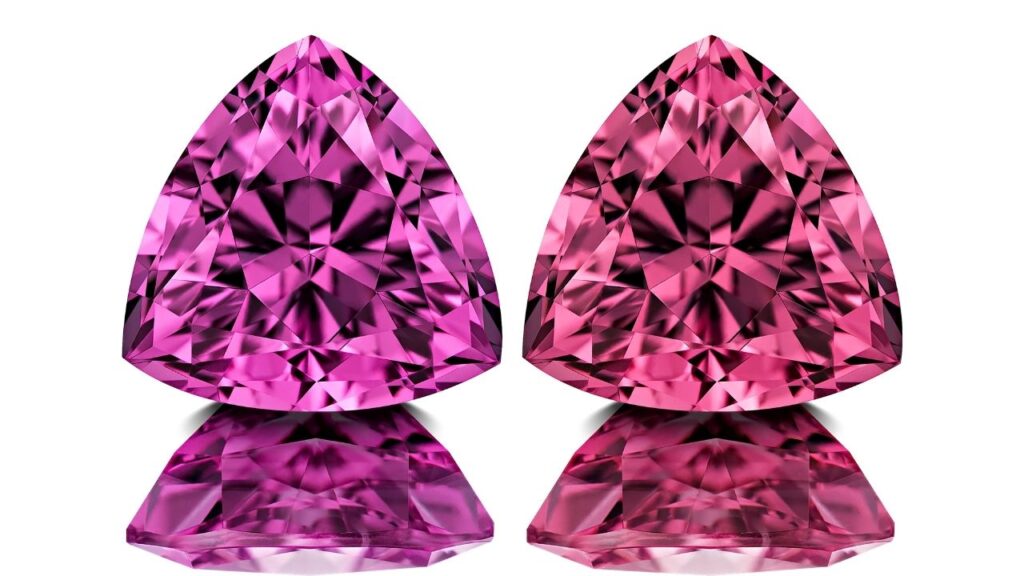
Mint garnets are also gaining traction. “Grossular garnets have been very much [in vogue], both in the traditional saturated greens and the fresher mint tones,” says Saltzman. “The peach- to pink-colored malaya garnets have also been increasingly popular,” with the finest examples displaying flamboyant pinkish-orange hues.
Navigating supply
The garnet supply chain remains steadier than that of many other gemstones, according to dealers, though it continues to present challenges, particularly when it comes to the best qualities. “Sourcing top-quality garnets is an art in itself,” says Yavorskyy. “The rough can be small or imperfect, and there’s a lot of competition for the really fine stuff.”
Yuda echoes this sentiment, noting the unpredictability of deposits. “A pocket might be found in [Tanzania’s] Umba Valley and be exhausted a month later. For the finer varieties, sourcing remains unstable due to the natural limitations of the deposits.”
Beyond that, reports Saltzman, rising gold prices have drawn artisanal miners away from gemstones in many mining regions. And the fact that most garnet mining is the work of small-scale operations adds to the uncertain nature of supply.
Seeing old shades with new eyes
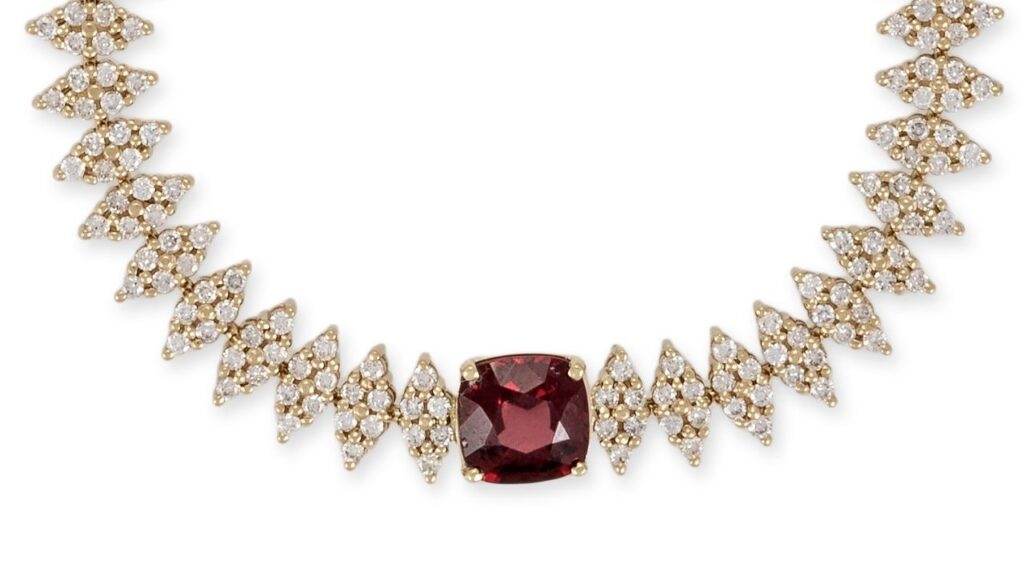
Few new garnet deposits have come to light recently. However, “over the past decade, some colors that were once overlooked have gained recognition, like mint grossular garnets,” says Saltzman. “What was once dismissed as not ‘good enough’ to be a tsavorite began to be appreciated in its own right as a beautiful gemstone. The discovery of larger pieces for a brief period, coupled with the endorsement of big brands, helped turn it into a sought-after stone.”
It’s not the only color to see a spike in popularity and a drop in availability recently. Certain local finds, such as Mozambique’s purple rhodolite garnets, attracted strong interest but quickly ran out, and even before that, they were typically found in sizes under 5 carats, relates Saltzman. Pink and peach malayas from Tanzania are another in-demand category, though production remains sporadic, with only occasional parcels of rough entering the market.
As for mandarin, Saltzman recalls that “15 years ago, we’d see piles of rough being brought into our office. Now it’s just one or two pieces — often included and offered at very high prices.”
Despite these challenges, there have been some bright spots. Yuda points to a significant new find of umbalite in the Umba Valley, which has drawn many buyers to the area. “Although the quantity of good-quality stones was high, demand was even higher,” he says. He also points to malaya garnets from Madagascar, which have been in the spotlight for their exceptional clarity and vivid color. “We’re seeing more of them in the market, and prices continue to rise.”
Measuring up
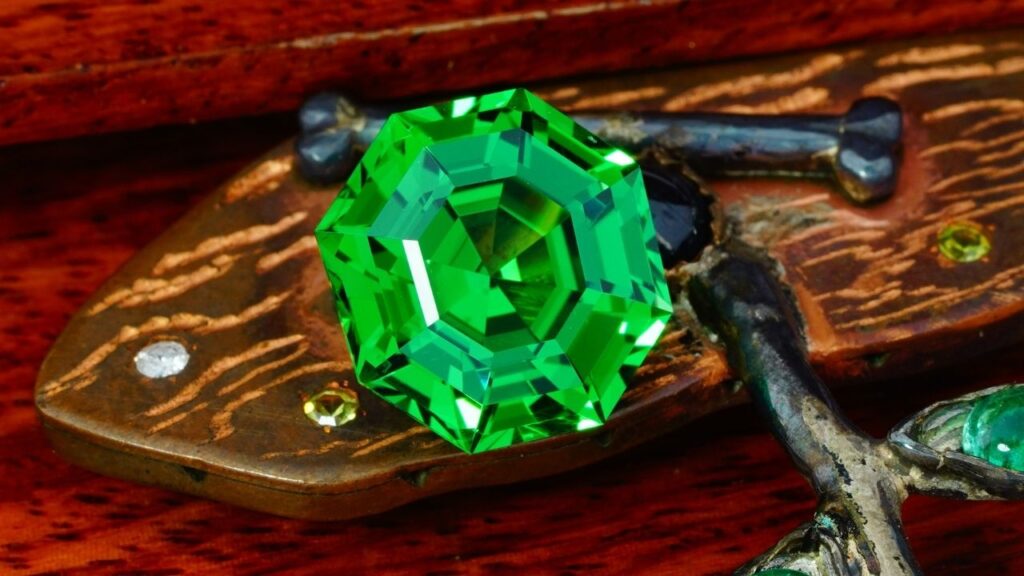
To assess fine garnets, gemologists use the 4Cs — color, cut, clarity and carat weight. Color remains the primary value driver. Stones with vivid, saturated hues and good transparency command premium prices, as overly dark tones are more common. The cut, meanwhile, plays a defining role in unlocking the stones’ full brilliance.
“We cut in-house and analyze the rough carefully to maximize color and light reflection,” says Brieuc Taymans of supplier Taymans Fine Gems.
Saltzman highlights the importance of clarity, explaining that “clean stones in bright, open colors are commanding a premium.” However, clarity standards vary by type. With spessartites and Fanta mandarin garnets, minor inclusions are often acceptable or even an advantage, as they can enhance the stone’s inner fiery glow. “The historic Namibian material that defined this color was known for such inclusions,” Saltzman says. In contrast, rhodolite and malaya get judged more stringently on clarity because there’s more clean material available.
The mixed cut remains the industry favorite for garnets. “A step-cut pavilion with a modified brilliant crown works beautifully,” says Yuda. “Cushion and oval outlines are especially popular.”
Yavorskyy agrees, adding that these cuts showcase color effectively while maintaining weight.
Worth buying
Dealers have observed that collectors increasingly view garnets as investment-worthy assets. They expect a wave of high-end garnet jewelry in the years ahead.
“Many varieties are still young [in] the market compared with the Big Three — ruby, sapphire and emerald,” says Saltzman. “As more people recognize how rare fine material is in larger sizes, demand will only rise.”
Taymans believes fine rhodolite remains undervalued. “The finest specimens have an amazing vibrant red color, yet most customers choose lower-quality rubies or rubellites instead.”
Yuda, for his part, predicts that malaya and spessartite will grow in value as sources run dry and demand climbs. “Several old-stock collections show that large, fine-quality stones were far more available in the past than what mines are producing today. This pattern points to growing rarity.”
Main image: Picchiotti Fan ring featuring a 7.57-carat spessartite garnet. (Picchiotti)