 WhatsApp
 Email
Email
 Facebook
 Twitter
 LinkedIn

US President Donald Trump’s sweeping tariffs on much of the world added a new layer of complexity for international sellers of pre-owned jewels and luxury goods. With little guidance, many in the trade found themselves navigating uncertainty, particularly when it came to jewels that sold in a different country than their nation of origin. The prevailing view is that the tariffs discouraged US collectors and dealers from buying abroad, funneling more business to American auction houses and dealers.
“I think it was close to impossible for an American buyer to purchase anything at the November Geneva sales,” comments Ariel Saidian of jeweler Joseph Saidian & Sons. “Between commissions, a weak dollar, and tariffs, a hammer price is almost doubled by the time it arrives home. We purchased much less than usual this round in Geneva. But there is still so much buying overseas that Geneva remains a strong indicator of the global market.”
Looking ahead, Saidian believes the balance could continue to shift if tariffs remain in place. “In the long term…American sales may become the annual milestone market indicator for the jewelry industry, replacing Geneva’s traditional role. We saw the beginning of this trend with Christie’s New York last June, which sold 100% of its lots. For private American collectors, I see significant growth potential in buying from US-based vintage jewelers — which, I suppose, was one of the intended goals of the tariffs: to strengthen American businesses.”
Greg Kwiat echoes that sentiment. “In some sense, tariffs have shifted auctions away from being truly global showcases and toward more regional affairs,” says the owner of diamond jeweler of Kwiat and estate dealer Fred Leighton. “The difficulties associated with bringing jewelry into the United States have had US buyers focusing primarily on US-based auctions, leaving international sales largely to European and Asian dealers.”
That dynamic has reinforced domestic demand, Kwiat believes. “The challenge of importing new inventory has benefited US dealers holding ‘post-tariff’ inventory. Market participants in the US felt strength throughout 2025. The looming possibility of higher prices due to tariffs was a powerful incentive for private clients to buy now rather than wait.”
On the website for its May Magnificent Jewels sale, Christie’s Hong Kong posted a note that any lots of non-US origin were subject to a 10% tariff if imported into the United States, with higher rates applying to items originating in China and Hong Kong. The notice also emphasized that buyers were responsible for all applicable taxes and duties, directing them to the auction house’s full conditions of sale.
Bonhams global jewelry head Jean Ghika feels it is still too early to measure the full impact of the tariffs. However, she adds, “the United States is currently the strongest region in terms of both bidding activity and consignments.”
For Saidian, 2025 marked a turning point: “It was a very important year for the luxury market, especially in America. Vintage jewelry had reached unprecedented levels of popularity and strength before the tariffs were enacted…. Once the initial shock passed, and Americans realized how difficult it had become to buy overseas, reputable US dealers and institutions with global reach were empowered.”
Still, the rarest segments remain inherently international, he says. “The market for exceptional, signed vintage jewelry is extremely limited. Collectors often wait months or even years for the right piece to appear.”
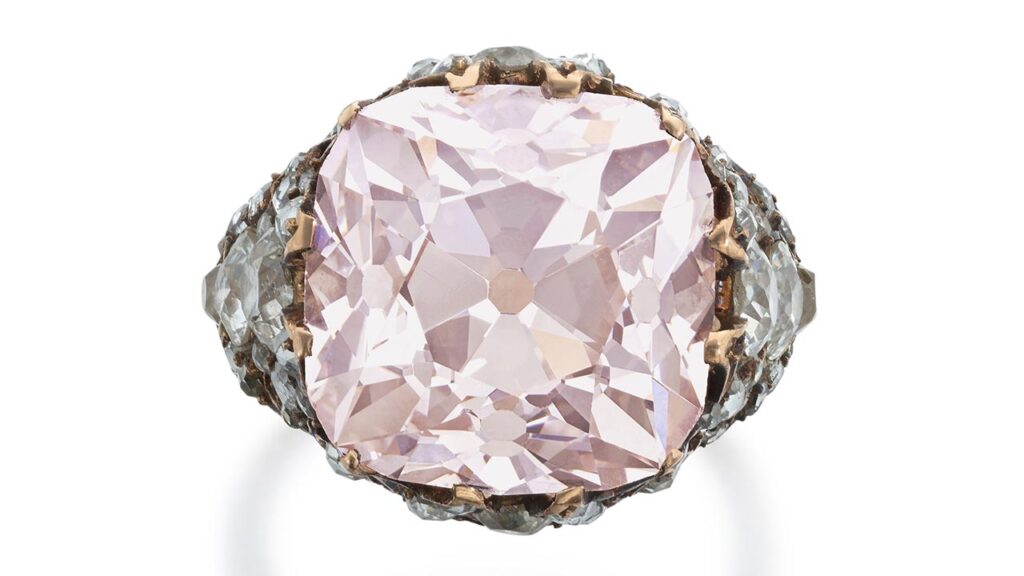
Main image: Boucheron’s Art Nouveau Juno pendant in enamel, sapphire and diamonds, circa 1900, which sold at Bonhams New York in June 2025. (Bonhams)