 WhatsApp
 Email
Email
 Facebook
 Twitter
 LinkedIn
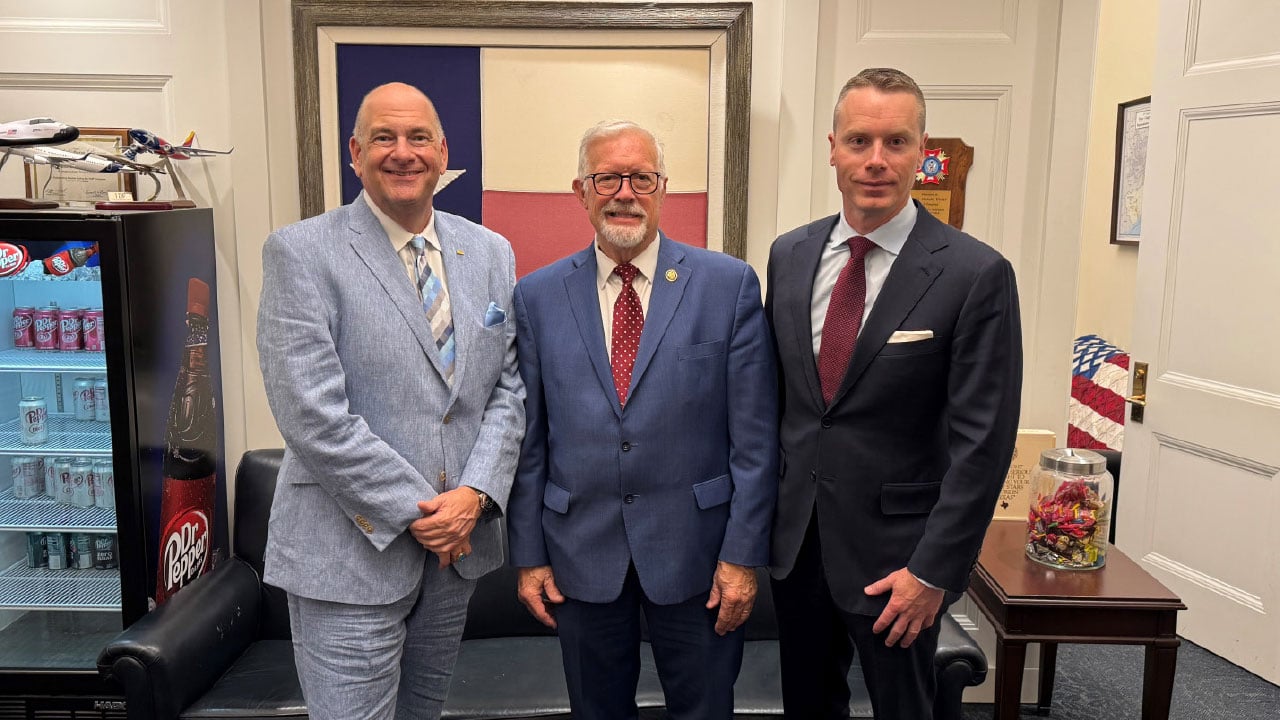
Behind the scenes, the American Gem Trade Association (AGTA) has been fighting a quiet, complex and costly battle in Washington, DC. As AGTA CEO John Ford and AGTA President Bruce Bridges tell it, AGTA’s work has not only helped to get gemstone shipments moving again into the US — it has effectively saved the global industry.
Why it matters
“The US is the biggest market for color in the world. Without the United States, the whole industry suffers,” Bridges says. The old economist’s line still applies: If America sneezes, the world catches a cold. When tariffs threaten to choke the flow of gems into the US, it isn’t just dealers who feel the squeeze. From mining towns in East Africa to cutting centers in Thailand and Sri Lanka, livelihoods everywhere hang in the balance.
The tariff shock
On April 2, 2025, President Donald Trump signed sweeping trade measures, imposing a 10% baseline tariff on nearly all imports.
When you examine the specifics, Washington applied broad tariffs under industrial mineral codes — and gemstones, being minerals, were caught in the dragnet, treated like chemicals or raw ores instead of luxury materials. Gemstone importers suddenly faced duties that simply did not exist in the United States.
These tariffs on imported goods raise their landed cost. In practice, they add expense to materials that have to come from overseas. For gem and jewelry businesses like ours, that means we’re paying extra duty on stones we can’t source domestically. Those added costs cut into margins, ripple through the supply chain, and make it harder for American jewelers to compete with finished jewelry produced abroad.
AGTA jumped on the problem immediately
Within days, AGTA assembled a bipartisan DC team of trade attorneys and lobbyists, with deep experience in trade policy — a team that could open doors on both sides of the aisle. This partnership gave AGTA rare access inside Washington.
AGTA used that partnership to meet with senators and members of congress. “If you have a 2:00 meeting with senators or members of Congress, you’re not kept waiting,” Bridges recalls. “They listen — and at the end, they ask, ‘What can I do to help?’”
Ford and Bridges had a simple answer: Write letters, call the administration, and make sure gemstones are recognized as minerals not available domestically.
The turning point: Annex III
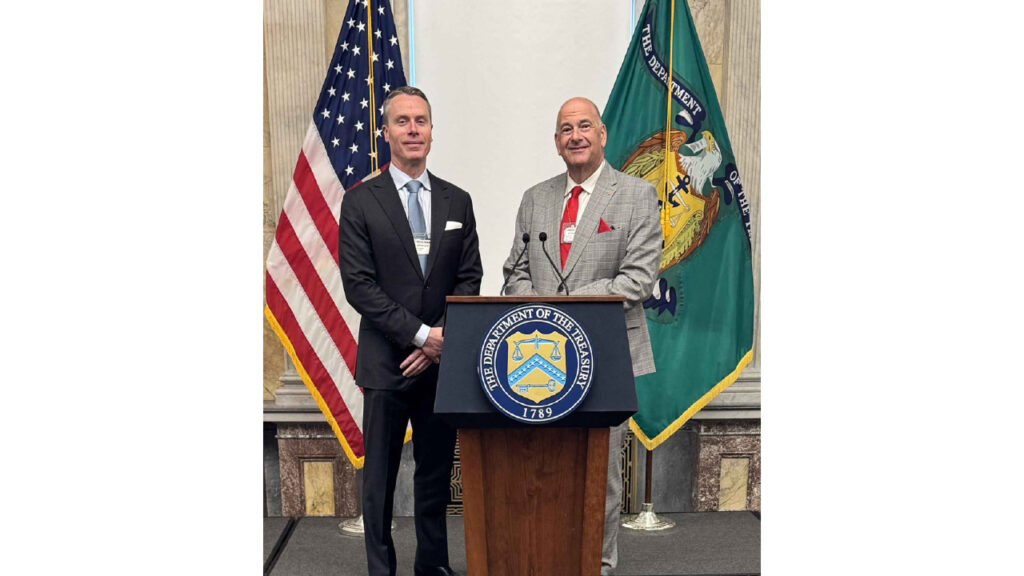
Months of meetings paid off when gemstones were added to Annex III, the US tariff schedule that defines which imports qualify for duty exemptions.
“It wasn’t because somebody at the White House likes jewelry,” Ford says. “It was because a number of congressmen, led by Randy Weber of Texas, sent letters and made calls to ensure gemstones were reviewed for decision.”
That September 2 executive order formally recognized gemstones as minerals not available in the US, placing them into Annex III. Ford laughs at the irony: “Annex III mostly lists pharmaceuticals and chemicals — and then there’s loose gemstones. We were batting way above our average.”
Beyond the exemption: What comes next
Listing in Annex III is only the first step. For the exemption to take effect, each source country must negotiate or update a reciprocal trade agreement with the US that includes the Annex III language. Only at that point does the waiver become legally effective for that country’s exports. That’s why AGTA’s work now extends to partner nations and embassies.
And that’s also why it was vital for AGTA to be in Washington from the start. Had they not jumped in with both feet immediately, gemstones would never have made the exemption list.
Update: The Thailand framework
AGTA’s campaign has reached its next milestone. The United States and Thailand have now agreed on a Framework for an Agreement on Reciprocal Trade — a key step toward restoring duty-free status for Thai colored gemstones.
AGTA has filed an official petition with the US Trade Representative, requesting that gemstones from Thailand be included under Annex III of Executive Order 14346, part of the new Framework for Potential Tariff Adjustments for Aligned Partners (PTAAPs). Once approved, the measure would set a 0% reciprocal tariff for qualifying gems entering the US from Thailand — effectively reinstating duty-free trade for loose stones.
Global ripple effect
Bridges says Thailand and Sri Lanka are immediate priorities, with discussions also underway with India,
Zambia, Mozambique, Kenya, Tanzania, Australia and Indonesia. “If Thailand opens,” he says, “everything else follows. Asia is the key.”
A fight funded by the association
Ford credits AGTA’s membership with underwriting the campaign and singles out Matt Stuller’s help with the Louisiana delegation.
“They now know AGTA,” Ford says. “When we call, people listen.”
The bigger picture
What began as a bureaucratic misclassification became one of the most consequential trade course-corrections in modern gem history. The world’s colored-stone industry remains in motion because two men — backed by a determined trade association — refused to let silence become policy.
“We didn’t go to Washington for a photo op,” Ford concludes. “We went to make sure our industry wasn’t forgotten.”
In an October 28 official statement from the Office of the United States Trade Representative (USTR), officially announcing that President Trump had signed Agreements on Reciprocal Trade with Malaysia and Cambodia and reached Frameworks for Agreements on Reciprocal Trade with Thailand and Vietnam, AGTA was acknowledged and quoted as thanking “President Trump, the Office of the US Trade Representative, and the Departments of Commerce and Treasury for their continued support of American industries reliant on mineral resources not found domestically.”
Main image (from left): AGTA CEO John W. Ford, Sr., US Representative Randy Weber from Texas, and AGTA Board President Bruce Bridges. (American Gem Trade Association)