
The engagement-ring shopping process has changed — and today, consumers are purchasing engagement-ring insurance earlier in the process and more often than ever.
This is due to a variety of factors that we’ll discuss in greater detail below, but they include consumers’ growing acknowledgement of the coverage gaps that exist in standard homeowner’s or renter’s insurance policies; clearer jewelry-insurance pricing; the ability to purchase engagement-ring insurance online, and greater education at the point of sale, including on the reality of risks.
Keep reading for a quick primer on how modern jewelry insurance works, and what buyers are responding to.
The shift: Insurance is moving into the standard post-purchase checklist
Specialized jewelry insurance is more than just a product trend — it’s becoming a part of consumer behavior and a standard part of the jewelry-purchasing process.
Today’s consumers view an engagement ring as a major investment, and one they want to protect, reducing their risks as much as possible. As such, the new normal is that the process of acquiring an engagement ring is only just beginning when the ring is sold.
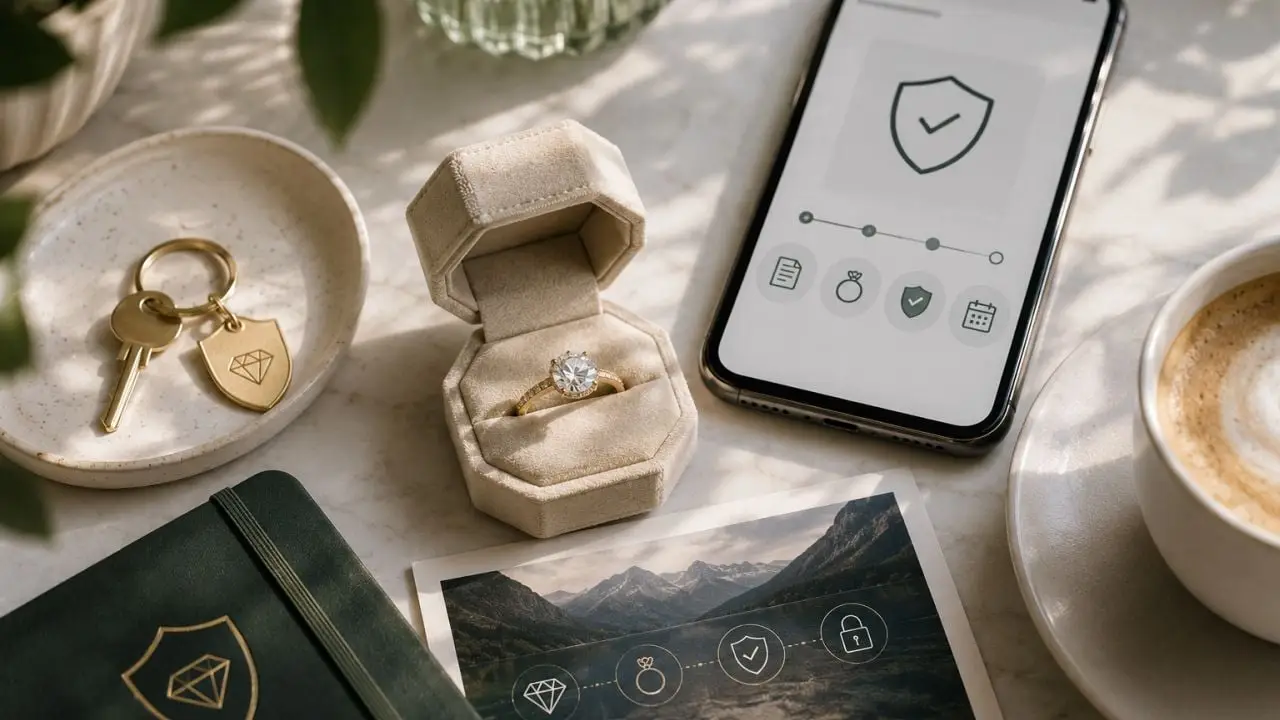
From that point, the process often includes documenting the ring (perhaps with the help of the jeweler), seeking a jewelry appraisal if needed, and then exploring comprehensive jewelry protection as soon as possible so as to negate risks immediately.
Buyers are learning their home policy won’t fully protect the ring
For many consumers, renter’s and homeowner’s policy limits are a driving factor in purchasing a jewelry-insurance policy versus relying only on a jewelry rider or itemized coverage. Exclusions such as accidental damage, high deductibles, and limited reimbursement all make renter’s or homeowner’s insurance less than ideal.
Many consumers don’t immediately think about the fact that their homeowner’s insurance policy exclusions mean their jewelry will only be covered under very specific circumstances — such as theft or a fire — leaving them vulnerable to risks like accidental damage or loss. Meanwhile, that theft and loss coverage will only cover them if the loss occurs while the jewelry is within the home, forcing them to rely on additional coverage options during travel.
Even if the jewelry is covered by the policy, high deductibles may result in a similarly high out-of-pocket cost for jewelry replacement or repair, and limited coverage for personal items often means the policy will pay out an amount far below the average value of an engagement ring.
Once consumers understand these limitations in their existing coverage, they quickly see the value of specialized jewelry insurance.
How to explain existing insurance shortfalls to consumers
Policy limits differ from customer to customer, so jewelers explaining existing shortfalls in their homeowner’s or renter’s insurance policy should keep things more general and focus on the full financial investment protection that specialized jewelry insurance provides, in plain English.
Stress that much of the time, specialized jewelry coverage (dependent on deductible options) can provide repairs or replacement of the same kind and quality, for no additional cost whatsoever.
Real loss scenarios don’t fit neat categories
Consumers are likewise realizing that in addition to general coverage limits, the standard homeowner’s policy may not offer mysterious-disappearance coverage at all — and mysterious disappearance is exactly the kind of loss that buyers fear most, as it can’t be easily explained like a theft can.
“Mysterious disappearance” refers to any unexplained loss, and this coverage can ensure that policyholders receive the full replacement value of their engagement ring or other fine jewelry.
Scenarios that might fall under “mysterious disappearance”:
- The ring is packed away in a suitcase for a trip, pre-proposal, but can’t be located once the owner reaches the hotel.
- The ring is tucked into a gym bag or locker and seemingly vanishes.
- The ring is lost during a move.
- The ring is turned over to someone else for resizing and is lost in the process.
It’s easy for consumers to see why protecting jewelry through mysterious-disappearance coverage is a necessity.
Insurance finally feels affordable and predictable
Not only are consumers understanding all their risks, they’re also realizing just how easy and affordable jewelry insurance can be, with many policies costing under $10 per month, making it an easy sell.
How much does engagement-ring insurance cost? Typically, diamond ring insurance costs about 0.5% to 1.5% of the ring’s appraised value per year. Using this range, if one has a ring with an estimated value of $10,000, an engagement-ring insurance policy would cost $50 to $150 annually, or around $5 to $13 per month.
Beyond ring value, factors that might influence the final policy price include the policyholder’s location and individual risk, and coverage choices that may differ from provider to provider.
Insurance has gotten faster – so buyers actually finish the job
Beyond the affordable cost, modern consumers also benefit from the convenience of online, instant jewelry-insurance quotes, and this ease and convenience means shoppers are more likely to purchase coverage fast, rather than putting it off.
Historically, insuring jewelry might’ve required days to get an appraisal, make calls for quotes, etc. Today, quotes are delivered in seconds, and every part of the process can be completed online, right from the shopper’s phone.
In fact, many modern insurers emphasize their quick online quote processes, minimal jewelry-insurance requirements, and streamlined flows, including during the jewelry-claim process in the future.
Point-of-sale education is stronger than it used to be
Retailers and jewelers are catching on to all of the above reasons why shoppers are buying jewelry insurance earlier and more often — and they’re playing their part in the process by providing thorough education and anything else shoppers need to make that next step of securing coverage easy.
For example, some may provide a document pack at checkout, including the receipt, Gemological Institute of America (GIA) grading report or similar, and guidance regarding appraisals and insurance. Some may offer appraisals for insurance themselves. They’re also providing education on coverage at more touchpoints, such as at checkout, at an appraisal handoff, or when resizing.
This all normalizes the process of purchasing damage, theft and loss coverage for new jewelry, making it a straightforward to-do rather than an add-on option.
Seven ways to support the new protection mind-set
Support shoppers’ new protection-focused mind-set with these seven simple steps:
1. Create a simple “after you buy” card for shoppers, with information regarding jewelry care, documentation, and how to insure an engagement ring.
2. Educate shoppers on appraisal timing and what “insurance-ready” means in regard to jewelry’s appraised value.
3. Explain how a warranty differs from true jewelry-repair coverage using simple language, no jargon.
4. Build a simple handoff process for any needed resizing or repairs, to limit risk.
5. Encourage shoppers to invest in secure at-home storage and to practice safe travel habits, especially pre-proposal, when loss risk is highest.
6. Offer digital document storage guidance.
7. Partner with modern insurance providers, making it easy for your shoppers to get a quick jewelry-insurance quote.
For buyers who want to understand better after the sale, a clear overview of engagement-ring insurance can help them evaluate coverage, timing, and common protection gaps.
The three misconceptions buyers still have
There’s still additional education that consumers need, though. Many still believe that a homeowner’s insurance policy’s personal-property coverage is sufficient, that a jewelry warranty is the same as insurance, or that they can hold off on insuring an engagement ring until after the proposal.
| The Myth | Reality |
| Homeowner’s insurance covers jewelry fully. | A homeowner’s or renter’s policy’s limited coverage risks not being able to replace or repair your jewelry without paying high out-of-pocket costs. |
| A warranty provides full jewelry protection. | While a warranty might give you loose-stone coverage or coverage related to the piece’s manufacture, it’s not going to provide any coverage for loss, accidental damage, or theft. |
| You can wait to insure the ring until after you propose. | The time between ring purchase and proposal is the riskiest of all, with a great amount of handling and moving the ring making loss, damage and theft more likely. |
FAQs
Why are more engagement-ring buyers insuring their rings?
More engagement-ring buyers are insuring their rings because they’re becoming more educated about their risks, and the process of buying even the very best protection for jewelry is simple and quick.
What does jewelry insurance typically cover?
Jewelry insurance typically covers mysterious disappearance, loss, accidental damage, and theft, and if the coverage is worldwide (check your insurance policy contract), it will also include travel insurance for jewelry. The policy will cover the cost of either jewelry replacement or repairs with your preferred jeweler.
What’s the typical cost range?
For jewelry insurance, the typical range is 0.5% to 1.5% of the ring’s appraised value per year.
Is homeowner’s/renter’s insurance enough?
No, even if you have a personal-articles floater or scheduled personal-property coverage, homeowner’s and renter’s insurance typically includes quite a lot of exceptions that mean jewelry is still at great risk and may not be fully covered under all circumstances.
When should buyers insure — before or after the proposal?
Buyers should insure engagement rings before the proposal, as soon as possible after purchase, for full protection right away.
Bottom line: The ring sale is now the start of the ownership experience
Thanks to education about real risks, and the greater affordability and convenience of purchasing jewelry insurance, more engagement-ring shoppers are buying engagement-and wedding-ring insurance than ever.
Become a part of the conversation and build confidence and relationships with shoppers by connecting them with the coverage they need.
BriteCo is a leading provider of modern jewelry insurance and event coverage for modern consumers, with fast online quotes, affordable rates, and full-value coverage with zero deductibles.
Image: BriteCo.