
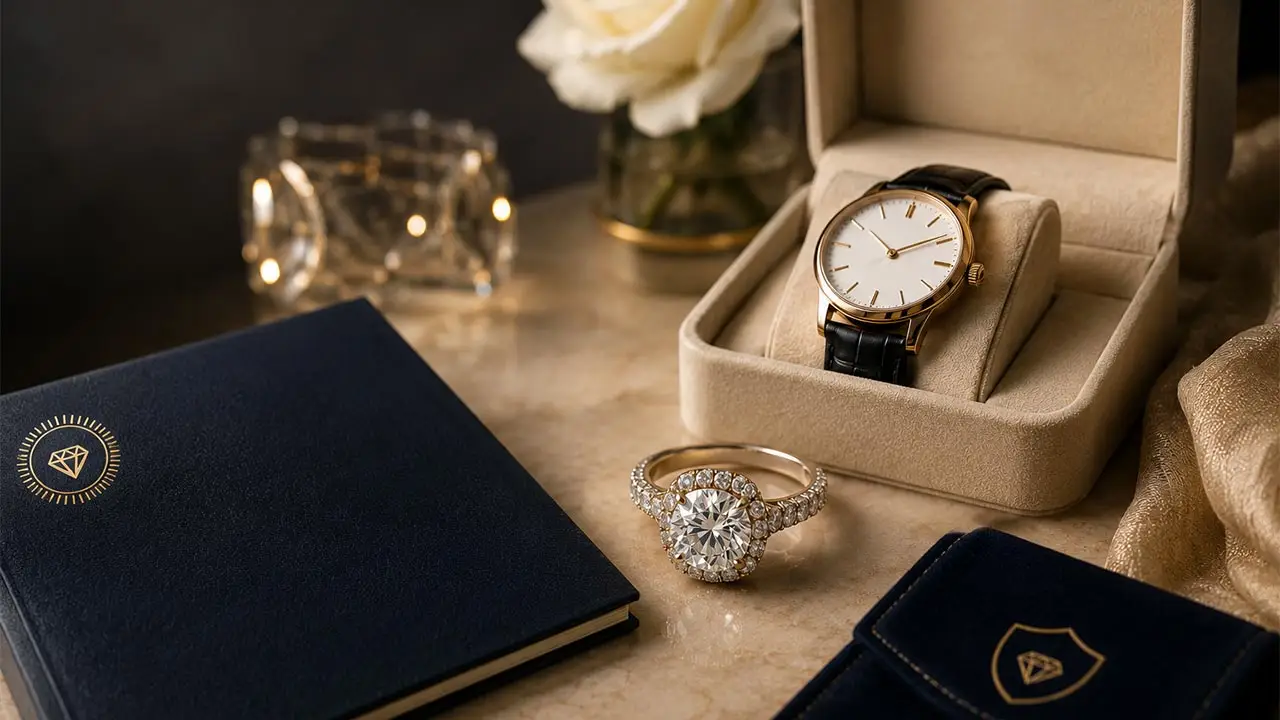
The new “peace of mind” economy refers to the growing feeling among consumers that reduced risk, friction, and regret contribute to a luxury item’s value. They’re willing to pay for that added peace of mind – and as a result, brands benefit when they package certainty and security as part of an item’s ownership.
Jewelry is one of the clearest examples of the peace of mind economy, because a ring or watch is both emotional and easy to lose, driving shoppers’ need for assurance. Jewelers can cater to this need by offering modern protection and recommendations for high value jewelry insurance, as well as the items necessary to secure jewelry insurance coverage, such as a conveniently accessible GIA grading report and/or fine jewelry appraisal services.
Let’s take a look at how peace of mind impacts consumer behavior and how the jewelry industry is well-poised to take advantage of this trend.
What the peace of mind economy actually is
The peace of mind economy refers to the trend of consumers who are shopping for luxury items and paying more for lower anxiety and higher certainty throughout their ownership. Those come in the form of extra services or add-ons such as high-value item insurance, concierge services, guarantees, and/or frictionless customer support.
These are seen not as cheap upsells, but as a premium assurance and a form of financial investment protection. Meanwhile, this added assurance plays into the personal meaning, unique experience, and individual relevance that have all become increasingly central to luxury consumption.
Why consumers are paying more for confidence right now
There are many cultural, societal, and economic reasons why consumers are paying more for confidence right now:
- Higher perceived risk: Luxury consumers are becoming increasingly aware of the various risks, such as theft, that exist during travel, during daily wear or usage, or even just during delivery.
- More life admin fatigue: With one study finding that the average adult spends 8 hours and 48 minutes per week on life admin tasks (and that’s above and beyond work admin!), more and more are opting for any services or add-ons that will reduce this time spent, increasing the demand for frictionless, convenient support.
- The trust gap: According to a PwC survey from 2024, 90% of business executives think customers highly trust their companies – while only 30% of consumers actually do. Consumers are more and more demanding tangible proof that they can trust the brands they buy from.
- Luxury market pressure: With declining consumer demand in the luxury space, consumers may be willing to forgo ultra-premium offerings for assurance and confidence.
The new luxury value equation: Product + experience + assurance
Historically, luxury has been all about the product – craftsmanship, heritage, and exclusivity. Then experience came into the picture, with consumers valuing the actual experience of making a luxury purchase as much as the product itself. Now we’re seeing assurance enter the picture as a legitimate pillar of luxury value as well.
Today, the new luxury value equation is made up of four factors:
- Craft (product quality)
- Story (a brand’s meaning and identity, as well as the experiential story the consumer experiences when interacting with the brand)
- Service (ongoing care)
- Assurance (guarantees and protection that remove fear)
Last year, the World Luxury Chamber of Commerce reported that “affluent individuals today prioritize experiences over ownership, with a growing desire for everyday enchantment, moments that are meaningful, memorable, and personal.” The peace of mind economy is the next step in this generational shift.
How luxury brands are packaging peace of mind
Luxury brands are packaging peace of mind as a must-have rather than an optional add-on, through offerings such as concierge service, white-glove delivery, or custom design documentation, just to name a few.
Other elements that luxury brands are weaving into the purchasing process, in the name of security and confidence, include:
- Item authentication
- Repairs or maintenance memberships
- Buyback or trade-in certainty
- Extended warranties or service contracts
- Clearer policies regarding returns, service timelines, and coverage limits
Why jewelry sits at the center of the peace of mind economy
The jewelry industry is the perfect example of the peace of mind economy, as jewelry comes with a high emotional or symbolic value; loss, theft, and travel risks are high; and replacements and repairs can become complex, due to appraisal needs and timelines.
As such, many luxury shoppers are happy to pay a premium or add on additional services and coverages, like insurance for jewelry, if it results in no need to worry about any of the above.
All along the jewelry buyer journey, there are opportunities for retailers to provide greater peace of mind and assurance.
- Providing an estimated value or jewelry appraisal for insurance enables the buyer to secure jewelry insurance policy quotes faster.
- Explaining the differences between a jewelry warranty versus insurance inspires trust.
- Similarly, educating the buyer on homeowners’ insurance jewelry coverage versus specialized jewelry insurance, including the standard homeowners policy limitations, can exhibit care for buyers’ future protection after they leave the store.
- Offering annual jewelry inspection and similar for appraisal update requirements builds a long-term relationship that can lead to future purchases.
Selling certainty without cheapening luxury
Use these eight steps to sell peace of mind and certainty, without cheapening the luxury experience:
- Give every client a “forever file,” a digital dossier with all their important jewelry info, such as grading reports and a jewelry appraisal for insurance needs.
- Make regular care and inspection feel like a valuable membership or subscription, not an upsell.
- Explain the differences in a warranty versus comprehensive jewelry protection via specialized insurance in 30 seconds, using plain language.
- Build a clean and easy repair and resizing process.
- Normalize quiet luxury jewelry protection as part of the ownership experience.
- Provide service timelines and proactive updates.
- Reduce general jewelry insurance, wedding ring insurance, and engagement ring insurance policy surprises by using clear language and being upfront about deductible options and limited coverage risks.
- Train staff on how to sell security, clarity, and continuity confidently, using language that will resonate with buyers.
The watchouts: When ‘peace of mind’ backfires
Keep credibility high by acknowledging pitfalls and avoiding the following:
1. Overly complex terms that erode trust
2. Pushy upsells that damage luxury positioning
3. Hidden fees or exclusions that undermine assurance
4. Inconsistent service delivery that breaks the promise originally made
One of the biggest risks for luxury brands is offering reassurance that feels complete but is not; in jewelry, for example, the hidden costs of insuring jewelry through a homeowners’ policy and scheduled personal property coverage can undermine the very sense of security buyers think they’re getting.
Peace of mind isn’t just a feeling
Myth: “Luxury sells status.”
Reality: Luxury increasingly sells confidence and ease.
Myth: “Protection talk cheapens the product.”
Reality: Assurance can be premium if done transparently.
Myth: “Home coverage always handles jewelry.”
Reality: Renters’ and homeowners’ policy limits can be extensive, and buyers need clarity regarding insurance policy exclusions.
What do buyers misunderstand about protecting high-value items?
Buyers often assume that a personal articles floater will protect high-value items, but these types of coverage often come with a difficult claim settlement process, and a lack of necessary coverage, such as accidental damage or mysterious disappearance coverage, while also making it unlikely that you’ll be able to get a repair or replacement of same kind and quality. Additional coverage options are necessary.
The bottom line: In luxury, ‘worry less’ is the new flex
Modern luxury consumers demand more than a product – they want an experiential purchase and post-purchase relationship with their retailer, and the assurance that they’ve made a smart investment. Brands that operationalize certainty will win luxury consumer loyalty – even as discretionary spending tightens.
BriteCo is a leading provider of modern jewelry insurance and event coverage for modern consumers, with fast online quotes, affordable rates, and full-value coverage with zero deductibles.
Image: BriteCo