
The Gemological Institute of America (GIA) recently found a natural diamond that reacted like a lab-grown stone when exposed to ultraviolet light.
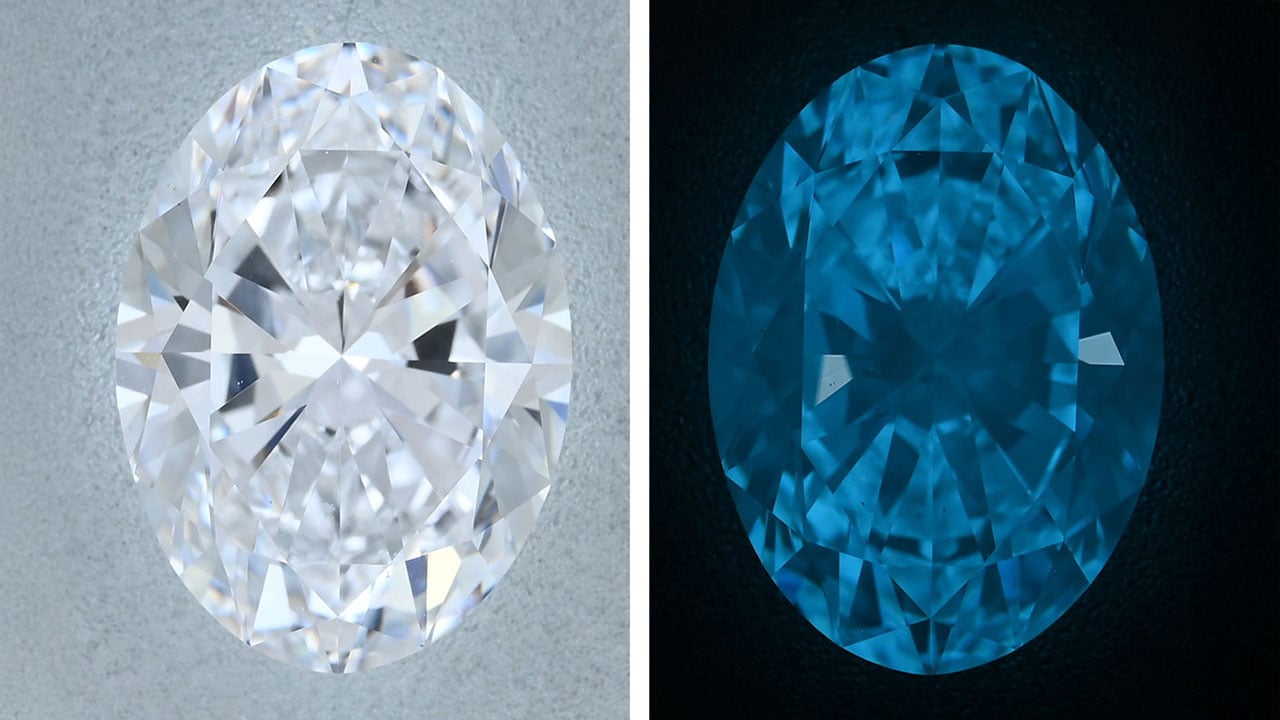
The oval, 2.50-carat, D-color, VS1-clarity diamond, which the GIA laboratory in Dubai received for testing, had an unusual response to the deep-ultraviolet exposure: It displayed a strong phosphorescent glow and continued to emit light for more than a minute once the source was removed, according to an article in the fall issue of the institute’s quarterly Gems & Gemology journal.
While this lingering glow occurs in some natural diamonds, the intensity matched levels more common in High Pressure-High Temperature (HPHT) synthetic stones.
Additional testing confirmed the diamond’s natural origin. Imaging showed growth features consistent with formation in the earth, while nickel-related chemical signals appeared only in trace amounts. The tests detected no signs of laboratory growth.
This case “demonstrates the intertwined relationships and complexity of features observed in both natural and laboratory-grown diamonds,” the GIA pointed out, warning that phosphorescence by itself is an insufficient way to distinguish the two categories without confirmation from additional tests.
Image: The diamond examined by the GIA. (Gemological Institute of America)