
Gold prices in India have surged nearly 20% this year, and Delhi’s jewelry market is feeling the heat.
The city’s Chandni Chowk, Lajpat Nagar and Karol Bagh jewelry hubs remain crowded with shoppers, but footfall no longer guarantees sales. Many customers are buying lighter ornaments, and splitting purchases, or postponing them entirely.
“People still come to look, but they buy much less,” said Shivani Bansal, manager at Bansal Jewellers in Chandni Chowk. “Earlier, a bride’s set would start at INR 600,000 to INR 700,000 [approximately $6,600 to $7,700]. Now families ask for smaller designs or wait until prices settle. The sentiment has changed.”
For jewelers, fluctuating gold prices make it hard to manage stock. “We can’t update prices every hour, but the market moves that fast,” said Rajesh Anand, owner of Amba Jewellers in Lajpat Nagar. “If you stock up and prices drop, you lose. If you delay, customers go elsewhere.”
Even during Dhanteras and Diwali, India’s two biggest jewelry-buying festivals, sales dropped between 15% and 20% compared to the previous year.
Customers who once opted for heavy 22-karat gold sets are now exploring lighter pieces, silver, platinum, or lab-grown diamonds.
Lab-grown diamonds offer a buffer
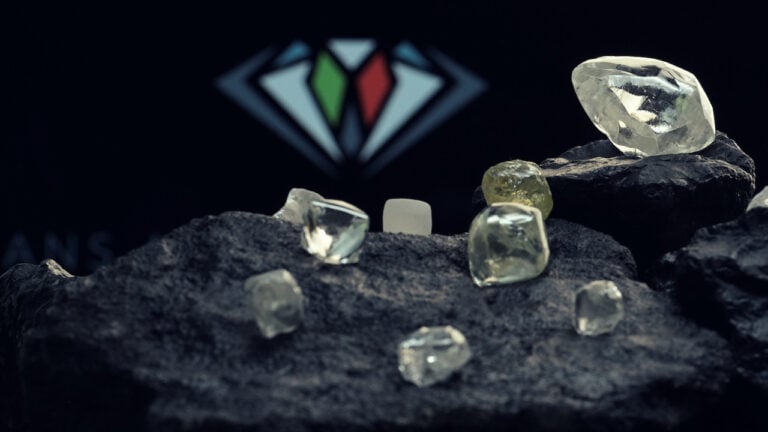
Lab-grown diamonds are gaining in popularity, especially among younger buyers who prioritize design and price over traditional prestige.
“Millennials and Gen Z couples want transparency,” said Raghuram Sharma, manager at Dhirsons Jewellers in South Delhi. “Whether the diamond comes from a mine or a lab doesn’t matter as long as it fits the budget.”
For retailers, lab-grown diamonds help maintain cash flow when gold sales slow, though they require more working capital and careful customer communication.
“Explaining why two visually identical diamonds are priced differently can be tricky,” Anand pointed out.
Challenges for small jewelers
Family-run stores, which form the backbone of Delhi’s traditional markets, face growing pressure from large chains such as Tanishq and CaratLane.
Customers compare prices online and expect discounts, exchange offers and lifetime-service benefits small stores can’t always match. Social media trends also shape demand, with buyers bringing celebrity-inspired designs to stores.
“The younger generation treats jewelry like fashion short cycles, fast updates,” Sharma said. “We have to adapt quickly or risk losing them to bigger showrooms.”
Ripple effects beyond Delhi
India accounts for roughly 25% of global diamond demand. Slower sales of gold and natural diamonds affect supply chains and international pricing sentiment. “If Indian weddings go lighter and smaller, global diamond demand will feel it,” said Anand.
Gold’s traditional role as an investment is also shifting. Some buyers continue to purchase for wealth preservation, but high prices have tempered enthusiasm, leading to smaller quantities or mixed purchases with other assets.
Looking ahead
Despite the challenges, jewelers remain cautiously optimistic. “People still love jewelry,” Bansal insists. “What’s changing is how much they’re willing to spend and what they value.”
Anand added, “Gold, diamonds, lab-grown stones, these are tools. The market will adapt, as it always does.”
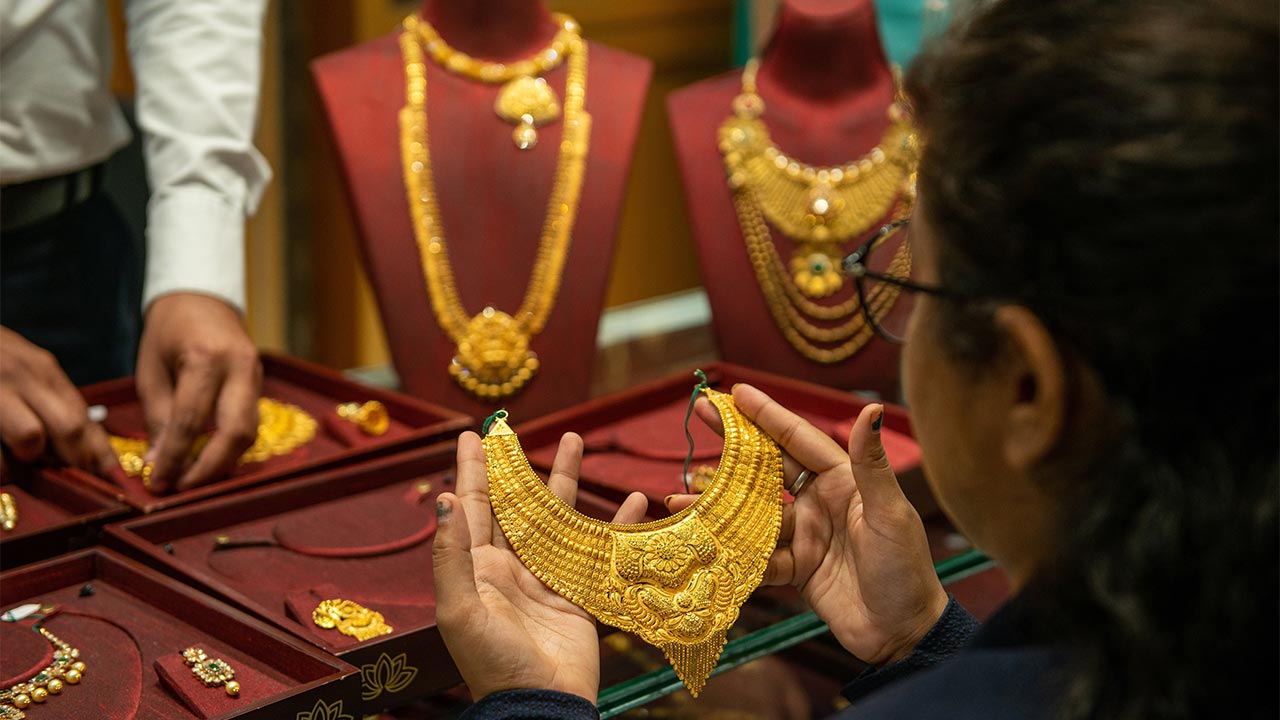
Image: A woman shopping for gold jewelry at a store in New Delhi, India. (Shutterstock)