 WhatsApp
 Email
Email
 Facebook
 Twitter
 LinkedIn

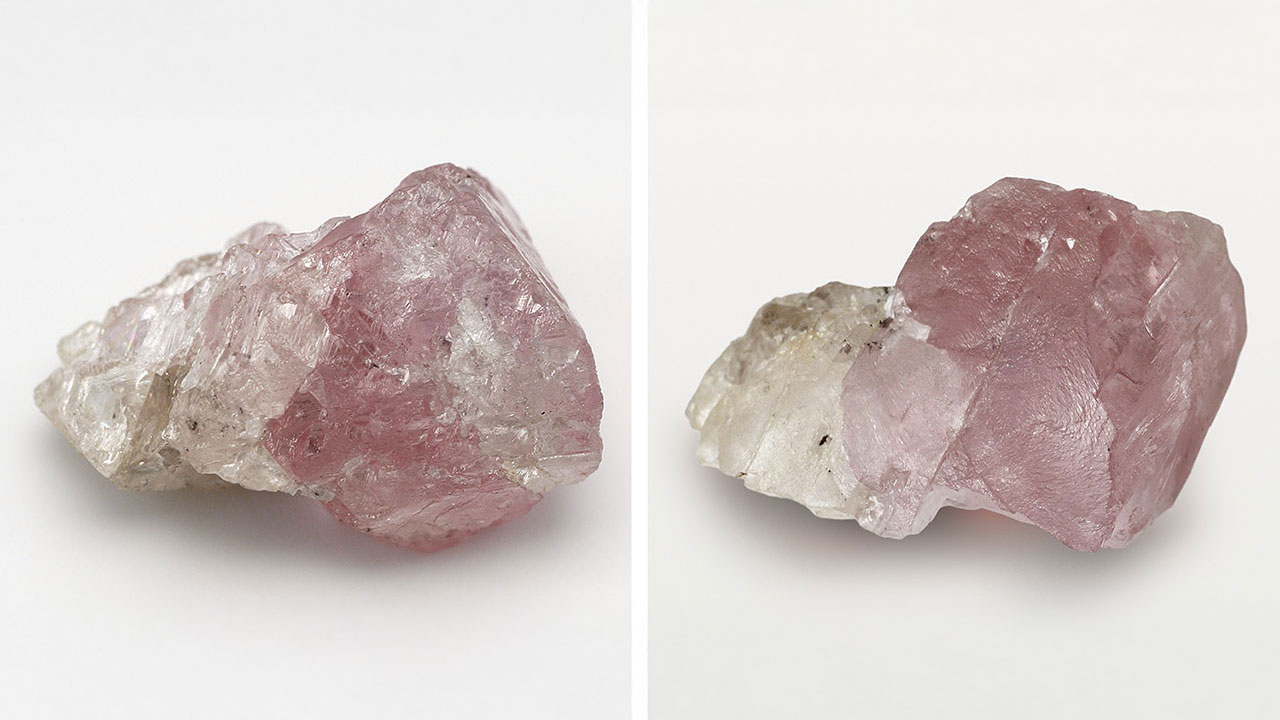
The Gemological Institute of America (GIA) recently examined an unusually large, two-toned rough stone: a 37.41-carat pink and colorless diamond.
The natural stone is believed to have originated at the Karowe mine in Botswana. The GIA’s Botswana laboratory received it for further investigation, the organization said Wednesday. The specimen displayed an indication of a mostly well-defined line dividing the pink and colorless regions, according to the report. The rare bicolor stone, with its large size and distinct coloration, offers valuable insight into pink-diamond formation, the institute added.
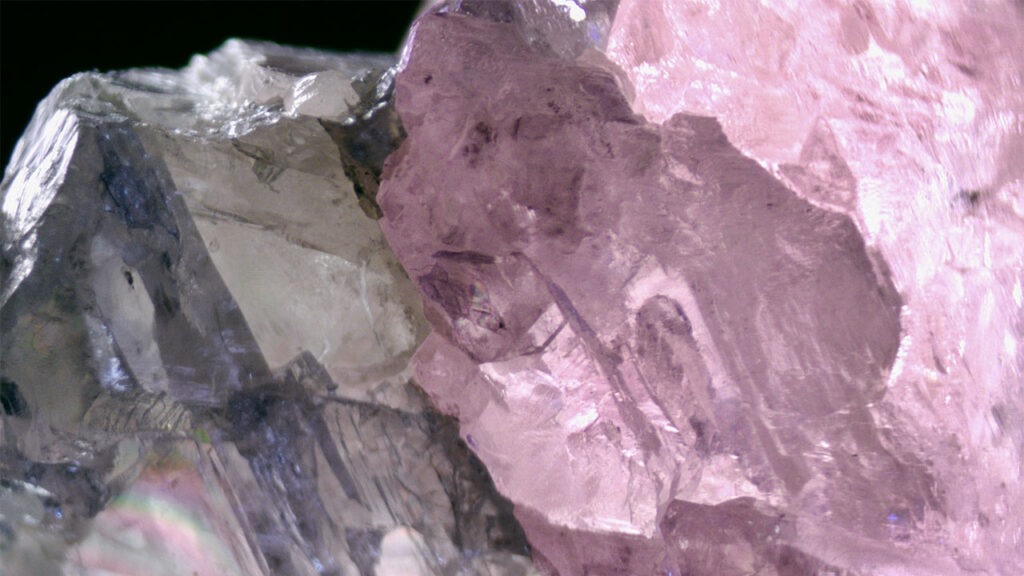
The GIA has previously examined similar type Ia bicolor rough diamonds, reportedly sourced from Australia, though those were much smaller — weighing under 2 carats each.
“It is generally understood that pink color in diamonds results from significant stress causing a change in the diamond’s crystal structure, known as ‘plastic deformation,’” said Sally Eaton-Magaña, senior manager of diamond identification at the GIA in Carlsbad, California. “The pink section likely was initially colorless and then plastically deformed, perhaps by a mountain-forming event millions of years ago, resulting in its pink color, with the colorless section forming at a later time.”
In recent years, the Karowe mine has produced several exceptional diamonds, including the Boitumelo — a pink, type IIa diamond weighing 63 carats — and the 2,448-carat Motswedi, which was the second-largest rough ever discovered. In total, it has generated nine stones over 1,000 carats, one of which was a 1,019.85-carat white diamond.
Image: The 37.41-carat pink and white diamond. (Gemological Institute of America)