
De Beers has adjusted its rough-diamond assortments for next year in a move that sightholders see as a tactic for handling weakness in small goods.
The miner has removed 8-grainer (2-carat) stones from its 2- to 4-carat boxes, and instead will sell them as part of the 4- to 6-grainer (1 to 1.50-carat) batches, sources told Rapaport News this week. These assortments will respectively become 2.50 to 4 carats and 1 to 2 carats (4- to 8-grainers).
The 8-grainers are currently among the weakest rough items. They produce polished of around 0.90 carats — a size that is facing pressure because of replacement by larger lab-grown diamonds. Being in the 2- to 4-carat category has posed challenges for this rough size, which is plentiful at De Beers mines.
In gem qualities, 2- to 4-carat goods go in beneficiation boxes, meaning De Beers expects sightholders to manufacture the rough in African mining nations — namely Botswana, Namibia and South Africa. These locations carry high costs, however, making them economically viable only for larger diamonds.
Moving the 8-grainers out of these and into the non-beneficiation boxes of smaller goods lets buyers cut and polish them in India without repercussions, insiders explained. Under normal circumstances, sightholders that don’t buy the rough they had earmarked for use in their African manufacturing facilities, or that fail to cut and polish them there after doing so, receive fewer goods in the future.
“The smaller the size, the more labor cost plays [a role],” said a source in the rough market on condition of anonymity, affirming that “8-grainers have always been super hard to cut in beneficiation.”
Sightholders have been refusing large parts of the 2- to 4-carat boxes, since 8-grainers have constituted around half of the contents. Redesignating them as part of the 4- to 8-grainer category — where they account for a smaller percentage of goods — eases the impact of refusals, a sightholder pointed out.
In addition, sightholders expect De Beers to use the adjustments as a quieter way to lower the price of this less-desirable rough in January, and thereby avoid the negative impact the miner’s official price cuts usually have on market sentiment.
To align sight prices with open-market ones, De Beers would need to drop the cost of 8-grainers by 20% to 30%, according to a manufacturing executive speaking on condition of anonymity. But doing so publicly “sends a wrong signal,” he said. “Our market is all about sentiment.”
Because the 4- to 6-grainer boxes have a lower price per carat than those with larger stones, moving the more expensive 8-grainer goods into this mix effectively lowers the 2-carat stones’ average price while still letting De Beers keep its official list prices steady, the executive elaborated.
De Beers also made other changes to its small-diamond assortments for next year, according to a note it sent sightholders and which Rapaport News has seen. Many of the changes simply reverted the sales structure to the one in place a few years ago, De Beers clients pointed out.
This week’s sight, running from Monday to Friday in Gaborone, Botswana, comes amid uncertainty in the rough sector because of mixed polished demand and an influx of goods from Russian mines entering the Indian market.
Sightholders refused large amounts of their allocations, resulting in expectations for very low sales figures. De Beers maintained its policy of allowing 100% refusals because of the weak trading situation.
The company will inform sightholders of their 2026 allocations — known as their “intention to offer” (ITO) — on Monday, according to the note. The first sight of 2026 will run from January 19 to 23.
De Beers declined to comment for this article.
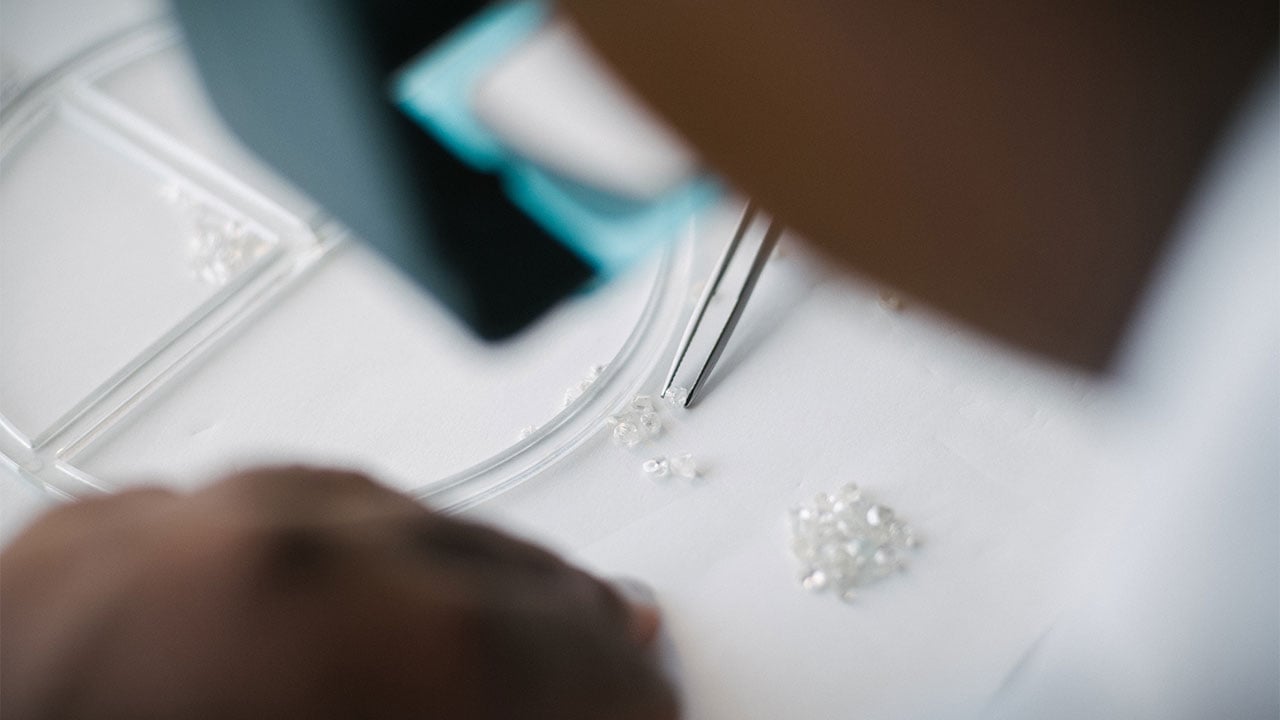
Image: An employee of Namdeb, a joint venture between De Beers and the Namibian government, sorting rough diamonds. (Ben Perry/Armoury Films/De Beers)