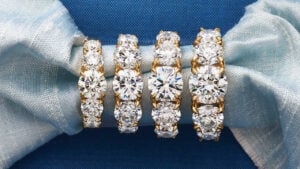

RAPAPORT… A couple of years ago (July 2005), the following question was posed in this column: Where are all the yellow diamonds coming from? At the time, the answer was that it was what was coming out of the mines. Up until that point, the market for yellow diamonds had been soft, so there is speculation that owners of those gems kept them in the vault until times changed and demand increased. Now, yellow diamonds have become as hot as the August sun. Their accessible price points and relative availability compared to other colored diamonds makes them sellable.
The question still remains, however, where are all the yellows coming from? For something that is supposed to be rare, they seem to be everywhere. This leads to the next question: Are these yellows natural, or have they come about through some sort of scientific procedure? Melee in particular seems suspect, as it is harder to track each and every stone in a parcel of smalls, whereas a larger stone will most likely have undergone the scrutiny of an accredited lab. Credible companies producing these larger stones clearly mark the diamonds for what they are.
For some, it is preferable to have a natural color diamond. However, as long as any changes to the stone are disclosed, isn’t it nice to have a diamond of another hue more accessible to consumers? Look at colored gemstones. Practically every type of stone is altered in some way — rubies and sapphires are heated, emeralds are oiled and even the modest and readily available topaz is irradiated or coated to increase its desirability. As long as the enhancements are disclosed, these stones offer more variety to the gemstone palette and give consumers another choice, so why should it matter that these favorite stones are treated? As long as nothing goes wrong and the alterations are fully disclosed and explained, it shouldn’t matter. When unexplained or badly done, these alterations can, in fact, cause the bottom to fall out of the market, as it did for emeralds several years ago.
The biggest point of contention is keeping track of what is enhanced — or not enhanced — and then educating consumers on the differences. Why not let consumers make the final decision on what they want to purchase?
Now comes another issue, the industry can’t seem to agree on what to call diamonds touched by the hand of science. Are synthetics fake? What is the difference between lab grown and lab created? What is a cultured diamond — is it made by a mollusk in the same way as a cultured pearl? This gets pretty confusing for the industry, let alone for consumers who just want to buy a nice stone that will hold its value. These issues are all resolvable. Natural diamonds and their many counterparts can all live harmoniously together as long as the industry gets together on its terminology and disclosure policies and explains them properly so as not to confuse the consumer.


What Does Love Look Like? Not Out-of-Touch Lab-Grown Messaging
The natural-diamond industry won’t attract couples by telling them synthetics devalue their relationship.

Bridal Shopping in the Age of AI
Couples are researching online, but they still want to make the ring purchase personal – and that creates opportunities.
Six Brands Serving Fresh Engagement-Ring Designs
Whether it’s hand-sculpted organic gold or reimagined divorce jewels, these designers are setting trends that resonate with bridal shoppers.