
When this reporter started writing this story, tariffs on imports on Indian goods into the US were 10% and were going to rise to 25% on August 7. By the time the article was done, US President Donald Trump had announced this would increase to 50% on August 27. The pace of change and depth of uncertainty are the cause of the pain the trade is feeling.
Only now, that insecurity is combined with sky-high tariffs, for the short term at least.
America’s levies on Indian products are devastating for the diamond industry. The south Asian country manufactures more than 90% of the world’s polished stones. These diamonds enter the US as Indian stones and attract the so-called reciprocal tariffs.
The 10% duties in place since April 5 were manageable, dealers said this week. The 25% rate is not, and 50% is beyond anything the trade could imagine.
“It’s like a doomsday for the industry in general, thanks to Trump not knowing what the implications are of tariffs on [its] products,” said an Indian manufacturer.
Shattered hopes
The diamond and jewelry industry had been eagerly awaiting July 9, when the three-month pause on the US’s so-called reciprocal tariffs on India and other select countries was due to end. Traders had been expecting to get some kind of certainty by then about whether the duties on India would revert to the original 26% that Trump had threatened. Some hoped they would disappear or turn out to be lower.
The lack of clarity on the future of the tariffs made buyers reluctant to invest and dealers unwilling to ship to the US unless they had a confirmed order.
That relief didn’t come: On July 7, President Trump essentially delayed the decision to August 1, extending the market freeze. He announced the increase to 25% on July 30 in a post on the Truth Social platform.
The immediate reaction was a standstill in the diamond market outside the US, similar to what happened when Trump announced the first round of tariffs in April. Business will likely slow down further once the higher rates go into effect.
Indian manufacturers shipped some goods to the US in the past week in preparation for August 7, albeit in lower quantities than in April. Paying 10% is better than paying 25% or 50%, but it’s still a base cost that didn’t exist some four months ago. There is also deep uncertainty about the direction of the market, whereas the April tariff announcement came during a modest recovery in trading. Unlike in the days running up to April 5, there has been no clear shift in the location of inventory on RapNet to the US in the past week. (This, despite one of the major jewelry retailers asking suppliers to bring high-selling items into the US to avoid spiraling tariffs, according to a source familiar with the matter.)
However, this was also in the context of a slight rebound in American imports of diamonds over the past three weeks, since inventories of sought-after items had started to run out. The number of round, 1-carat diamonds on RapNet spiked in early April before declining around 16% between May 1 and July 21. Since that date, stateside inventories in that shape and size have risen about 10%, indicating dealers have been bringing stones into the country to fill shortfalls.
The timing has exacerbated the problem, since Belgium and Israel are largely closed for the summer and time is running out to send goods for the holiday. Most of the shipments were of solitaires that will be in demand over the holiday and can be mounted in the US, one dealer in Antwerp pointed out.
Russian oil
Earlier this week, there was already a fear that the situation would worsen. Trump fell out with India over oil purchases from Russia — the president’s stated reason for doubling tariffs.
“I don’t think it will get better, because it’s [gotten] dirty,” said the Indian manufacturer. “Trump is saying things that the Indian counterparts aren’t liking.”
Many in the trade hope this is a negotiation tactic on Trump’s part. A US trade delegation will reportedly visit India later this month for talks. Trump has given himself a strong negotiating position, given that the tariffs will soon default to 50% if the parties don’t reach a solution.
There is also a problem for companies that have already sent goods to the US under the Temporary Importation Under Bond (TIB) mechanism while the tariffs were 10%. This enables them to bring goods into the country without paying the tariff, for example when sending goods to a grading lab or trade show. It requires them to send the merchandise back to the place of export or pay damages equal to double the existing tariff. While in theory a company could have redirected the goods to a customer or office in the US in the past week and paid 20% tariffs to avoid paying 25% or 50% later on, this would technically have been a violation.
“In general, given the Customs directive on strict enforcement, intentionally breaching the provisions as a means to avoid the reciprocal tariff is strongly discouraged,” Sara Yood, CEO and general counsel of the Jewelers Vigilance Committee (JVC), wrote in an email to Rapaport News.
Inflationary effect
The industry also fears the impact on the consumer. Assuming retailers pass on the cost, the tariffs could reduce demand in the same way that inflation has done. It could also push shoppers at the margins from natural to lab-grown.
“Consumers always go in with a budget,” explained Pranay Narvekar, partner and founder of Mumbai-based Pharos Beam Consulting, which provides consultancy services to the diamond and jewelry industry. “While some prices can be pushed, ultimately that amount of money spent by consumers is limited.”
This means the costs will eventually trickle upward to the diamond miners, but this will take a year, Narvekar said. In addition, the larger margins in lab-grown could make the tariffs easier to absorb for retailers and manufacturers than in natural, he added.
At a loss
The Indian industry had a plan to deal with the impact of tariffs had they remained around 10% to 15%, said Kirit Bhansali, chairman of India’s Gem & Jewellery Export Promotion Council (GJEPC). This would have entailed asking the miners to reduce rough prices by around 3% to 5% and sharing the rest of the tariff burden among manufacturers, exporters and US retailers.
The new rates make this unrealistic, Bhansali said.
There are ongoing rumors that some businesses are using loopholes to avoid tariffs, such as finding a route through Mexico. Some Indian manufacturers might move some of their production to Dubai, Israel or Belgium to ensure tariffs of 15% or less, though the entire cutting and polishing process would have to take place there for it to achieve the goal.
“Completing a finishing step in another country is not enough to change the country of origin for tariff purposes and is not a viable solution here,” said Yood.
The bottom line is more chaos for the diamond trade. The possible winners are the US dealers — or local branches of overseas manufacturers — with salable inventory that they imported at 0% or 10%. But even they will have to start bringing wares from India at some point.
However, given what has been going on, the news might have completely changed by the time you read this. Yet it’s hard to see how it could get any worse.
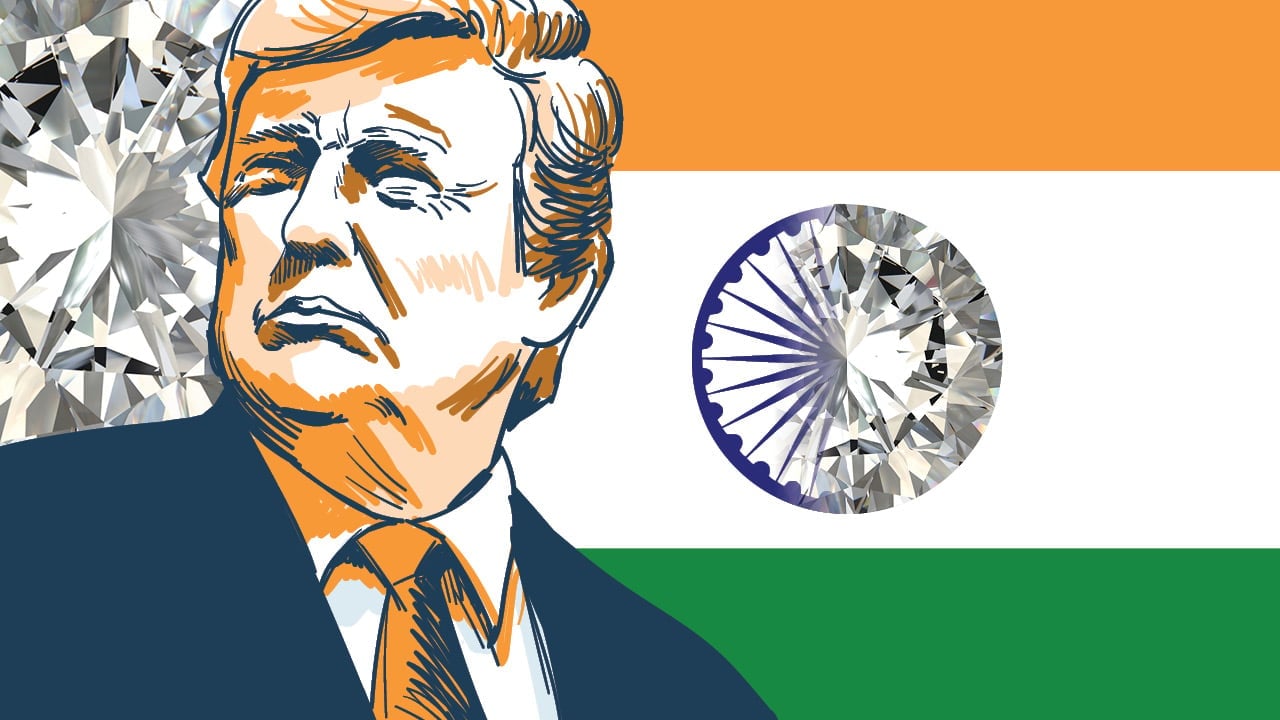
Image by David Polak.