
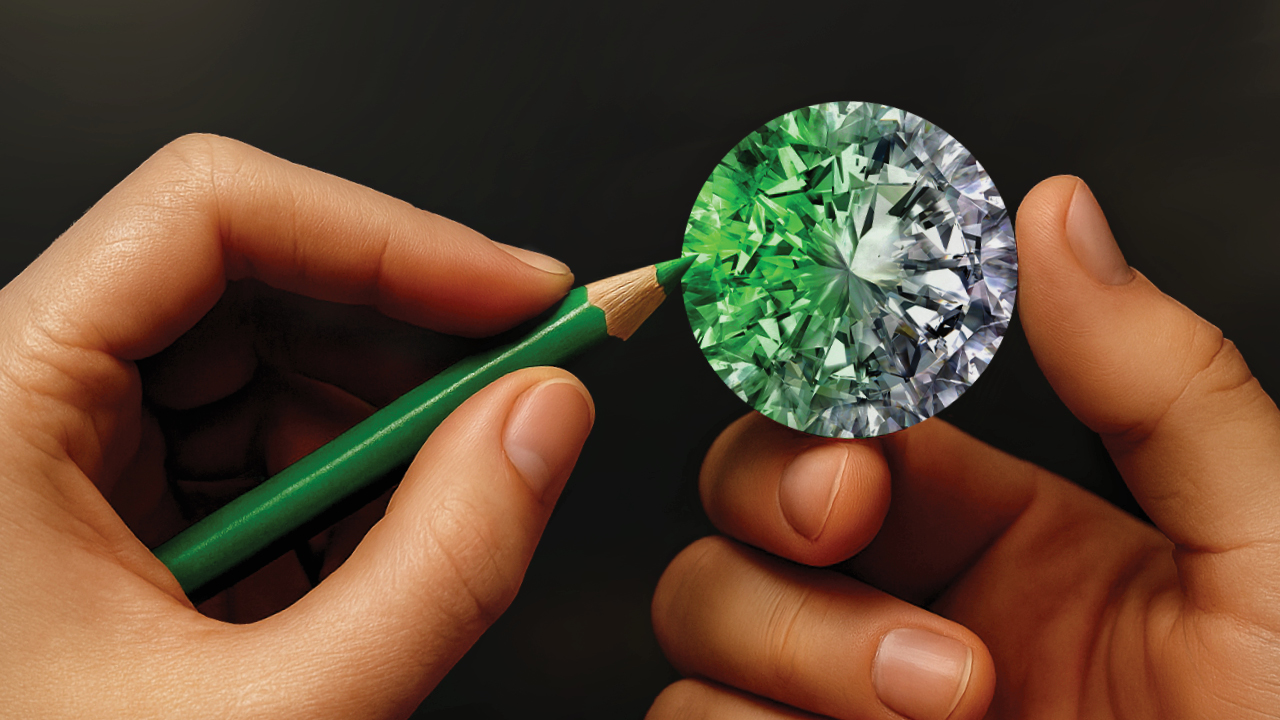
The market for green diamonds has suffered in recent years because of difficulties confirming natural color origin — though some participants see confidence improving, the latest Rapaport Research Report explains.
Dealers have steered clear of the sector because of the uncertainty involved when obtaining grading reports. The sky-high value of a green diamond — one of the industry’s rarest and most cherished items — hangs on the color determination it receives from the Gemological Institute of America (GIA). But the process of confirming this provenance is highly complex, resulting in some dealers getting a different result from what they had expected.
The November edition of the Rapaport Research Report explores this market, looking at why some traders are scared of the category and how a “treated” or “undetermined” score on a certificate can impact a green diamond’s price. The report delves into a New York arbitration case that a customer of the GIA unsuccessfully brought against the lab in 2022 after the examination of 17 green diamonds turned into a dispute.
It also asks whether certainty about the product is recovering as scientific knowledge expands.
The Rapaport Research Report includes the regular section providing exclusive RapNet data for 0.30-, 0.50-, 1- and 3-carat stones, including average prices, discounts, inventory by country, and search volume. In addition, it presents the volume of goods moving onto and off the RapNet platform, and the average time it takes them to do so.
If you are a subscriber to the Rapaport Research Report, click here to download the full edition.
If you are not yet a subscriber and would like to receive the report as soon as it’s published, you can sign up here.
Image: David Polak.