 WhatsApp
 Email
Email
 Facebook
 Twitter
 LinkedIn

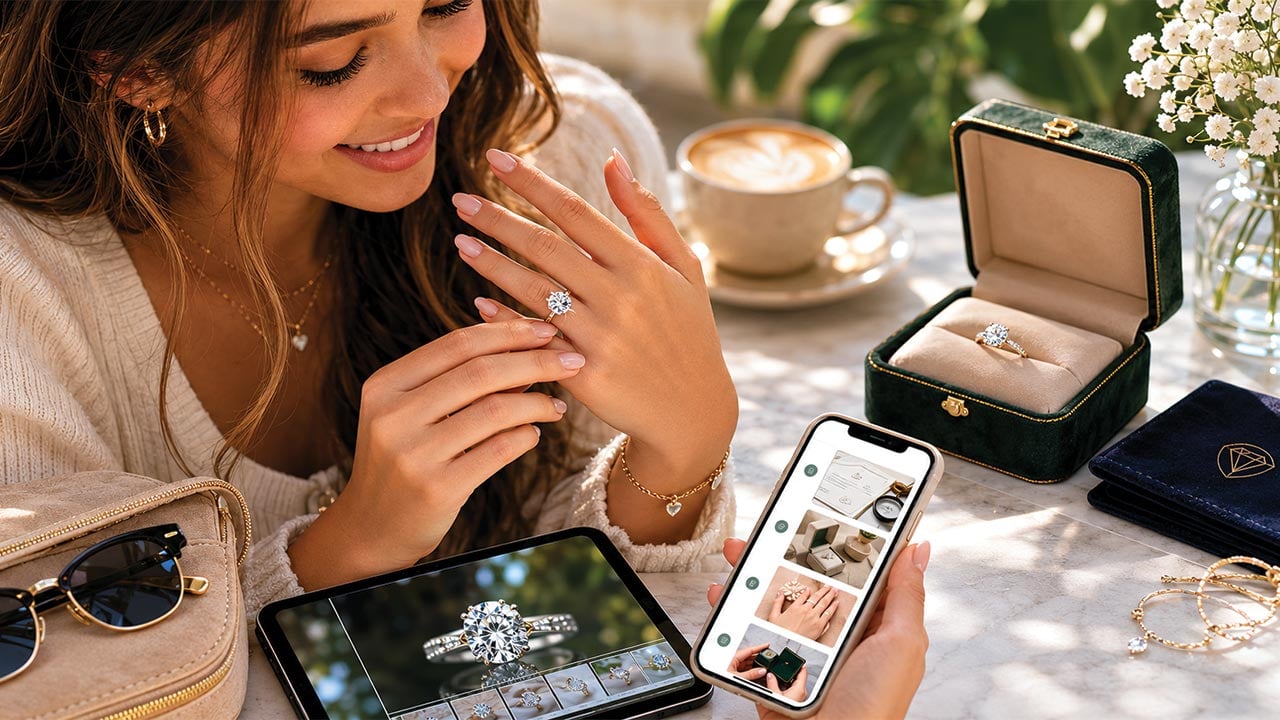
Along with a diamond, Gen Z buyers expect to leave a jewelry store with proof of the diamond’s value, future care as needed, value protection in the form of a jewelry insurance policy, digital convenience throughout every step of the process, and assurance that their new keepsake will hold its value forever.
As such, when catering to shoppers born between 1997 to 2012, keep these priorities in mind:
- Proof (documentation, authenticity, and provenance)
- Care (ring resizing, maintenance, and service transparency)
- Protection (coverage clarity with fewer surprises)
- Digital convenience (self-serve and status updates)
- Value retention (upgrade, trade-in, or resale ease)
For when you’re working with buyers thinking about how to protect a new ring, day-to-day – not just at home – here’s a straightforward overview of modern jewelry coverage options.
Let’s look further at the products and experience you can offer these buyers after the point of sale.
For Gen Z, the sale isn’t the finish line
Gen Z prioritizes a post-purchase experience, which, when it comes to buying a diamond, often looks like jewelry and diamond education, documentation (such as a jewelry appraisal for insurance), services such as diamond ring resizing and maintenance, and protection like diamond ring insurance or wedding ring insurance.
When jewelers support this shift from a mere transaction to an ownership experience, it signals to Gen Z that they believe in the long-term value of their investment. It shows them that the seller is invested in their experience, aligned with their values, and that the seller is someone they can trust – whether that be with a jewelry care plan or jewelry warranty, or an engagement ring insurance policy recommendation.
Expectation #1: Proof beats promises
Gen Z buyers want more than just promises when it comes to their purchase – they want proof in the form of documentation, transparency, and authenticity.
As such, consider offering buyers the following proof assets:
- A digital receipt with their item’s specs
- Any relevant lab reports, such as a GIA grading report
- Clear care and maintenance instructions
- Easy-to-understand explanations of what’s covered by their diamond ring warranty (or similar warranty) vs. what’s not
Not only will this assure them of exactly what they purchased and its value, but it can also assist them in getting an accurate appraisal estimate and/or shopping around for fine jewelry insurance – whether they opt for a specialized jewelry insurance or itemized jewelry coverage through their homeowners’ or renters’ insurance.
Expectation #2: Care plans that feel like membership, not an upsell
Gen Z jewelry buyers will need the same jewelry maintenance and care that every other generation has, but they want to feel like they’re receiving a valuable and ongoing suite of services that will ultimately protect their financial investment – not that they’re simply being upsold on something they don’t really need.
As such, whether you’re pitching bezel setting protection, prong tightening, cleanings, inspections, etc., package those offerings credibly and like a trusted source, not a salesperson. Explain to the buyer what’s at stake if they forgo these services and how it may impact their jewelry’s value down the road.
How to present care plans in a Gen Z-friendly way:
- Be transparent regarding all covered losses and exclusions
- Make it easy for them to book care and maintenance
- Be upfront about what they can expect regarding timelines
- Provide an easily accessible service history record
Establishing this ongoing relationship can also lead to potential future sales.
Expectation #3: A clear ‘protection story’ (and no coverage surprises)
It’s important to explain to Gen Z buyers exactly what they can expect in terms of comprehensive jewelry protection once they leave the store, so there are no surprises and they can proceed to pursue the best protection for jewelry for their needs, whether that’s a homeowners’ insurance jewelry rider or personal articles floater, or a specialized stand-alone jewelry insurance policy.
Gen Z buyers want to know what they don’t know, so provide a clear explanation of what may be covered by their existing policies, coverage limits they may face, and ultimately where homeowners’ policies fall short.
For engagement ring buyers especially, the protection conversation should extend beyond basic care and warranty questions to understanding engagement ring insurance – as homeowners’ coverage may not fully protect that high-value, highly sentimental ring.
Additionally address common misconceptions like:
- A standard homeowners’ policy or renters’ insurance policy covers all jewelry: In reality renters’ and homeowners’ policy limitations mean most owners who file a jewelry claim pay a deductible and their policy likely won’t pay out the full estimated replacement value – if their claim is even covered at all.
- Loss and mysterious disappearance coverage are the same thing: Homeowners’ insurance policy exclusions don’t consider the two one and the same, and these policy limits may mean a claim is denied.
Ultimately, a buyer should always consider insuring jewelry via stand-alone coverage if they purchased a high-value piece, plan to wear it daily, travel often, or live a lifestyle that may risk accidental damage or loss.
Expectation #4: Digital-first ownership
Gen Z is a generation of digital natives who expect their jewelry buying, protecting, and maintaining experiences to be digital-friendly, whether that comes in the form of easy self-serve online processes or online or text-based status updates. In other words, they’re unlikely to be pleased with a game of phone tag in order to get the information they need or schedule services.
A digital-first, post-purchase jewelry experience looks like:
- QR code or portal access to important jewelry documents
- Easy online appointment scheduling
- Repair status updates provided automatically
- A single online spot that holds their store appraisal, receipt, and lab report
Expectation #5: Value Retention Pathways (Upgrade, Trade-In, Resale Readiness)
When Gen Z makes a jewelry purchase, they’re thinking beyond the romance. They’re looking forward, into the future, considering their piece’s value, liquidity, and how easy it will be to upgrade, trade-in, or resale if necessary.
As such, provide shoppers with clarity on:
- Upgrade policies (and timelines for upgrades, as well as how a piece’s value is adjusted following an upgrade)
- Condition standards and service records
- What documentation will be needed to increase future value confidence
Focus on reducing any future friction, so they walk away feeling confident that they’ll have agreeable options years down the road.
The Gen Z post-purchase playbook: Eight moves retailers can implement now
- Deliver a “digital diamond dossier” (with receipt, specs, a lab report link, and a care guide).
- Offer a first-year care cadence (with cleaning + inspection reminders).
- Normalize resizing timelines and policies upfront.
- Explain warranty vs. insurance in a single minute (with a takeaway card for later reference).
- Provide a protection pathway (what’s covered, what isn’t, and how much jewelry coverage can benefit them).
- Make post-sale service booking easy.
- Keep service history documented, for future value confidence.
- Train staff to sell “confidence,” not just “carats.”
Myth vs. reality: What buyers assume after the sale
Myth: “Homeowners’ and personal property coverage will always cover my ring fully.”
Reality: Scheduled personal property coverage is often very limited.
Myth: “A warranty provides full protection.”
Reality: Warranties may provide maintenance and cover defects, but offer no theft and loss protection.
Myth: “All documentation is the same.”
Reality: Particular proof assets will reduce friction when selling or liquidating later.
FAQs: Gen Z and the post-purchase diamond experience
What does Gen Z care about most after buying a diamond?
Gen Z wants to continue the post-purchase experience by receiving education, care, protection, and proof of value, conveniently and digitally.
What post-sale services matter most to younger buyers?
Young jewelry buyers want financial investment protection in the form of value assurance, guided maintenance and care, insurance, and education.
Does homeowners’ insurance cover a diamond ring?
While some homeowners’ insurance may cover a diamond ring to a degree, this very limited coverage risks not being sure that you’ll get a ring replacement of the same kind and quality, should you need to go through the jewelry claim process. Furthermore, basic homeowners’ insurance does not include jewelry repair coverage related to accidental damage, stone loss coverage, or travel insurance for jewelry – all of which can be covered by specialty jewelry insurance.
What documents should a buyer keep?
A buyer should keep their appraisal, jeweler-provided description, photos, and lab-grading reports in a safe place, in case they, in the future, need to provide appraisals for insurance, or want to resell the jewelry.
How can retailers build loyalty after the sale?
Provide a post-purchase experience through education, maintenance and care, and value assurance.
The bottom line: Gen Z buys a diamond – then expects a system
Give Gen Z diamond shoppers the post-purchase experience they want, complete with proof of value, care and maintenance, protection in the form of insurance, digital convenience, and flexible future sales or upgrades.
Protection options are especially worth explaining clearly at the point of sale, so that Gen Z shoppers are aware of their options and risks as soon as they leave the store.
BriteCo is a leading provider of modern jewelry insurance and event coverage for modern consumers, with fast online quotes, affordable rates, and full-value coverage with zero deductibles.
Image: BriteCo