 WhatsApp
 Email
Email
 Facebook
 Twitter
 LinkedIn

The Swiss Gemmological Institute (SSEF) has encountered emeralds that have undergone filler treatments after they have been examined in labs, it cautioned.
Decreasing the visibility of fissures — which are present in most emeralds — with colorless fillers such as wax, oil or artificial resin is a common practice, the SSEF explained in a trade alert on Monday. However, it is obligatory to disclose treatments under Laboratory Manual Harmonisation Committee (LMHC) guidelines, as they affect the emerald’s value.
The luxury market prefers gemstones that are minimally treated with oil, or with no clarity adaptations. As a result, many emeralds that were previously enhanced with artificial resin are being chemically cleaned with solvent to remove the filler.
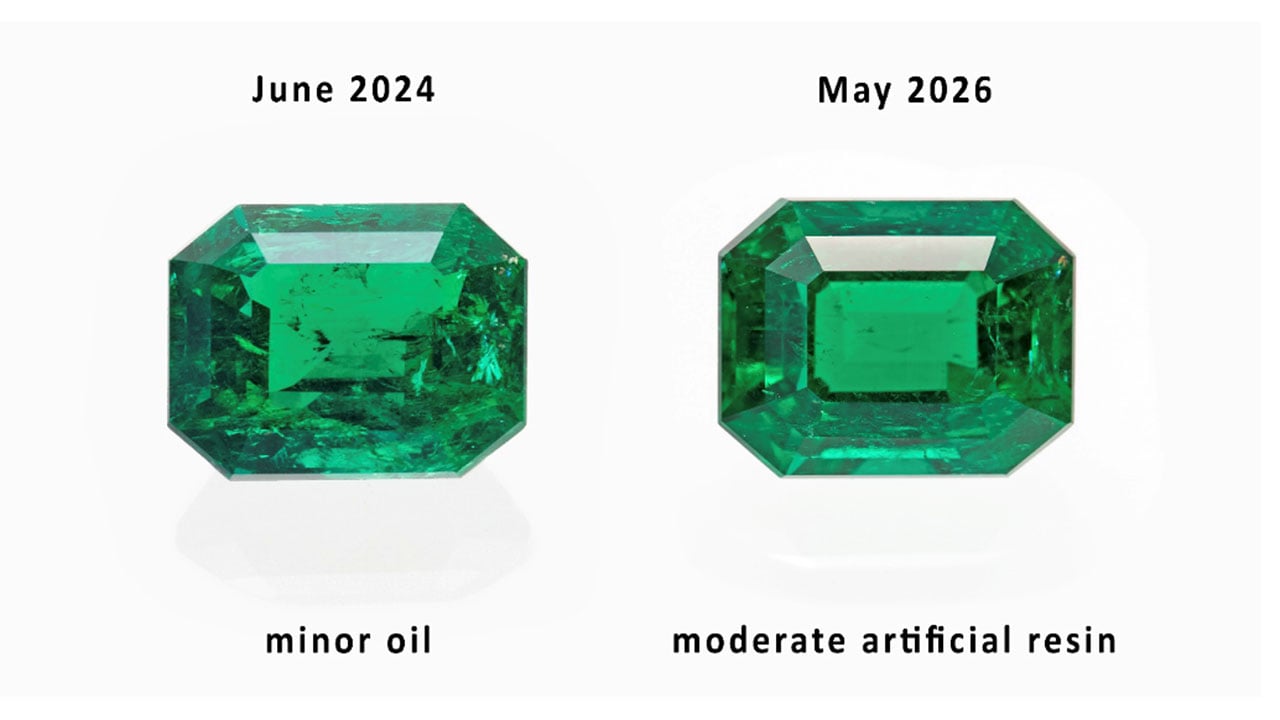
After a lab issues a report for the stones, some sellers are fraudulently refilling them with colorless fillers. They will then show the emeralds to third parties with the laboratory’s finding of “no or minor clarity modification,” even though the report no longer accurately reflects the gems’ current condition, the SSEF added.
To address this issue, every SSEF report states that its findings apply only to the gemstone’s condition at the time of testing and do not guarantee its condition thereafter. If the SSEF detects fissure filling, it reports the presence of the treatment, its extent, and the filler material used.
The institute added a list of recommendations to the trade. These include verifying every SSEF report’s legitimacy, rechecking gemstones before purchase, encouraging sellers not to recirculate earlier reports once a stone has been cleaned, and handling cleaned or heavy fissured emeralds with care, as they are fragile and prone to chipping.
Image: One of the emeralds in question. (Swiss Gemmological Institute)