

The US subsidiary of Brink’s has agreed to pay $42 million over three years as part of agreements with two government entities to resolve money-laundering investigations.
Brink’s Global Services USA has entered into a non-prosecution agreement with the US Department of Justice (DOJ), as well as a consent order with the Financial Crimes Enforcement Network (FinCEN) imposing a civil monetary penalty, the transportation group said in a February 6 statement.
The DOJ agreement settles criminal allegations that Brink’s Global Services USA operated as an unlicensed money-transmitting business, according to a statement the department released the same day. The company admitted it had violated the Bank Secrecy Act, the US’s primary anti-money laundering (AML) law, that statement said.
Brink’s shipped money domestically and internationally beyond the scope for which currency transporters have regulatory protections, the DOJ said. The business also failed to have compliance controls in place, the statement added.
The department cited 12 transactions between money service businesses in San Diego and Florida in which Brink’s failed to identify the final beneficiary, as well as eight occasions in which the company was involved in importing currency from Mexico to the US as an unlicensed money transmitter.
In a separate statement, FinCEN said Brink’s had “willfully” violated the Bank Secrecy Act, resulting in “hundreds of millions of dollars in bulk currency shipments” across the US’s southwest border with Mexico on behalf of “high-risk entities.”
The claims do not mention any missteps by Brink’s in its shipments of diamonds and jewelry.
“Upon learning of the DOJ investigation in 2020, we conducted our own thorough internal review and have since implemented further enhancements to our global ethics and compliance program, which were acknowledged by the DOJ in our agreement,” said Brink’s president and CEO Mark Eubanks. “As an industry leader, we are committed to continuous improvement and are always evolving our program to address changing compliance risks.”
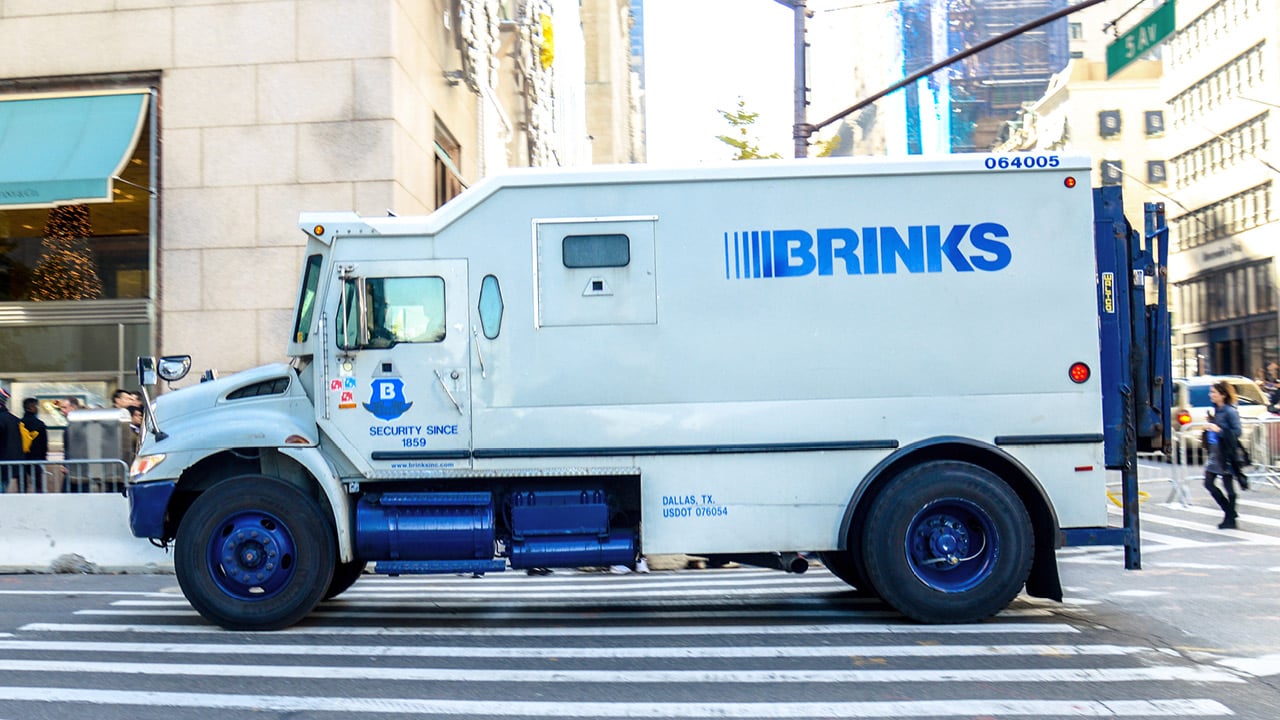
Image: A Brink’s truck in New York. (Shutterstock)