 WhatsApp
 Email
Email
 Facebook
 Twitter
 LinkedIn


With the year wrapping up, Rapaport News asked ChatGPT to write a well-researched news article about the diamond industry in 2024, using as many credible sources as possible, including news outlets, mining publications, and press releases from jewelry and diamond companies. We did not edit the content and it is not 100% accurate. Here’s what it turned out:
The diamond industry has seen significant transformations, controversies, and evolving consumer preferences in 2024. From the rise of lab-grown diamonds to geopolitical sanctions and luxury jewelry market disruptions, the sector has been a hotbed of activity. Here’s a comprehensive look at the key developments shaping the diamond industry this year.
Lab-grown diamonds: Gaining ground
Lab-grown diamonds continue their ascent, solidifying their place in the global diamond market. According to recent data from industry analysts, these stones now account for nearly 15% of diamond-jewelry sales worldwide, up from 10% in 2023. The affordability, sustainability, and ethical appeal of synthetic diamonds have made them a popular choice, particularly among Millennials and Gen Z consumers.
Major retailers such as Signet Jewelers and Blue Nile have expanded their synthetic-diamond collections, while high-end brands like Cartier and Tiffany & Co. have cautiously entered the market with select pieces. (Editor’s note: Neither Tiffany & Co. nor Cartier has launched lab-grown products). The technological advancements in diamond synthesis have also enabled the production of larger and higher-quality stones, further closing the gap with natural diamonds.
However, the growing popularity of lab-grown diamonds has intensified competition and pushed prices down. In some cases, the price of lab-grown diamonds has dropped by as much as 30% year over year, creating challenges for manufacturers and retailers alike.
Jewelry trends: Bold designs and customization
The jewelry sector has seen a surge in demand for bold, statement pieces. Consumers are gravitating toward vibrant, colorful gemstones paired with diamonds, as well as unique, customizable designs that reflect personal stories. High-jewelry houses, including Bulgari and Van Cleef & Arpels, have unveiled collections inspired by nature and art, incorporating unconventional shapes and settings.
Another notable trend is the integration of technology into jewelry. Smart rings and bracelets featuring diamonds are becoming more common, blending luxury with functionality. Moreover, the use of blockchain technology for provenance tracking has gained traction, allowing consumers to verify the origin and authenticity of their diamond purchases.
Sanctions and supply-chain disruptions
Geopolitical tensions have cast a shadow over the diamond industry this year. The ongoing sanctions against Russian diamond exports, imposed in response to the conflict in Ukraine, have severely disrupted global supply chains. Russia, one of the largest diamond producers, has faced increasing scrutiny, with countries like the United States and members of the European Union banning the import of Russian diamonds.
To circumvent these restrictions, Russian producers have sought alternative markets in Asia, particularly India and China. Meanwhile, Western markets have turned to African and Canadian sources to fill the gap. The sanctions have also prompted calls for greater transparency in the diamond trade, with advocacy groups urging stricter enforcement of the Kimberley Process — a certification scheme aimed at preventing the sale of conflict diamonds.
Scandals and announcements
The diamond industry has not been without its share of controversies in 2024. One of the biggest scandals involved a major European luxury brand that was found to be selling untreated diamonds labeled as “enhanced” to justify premium pricing. The revelation sparked outrage among consumers and led to a class-action lawsuit.
On the brighter side, De Beers made headlines with its announcement of a $2 billion investment in Botswana’s diamond sector, reinforcing its commitment to ethical sourcing and local economic development. Additionally, the launch of an ambitious sustainability initiative by the Natural Diamond Council aims to achieve net-zero carbon emissions across the natural-diamond supply chain by 2030.
Future outlook
Looking ahead, the diamond industry is poised for continued evolution. The convergence of sustainability, technology, and shifting consumer values will shape the market. While challenges such as pricing pressures and geopolitical uncertainties remain, the industry’s adaptability and innovation promise a dynamic future.
As 2024 draws to a close, the diamond sector’s ability to navigate these complexities will determine its trajectory in the years to come.
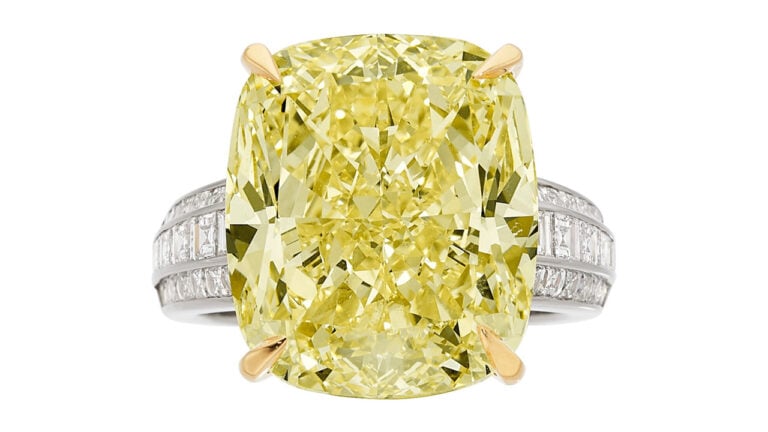
Image: A polished diamond. (Shutterstock)